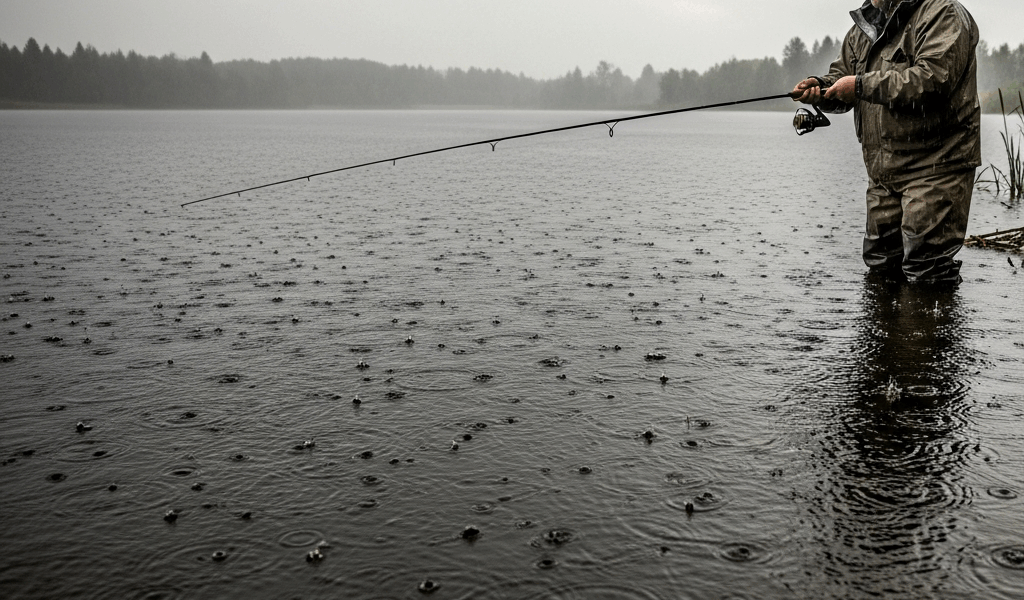
Rain starts falling and everyone on the lake heads for the ramp. Meanwhile the fish start feeding harder than they have all week. Rain changes nearly every variable that matters in freshwater fishing — light, pressure, food availability, fish positioning — and almost all of those changes work in your favor if you stay out.
Why Rain Often Improves Freshwater Fishing
Four things happen simultaneously when it rains, and all four push fish toward feeding behavior.
Reduced light. Cloud cover plus rain dimpling the surface cuts light penetration significantly. Fish that were parked in deep shade or under docks move shallower onto flats and along banks because the bright conditions that kept them hidden are gone.
Surface disturbance. Rain hitting the water creates visual and acoustic noise that masks your approach. Boat motor noise, footsteps on the bank, shadow movement — all the things that spook fish in calm conditions get buried under the constant patter of raindrops.
Terrestrial food inputs. Rain washes worms, beetles, ants, and other insects into the water from the banks. This triggers opportunistic feeding, especially among trout and panfish that key on surface and near-surface food sources.
Barometric pressure drop. Fish sense pressure changes through their swim bladder, and falling pressure before a rain event triggers aggressive feeding. The best fishing window is often the 6 to 12 hours before the rain actually arrives — not during.
The Barometric Signal: Fish Before the Rain Hits
Falling barometric pressure is the biggest single trigger. Fish feel it before you see a single cloud, and they respond by feeding hard while conditions are good.
Check the barometer trend on your weather app — not the rain forecast, the pressure graph. A rapidly falling line means a front is approaching and the feeding window is open right now. A strong cold front that hits tomorrow evening gives you an excellent feeding window this afternoon and tomorrow morning.
After the front passes and pressure bottoms out at low, fishing typically slows until pressure begins rising again. The classic post-front lockjaw is real — clear skies, high pressure, and fish that will not look at anything. Time your trips around falling pressure, not around the rain itself.
Which Species Respond Best to Rain and How
Bass: Move shallow during rain. They push from deep cover onto banks and shallow structure where reduced light gives them ambush advantage. Topwater lures and shallow-running crankbaits become productive when they would have been ignored an hour before the rain.
Catfish: Rain fishing for catfish is exceptional. Runoff carries worms and invertebrates into the water from the bank, creating a feeding frenzy near creek mouths and drainage inflows. Natural bait on the bottom where runoff enters — that is the entire game plan and it works reliably.
Trout: Surface feeding increases in rain. Insects blown into the water plus rain-triggered hatching activity put trout looking up. Dry fly fishing during a steady rain can be some of the best surface action of the season. I have had my best dry fly days in rain that would keep most anglers home.
Panfish: Move to shallow structure during light rain. Not as dramatic a response as bass or catfish, but dock pilings and laydowns produce during rain when they were quiet in sunshine.
Technique Adjustments: Before, During, and After Rain
Before (pressure falling): Fish aggressively. Cover water. This is not the time for slow finesse presentations — fish are actively feeding and moving. Power fishing with reaction baits works.
During light rain: Surface lures for bass — the reduced visibility and surface chop give topwater presentations an advantage. Topwater flies for trout. Bottom bait for catfish near runoff inflows.
During heavy rain: Visibility drops to near zero in stained water. Switch to lures with strong vibration — spinnerbaits and buzzbaits create enough displacement for fish to track them through murky water. Slow down presentations because fish are hunting by vibration, not sight.
After light rain: Often the best fishing of the day. Water is cooler, oxygenation has improved, fish have been active, and many anglers have already left. Stay out.
After heavy rain: Muddy water changes the equation. Dark-colored lures (black, junebug, dark red) silhouette better against stained water than bright colors. Fish the transition line where clearer water meets the stain — fish stack on the clear side, facing into the muddy water where food is washing through.
Flooding Water: The Opportunity and the Hazard
Rising rivers after significant rain can produce the best freshwater fishing of the entire year. Fish push into newly flooded margins — grass, brush, tree bases that were dry ground yesterday. They have never seen a lure in these spots and they are actively feeding on the insects and worms the rising water displaced.
The fishing can be genuinely extraordinary. It can also be genuinely dangerous. Fast current, foot traps from submerged rocks and debris, obstacles you cannot see, and water that rises faster than you can wade to safety. Rivers in flood conditions have killed experienced anglers who misjudged how quickly conditions changed.
The rule: if you cannot see the bottom and feel it with every step, do not wade. Fish from the bank or from a boat. The fish will still be in those flooded margins whether you are standing in the water or casting from dry ground. Nobody catches a fish worth drowning for.



Stay in the loop
Get the latest fishing tales journal updates delivered to your inbox.