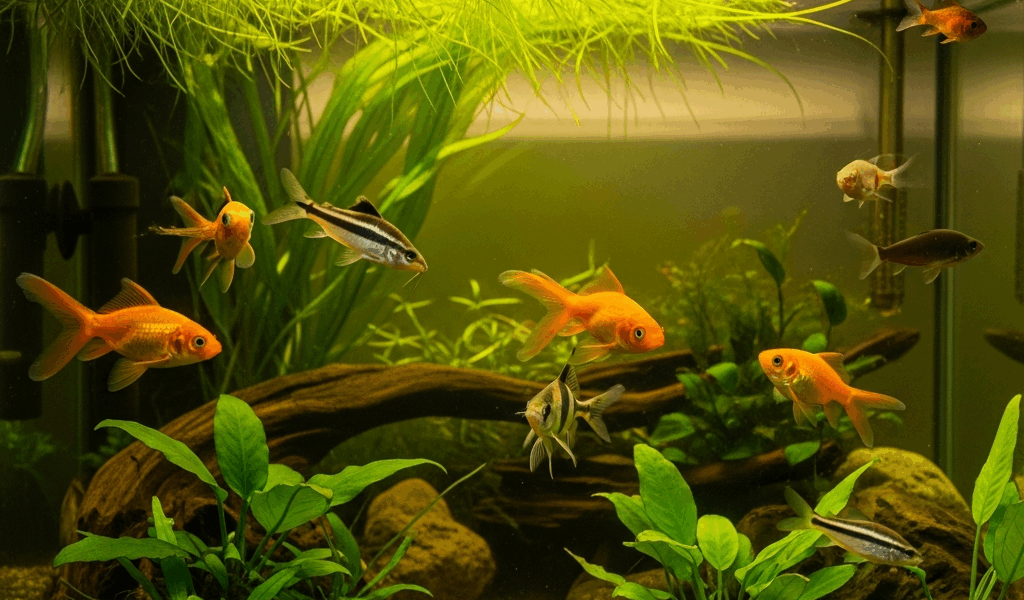
The Beginner Tank Reality — Most Fish Die in the First Month
Fishkeeping has gotten complicated with all the conflicting advice flying around.
Probably should have opened with this section, honestly — because the hardiest fish in the world won’t survive an uncycled tank. Most people fill the tank, drop in a filter, add fish that same afternoon. Then they overfeed because the fish look hungry. Then they do a massive water change without understanding what the nitrogen cycle actually does. Then the fish start dying and they assume they’re just bad at this.
They’re not bad at it. The setup was wrong from day one.
A cycled 10-gallon tank with proper filtration and a heater changes everything. Even guppies — which can genuinely survive in conditions that would embarrass most fish — need those fundamentals locked in first.
The 5 Hardiest Freshwater Fish for Beginners
Neon Tetras — Small, Colorful, and Tougher Than They Look
But what is a neon tetra’s actual reputation? In essence, it’s “fragile beginner fish that dies immediately.” But it’s much more than that — and the fragile label is mostly wrong.
What neon tetras actually hate is sudden change. Ammonia spikes. Temperature swings outside the 72-76°F range. Drop them into a stable, cycled tank and they become nearly bulletproof. I’ve had the same school in my 20-gallon setup for two years running. Picked them up at Petco for around $1.50 each. They’ll live 5-10 years if you’re not shocking them every other week with bad water.
Do 25% water changes weekly. Feed high-quality flake food or micro pellets — I use Hikari Micro Pellets, about $6 a bottle. Buy them in groups of at least six, minimum. They’re schooling fish. Alone, they panic, lose color, and act erratic. Together, that iconic blue-red stripe comes out and they behave like actual fish instead of stressed-out little ghosts.
So, without further ado, let’s keep going.
Corydoras Catfish — The Tank Cleaners That Actually Work
Corydoras might be the best option for bottom-level tank maintenance, as a community tank requires something working the substrate. That is because uneaten food sitting on the gravel is basically a slow-release ammonia bomb.
I started with three bronze corydoras in my first tank expecting them to solve my overfeeding problem entirely. Don’t make my mistake — they don’t cancel out bad habits. I still had to cut my feeding back significantly. But they made a real, measurable difference in how fast waste accumulated.
They run $3-4 per fish. Live 5-7 years. They need soft substrate — sand or fine-grain gravel, not sharp decorative rock — because their barbels are sensitive and sharp substrate degrades them over time. Two or three are enough for a 10-gallon. They’re nocturnal, peaceful, and completely unbothered by other fish. Not flashy. Genuinely useful.
Guppies — Colorful, Prolific, and Forgiving
Guppies are apparently indestructible, and I’m apparently someone who keeps a trio in a 10-gallon desk tank specifically because they require almost nothing from me — and that works for me while more demanding species never have in low-maintenance setups.
The males are genuinely beautiful. Premium specimens from specialty breeders have tail fins that rival anything else in the freshwater hobby. Basic pet store guppies, around $1-3 depending on variety, are still colorful and considerably tougher than they look. They survive conditions that would wipe out most other beginner fish. In a properly maintained tank, they develop richer color and live longer — simple cause and effect.
One thing: they breed constantly if you keep males and females together. If that’s not something you want to manage, keep males only. Either way, they’re resilient to the kinds of mistakes beginners make in the first six months.
Cherry Barbs — Red Coloring Without the Aggression
Tiger barbs get all the attention. They’re also notorious fin-nippers that will absolutely destroy slower, long-finned fish. Cherry barbs are different — same general body shape, striking red coloring on the males, none of the aggression.
I added six cherry barbs to my 29-gallon community tank three years ago. Zero problems since. They establish a loose pecking order among themselves, but they leave everyone else completely alone. They eat standard flake or pellet food without issue. Water parameter fluctuations that would stress out more sensitive species don’t seem to bother them much.
They cost $2-3 per fish and live 4-6 years. Males posture at each other occasionally — puffing up, circling — but it never escalates into actual damage. They look good without demanding perfection from you.
Bristlenose Plecos — Small, Algae-Eating, and Genuinely Useful
Frustrated by algae blooms and limited tank space, I ditched the common pleco and switched to bristlenose plecos using a simple logic: same job, one-third the size. That was 2017. Haven’t looked back.
Common plecos are sold as 2-inch juveniles. They grow to 12-18 inches. Bristlenose plecos max out around 4-5 inches — manageable in a standard community tank. They eat algae wafers, leftover food, and genuinely help keep algae under control. Three separate bristlenose plecos over the years, none of them have caused a single problem.
Expect to pay $5-10 per fish. They live 10-12 years, so this is a long-term commitment — longer than some relationships. They need driftwood in the tank. Not optional, actually required — they rasp on it for digestion. I use Malaysian driftwood pieces from local fish stores, usually $15-30 depending on size. Skip the driftwood and you’ll notice the difference.
Fish to Avoid as a Beginner
Common Plecos — They Get Massive
Common plecos get sold as cute 2-inch algae cleaners for small community tanks. This new problem shows up several years later and eventually evolves into the 15-inch tank destroyer enthusiasts know and dread today. They need 75+ gallons minimum. I’ve seen them crammed into 10-gallon tanks. It’s not good for the fish and it’s not good for anything else in that tank. Get a bristlenose instead.
Goldfish in Tropical Tanks
Goldfish are coldwater fish — full stop. They don’t belong in tropical community tanks. Beyond the temperature mismatch, they produce waste at a volume that would shock you for a fish that costs $0.30. A single goldfish realistically needs 40+ gallons to thrive. People buy them on impulse, add them to a 10-gallon tropical tank, and then wonder why everything crashes within a week.
Aggressive Cichlids
Red devils, Texas cichlids, Oscars — fascinating fish. Genuinely. They also uproot plants, kill smaller tankmates without hesitation, and require purpose-built setups designed around their specific needs. These are not starter fish. Give yourself at least a year of successful fishkeeping before going down that road.
Discus Fish
Discus are stunning. They’re also among the most demanding freshwater fish available. Pristine water conditions. Specific temperature ranges. Live or frozen food, ideally. They run $15-50 per fish and die in beginner tanks regularly — not from neglect, but from conditions that any other fish would tolerate without complaint. Save discus for later.
Tank Setup That Keeps Fish Alive
While you won’t need a chemistry degree, you will need a handful of key tools before adding a single fish. First, you should cycle your tank — at least if you want anything to actually survive. This takes 4-6 weeks. Run a fishless cycle using ammonia drops and monitor the nitrogen cycle with an API Master Test Kit, around $35 at most fish stores. Don’t compress this timeline.
Use a minimum 10-gallon tank. Smaller tanks are genuinely harder to keep stable because water parameters swing fast when the volume is low. A 20-gallon long might be the best option, as beginner setups require stability above everything else. That is because more water volume means slower, more forgiving parameter shifts when something goes wrong — and something always goes wrong early on.
Install a filter rated for your tank size. Aqueon and Marineland hang-on-back filters both work well and run $20-40 depending on the model. A heater is non-negotiable for tropical fish — I use Fluval E-Series heaters in the 50-watt range, around $35, and they’ve been reliable across multiple tanks.
Do 25% water changes weekly using dechlorinated water. Seachem Prime, about $10 for a 100ml bottle, treats tap water effectively and detoxifies ammonia temporarily during cycling. Use a gravel vacuum during water changes to pull debris out of the substrate before it breaks down.
Feed once daily. Only as much as the fish consume in two minutes. Overfeeding is the single most common cause of tank crashes — excess food rots, ammonia spikes, fish die, and the whole thing feels like a mystery when it’s actually just math.
Get the setup right first. Stock with hardy species. Your fish won’t just survive — they’ll actually thrive, and so will you.


Stay in the loop
Get the latest fishing tales journal updates delivered to your inbox.