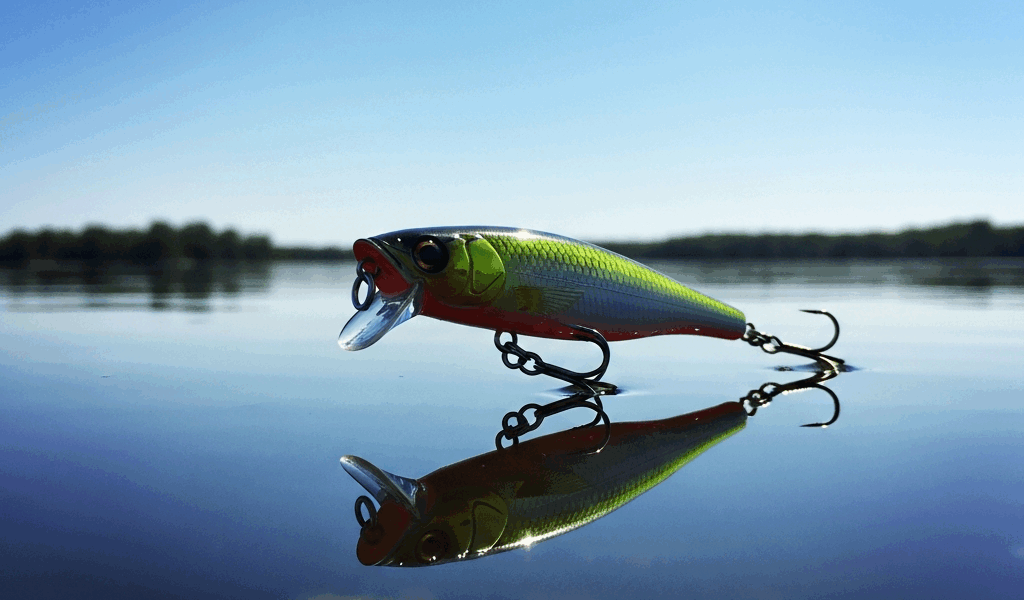
The Topwater Window Is Real and It Closes Fast
Summer bass fishing has gotten complicated with all the conflicting advice flying around. But the topwater window problem is actually straightforward — most anglers just refuse to believe how narrow it really is.
Last July I was out at 6:47 a.m. throwing a Heddon Super Spook Jr. on a lake I’d fished for eleven years. First cast. Fish up immediately — aggressive, committed, the kind of strike that makes you feel like a genius. By 8:15 a.m., nothing. By 9:30, I was lobbing a lure into what felt like a parking lot. Dead water. Not even a follow.
That was the thermocline winning. Not me.
Summer topwater runs a hard window — roughly the first 90 minutes of daylight, then the final 30 before dark. That’s it. Outside those slots, you’re not fighting fish behavior. You’re fighting physics. Surface temps climb fast on clear days, and when water hits 85°F on top, bass feel that invisible temperature boundary — the thermocline — and drop below it where the oxygen is stable and the water sits cooler. They don’t vanish. They just go down. Your topwater lure is now performing for nobody.
Probably should have opened with this section, honestly. But here’s the framework that actually fixes dead topwater sessions: it’s almost always time of day, retrieve speed, lure profile, or you’ve simply missed the window entirely. Four things. That’s the whole list. So, without further ado, let’s dive in.
You Are Fishing the Wrong Time of Day
This is the most common diagnosis. And the easiest to correct once you accept it.
A clear-sky summer morning is brutal for surface temps. A lake sitting at 78°F at sunrise can push 86°F by 10 a.m. I’ve measured it myself with a Rapala digital thermometer — the cheap $14 kind from Walmart. That eight-degree swing happens faster than most anglers expect, and bass don’t wait around once the surface starts cooking. They abandon shallow feeding zones and stack under docks, in deeper channels, or tight against the darkest grass lines where shade keeps temps manageable.
When they leave — topwater is useless. You’re not getting strikes because there are no fish there to strike.
If it’s past 9 a.m. and the surface bite has gone quiet, stop throwing topwater. Seriously, just stop. Every cast after that point is a wasted presentation during hours when bass are already repositioned 12 feet down. That’s what makes the early window so valuable to us topwater obsessives — it’s short, it’s violent, and it rewards anglers who actually show up for it.
Cloud cover changes everything, though. I’ve had legitimate topwater action run past noon on overcast days — surface temps stayed in the low 80s, bass never fully dropped, and I worked a Zara Spook for nearly five hours straight. Those days feel like gifts. But on bluebird skies? Accept the math. Set your alarm for 5:15 a.m. Leave when it’s still dark. Fish hard until 8:30. Then come back at 7 p.m. when the sun gets low and the surface cools back down. You’ll catch more fish in those two windows than in six straight midday hours. Don’t make my mistake of sleeping through the first one and then wondering why the lake feels empty.
Your Retrieve Is Too Fast for Pressured Summer Bass
Even with perfect timing, speed kills the bite.
Spring bass are aggressive. Cold-water metabolism, post-spawn hunger, and active feeding push them to chase fast-moving presentations across open water. Summer is a completely different animal. Lethargic fish in warm water aren’t sprinting after anything. They want something that looks wounded — a dying shad, a disoriented bluegill. Energy-efficient targets.
The adjustment is shifting from a steady walk-the-dog cadence to a pause-and-twitch presentation. Twitch once. Maybe twice. Then stop completely. Count to three — or five — or eight on tough days. Let the lure sit there and barely breathe. Most summer topwater strikes happen on the pause, not during the retrieve. Bass see the lure twitch, lock into a stalk, then explode the moment it goes still and looks vulnerable. That pause is the trigger.
Sounds like a small change. It’s massive.
I’m apparently a slow-twitch fisherman by nature, and that cadence works for me on summer reservoirs while an aggressive walk-the-dog retrieve never produces past mid-June. On pressured lakes — I’m talking places like Table Rock or Lake Fork that see serious weekend traffic — I’ve had sessions where the only bites came on eight-second pauses between twitches. Dead-stick moments that looked almost embarrassing. Bass didn’t care. They ate it.
Pay attention to forage size too. Summer baitfish are juveniles — threadfin shad running an inch and a half, young-of-year bluegill barely larger. Small baitfish don’t move fast. They twitch and pause and drift. Match that energy with your retrieve.
You Are Throwing the Wrong Profile Lure
This one catches experienced anglers because they trust a proven spring arsenal without making adjustments.
But what is a match-the-hatch problem in topwater fishing? In essence, it’s throwing a lure that’s too big for what bass are actually keying on. But it’s much more than that — it’s also profile, displacement, and how much disturbance your presentation creates relative to natural forage.
A 5-inch Super Spook that absolutely crushed fish in May looks like a different species by July. Natural forage has shifted. Threadfin shad populations are smaller. Juvenile bluegill are running tighter to cover. Oversized lures stop matching the menu.
Downsize. Look for walk-the-dog stickbaits in the 3 to 3.5-inch range instead of 4 to 5. The Heddon Tiny Torpedo — which runs about $8 at most tackle shops — outperforms larger walking baits consistently in my experience. Hollow-body frogs like the Spro Bronzeye in the 65mm size become exceptional near grass and lily pads where bass hunt during low-light periods. Small prop baits in the 2.5-inch range create disturbance without overwhelming profile — they read as small panicked baitfish, not oversized predators.
I’m apparently a Spro and Strike King guy and both work for me during summer while heavier poppers and big walking baits never seem to trigger the same response after June. Brand matters less than getting the size and action type right. Smaller and subtler wins in heat. That’s the pattern. It’s consistent.
When to Give Up on Topwater and What to Switch To
You timed it right. You slowed your retrieve. You downsized the lure. The bite is still dead.
That’s fine. Time to transition — not surrender.
Bass haven’t abandoned the structure where your topwater failed. They’ve moved down, not out. A shaky head rig with a 3-inch Berkley PowerBait Minnow — rigged on a 3/16-ounce head — fished vertically along those same edges will produce. You’re working identical real estate, just 8 to 12 feet deeper. Same dock pilings. Same grass edge. Same fish, now sitting below the thermocline and willing to eat a slower presentation.
Drop shots produce well too. Rig a 1.5 to 2-inch finesse soft plastic about 14 inches above a 1/4-ounce cylinder weight. Work it along channel ledges or deeper break lines adjacent to your morning topwater spots. That’s the whole adjustment — same structure, different depth, different presentation.
Here’s the encouraging part. The topwater window resets at dusk. Frustrated by dead midday water, most anglers leave the lake by 2 p.m. and miss the entire evening opportunity. The moment the sun angles low — around 6:30 to 7 p.m. in midsummer — surface temps start dropping and bass push shallow again. You’ve got a genuine 30 to 45-minute surface window before dark. This new approach to the day took hold with serious bass anglers several years ago and eventually evolved into the two-session strategy topwater enthusiasts know and swear by today.
Use the midday hours to scout with finesse rigs. Learn exactly where bass positioned themselves in the heat. Then come back to those specific spots with topwater at dusk. You end the day on a bite. That’s a significantly better outcome than standing at the water at 10 a.m. wondering why the surface looks completely dead — which, at that point, it usually is.


Stay in the loop
Get the latest fishing tales journal updates delivered to your inbox.