The Real Reason Your Live Bait Keeps Dying
Live bait has gotten complicated with all the conflicting advice flying around.
Here’s what nobody at the boat launch tells you: the fish rarely kills your bait first. You do. Dead bait on your line before a single strike points to a specific breakdown in your process — thermal shock, bad hook placement, a suffocating bait bucket, or handling stress that’s already done the damage before you ever cast. Each one of those problems is fixable. None require expensive gear or some kind of specialized knowledge.
So, without further ado, let’s dive in. Think of what follows as a troubleshooting checklist. Work through it, find where your system breaks down, and fix that one thing. Your bait will live longer, move better, and — yeah — catch more fish.
You Are Hooking It Wrong for the Species
Wrong hook placement is probably the single fastest way to kill live bait. Different baits need different approaches, and most anglers never adjust their technique based on what they’re actually fishing with.
Minnows — Lips or Dorsal
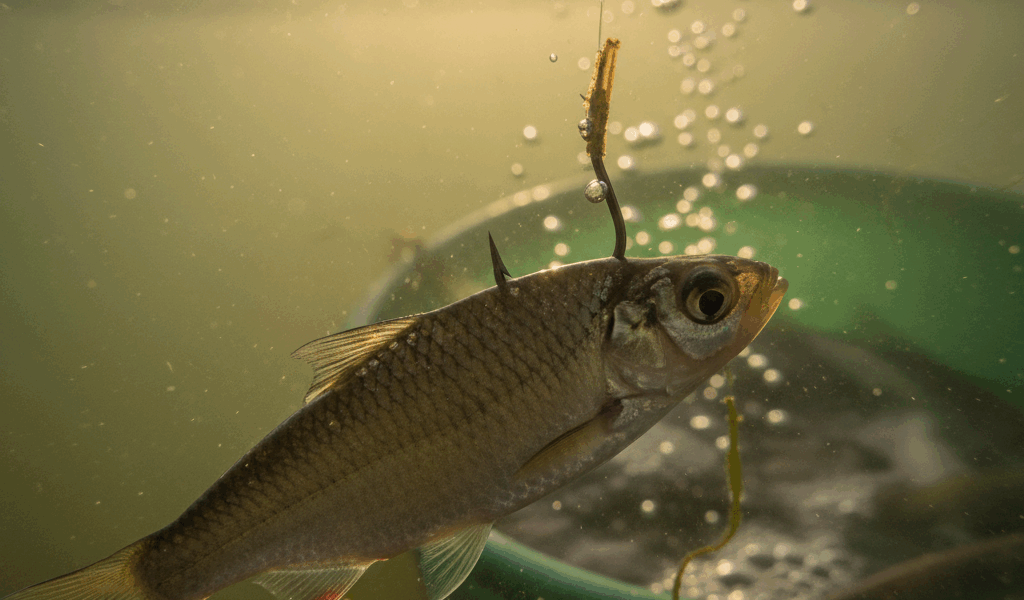
I used to hook minnows through the mouth. Thought it was universal. It’s not. Threading the hook through both lips puts direct pressure on brain and gill structures. That minnow is dead in minutes — sometimes faster.
Hook behind the dorsal fin instead. Run your hook point through the skin just behind where the dorsal fin base sits. Keeps the spinal cord and gills intact. The minnow moves naturally and stays alive dramatically longer. Small adjustment. Massive difference.
Nightcrawlers — Single vs. Threaded
Nightcrawlers are tougher than minnows, but placement still matters. A single hook through the middle of the body leaves the worm mostly functional. Long soaks, patient presentations — this is the right move.
Threading the hook through multiple segments tears tissue fast. You’ll watch the worm pinch off at the hook point inside 20 minutes sometimes. Use threading only when you need durability for heavy casting or you’re dragging rocky bottom where single-hooked worms get stripped instantly.
Shrimp — Head Holds the Life
Shrimp die fast regardless. But hooking location changes that timeline considerably. Hook through the tail and you’re cutting the nervous system. Dead within minutes — sometimes less than five.
Hook just behind the eye socket instead. The tail stays free to kick and thrash. You get 30 to 45 minutes of active bait rather than 10. That’s real fishing time, not dead-stick time.
Hook Size Matters More Than You Think
Probably should have opened with this section, honestly. I burned entire summers using hooks that were just too big before a buddy finally called me out on it at a dock in Lake Fork circa 2011.
A hook too large tears a massive wound. A hook too small shifts constantly and grinds tissue. Match size to bait like this: the hook eye should run roughly one-quarter the width of the bait’s head. A size 2 for a 2-inch minnow. Size 1 for a large nightcrawler. Size 4 for live shrimp. Don’t make my mistake.
Your Water Temperature Is Killing Them
Thermal shock destroys bait faster than almost anything else. Pull minnows from a 45-degree cooler and drop them into 78-degree lake water — their system can’t adjust. They panic, burn energy, and go belly-up within minutes.
I learned this one July morning at a pond I’ve fished since I was twelve. Water was warm. My bait was cold. Hooked a dozen minnows and watched every one of them flip sideways inside five minutes. Not a single strike. Left a fresh batch sitting in a dock bucket for 20 minutes and caught fish on the first cast after that. That was 2014, and I haven’t made that mistake since.
The Acclimation Fix
Before rigging anything, give bait time to adjust. Ten to twenty minutes is usually enough. Scoop water from your actual fishing spot into a separate bucket, then add bait gradually. Let it sit. Watch it straighten out and start moving like it should.
This takes discipline — at least if you’re the impatient type who wants the line in the water immediately. Do it anyway. Fifteen minutes of waiting beats three hours of fishing dead bait.
Ice Fishing — The Reverse Problem
Winter flips everything. Bait warms up in your hands or sitting on the ice, then hits near-freezing water and dies from the same kind of shock. Keep ice fishing bait in an insulated container until the exact moment you rig it. Work fast. Use wet, cold hands — or gloves — when handling.
Aeration and Bait Bucket Mistakes
A bucket with no air circulation becomes a slow-motion death chamber. Oxygen depletes. Waste builds up. Your bait suffocates while you’re focused on reading the water.
I’m apparently a sucker for cheap battery aerators, and the Lustar Aquarium Air Pump — around $18 at most tackle shops — works for me while a no-name clip-on I bought at a gas station never kept anything alive past noon. The Stingray and Marine Metal models run $25 to $35 and last a full season of weekend trips without issue. One unit keeps a standard 5-gallon bucket healthy all day.
Bait Density and Water Changes
Overcrowding accelerates everything bad. Five minnows in 2 gallons is fine. Fifteen minnows in 2 gallons creates an oxygen competition — and waste builds up fast.
Keep the ratio at roughly one fish per liter minimum. Change water every 3 to 4 hours without an aerator. Every 6 to 8 hours with one. Dead bait contaminates the water and takes healthy bait down with it. Pull dead bait immediately. Don’t leave it in there even for a few minutes.
Tap Water With Chlorine
Some anglers fill buckets from the tap before heading out. Chlorine stresses bait and shortens survival time noticeably. Use water from your fishing location when possible. If tap water is the only option, leave it uncovered overnight — chlorine gas escapes on its own within 8 to 12 hours.
Handling Stress You Did Not Know Was a Problem
Dry hands. Hard squeezing. Leaving bait sitting in direct sun for two minutes while you mess with your rig. All of it stresses live bait before the hook enters the picture — and stressed bait dies faster once rigged.
Wet your hands before touching anything. Work in shade when you can. Use a small dip net instead of grabbing minnows bare-handed from the bucket. These habits reduce stress response in the bait and extend survival time by a genuine 20 to 30 percent.
Your Quick Diagnostic Checklist
- Bait dying within 5 to 10 minutes? Hook placement and thermal shock — check those first.
- Bait lasting 15 to 30 minutes then dying? Aeration or water quality problem.
- Bait looks stressed immediately after hooking? Handling damage or water temperature mismatch.
- Entire bucket dying at once? Dead bait left in the water — clean it out and do a full water change immediately.
Fix one thing at a time. You’ll know quickly which factor matters most for your specific setup.


Stay in the loop
Get the latest fishing tales journal updates delivered to your inbox.