Fishing Tales from Around the Globe
Fishing stories have a way of growing in the telling, but the best ones don’t need exaggeration — the fish and the places are remarkable enough on their own terms. Today I’ll share a handful of the ones that stuck with me.
Africa: The Nile Perch Challenge
The Nile has sustained civilization for five thousand years, and the Nile perch has been part of that story for most of it. These are serious fish — specimens over 440 pounds have been documented in Lake Victoria and the upper Nile, though fish in the 50-to-100-pound range are the realistic ambition for most anglers. The fight from a large perch is long, sustained, and physical, and stories from communities along the Nile about landing one — particularly among younger fishermen encountering the species for the first time — have the quality of initiation rites. The fish demands something from you. Whether you provide it is the story.
Asia: The Mysterious Mekong Catfish
The Mekong Giant Catfish is the largest freshwater fish in the world by body mass. The largest reliably recorded specimen weighed 646 pounds. They’re found in the Mekong River system across Thailand, Laos, Cambodia, and Vietnam, but in rapidly declining numbers — they’re now critically endangered, primarily due to habitat loss and dam construction disrupting migration routes.
Thai fishing communities along the Mekong traditionally regarded the giant catfish as a sacred animal with deep spiritual significance. Catching one was a ceremony as much as a fishing trip — rituals, offerings, and protocols observed before and during the attempt. Locals believed these catfish were connected to the river in ways that made their capture a transaction requiring respect rather than just skill. The stories passed down through generations in riverside villages reflect a relationship with a fish that most of the world will never encounter.
North America: The Legendary Muskies of Wisconsin
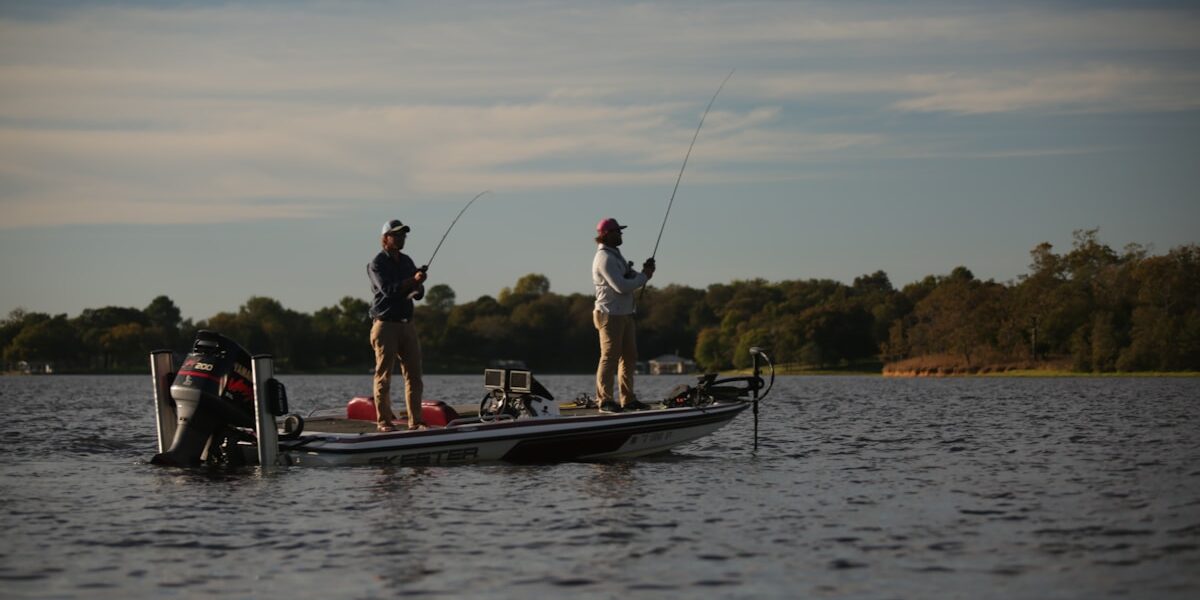
Muskie fishing has a cult following in the upper Midwest that’s hard to explain unless you’ve done it. The fish are enormous — 50 to 60-inch specimens exist in Wisconsin’s better lakes — and they’re genuinely difficult to catch. Muskellunge are called “the fish of ten thousand casts” by anglers who have actually put in the time, and that’s not an exaggeration. Days without a strike are normal. Weeks without one are not unusual. The anglers who persist are driven by something that goes beyond the catch rate, and the stories they tell about the moments of contact — that moment a muskie rolls on a lure after being followed across the entire retrieve — have the compressed intensity of experiences that arrive rarely and matter enormously precisely because of that rarity.
South America: Tales of the Amazonian Piranhas
Piranhas have an outsized reputation relative to the actual danger they pose to humans — the Hollywood version bears little resemblance to the fish that Amazonian communities have been harvesting and living alongside for thousands of years. The red-bellied piranha, which is what most people picture, is predominantly a scavenger and opportunistic predator of smaller fish, not the coordinated human-destroying school of the movies. Amazonian tribes learned to fish piranhas efficiently using simple hooks and hand lines, and the fish is an important protein source throughout the basin. The stories these communities tell about piranhas are practical rather than fearful — notes about behavior, feeding patterns, and the occasional unwary swimmer who learned something the hard way.
Europe: The Mystique of Loch Ness
Loch Ness is famous for a creature that almost certainly doesn’t exist in its famous form, but the fishing in those cold, deep Scottish waters is real and genuinely demanding. The ferox trout — a large, predatory brown trout strain found in deep Scottish and Irish lochs — is the actual quarry worth pursuing there. Ferox can grow to 20-plus pounds in the deepest parts of Loch Ness, and catching one requires trolling heavy lures at considerable depth through cold, dark water with limited sonar detail. The stories about ferox fishing from Scottish ghillies and the anglers who hire them combine patience, local knowledge accumulated over decades, and the particular atmosphere of fishing in landscape with that much history embedded in it.
Oceania: The Challenges of the Great Barrier Reef
Fishing on the Great Barrier Reef is fishing inside one of the most complex ecosystems on earth, which makes it both spectacular and demanding. Giant trevally — powerful, fast, and reef-smart — are the prestige target for many visiting anglers. They use the coral structure to their advantage in ways that require experience and local knowledge to counter. The stories from reef fishing guides about clients’ first encounters with a large GT on a popper — the speed of the strike, the run toward structure, the equipment failure that sometimes results — have a quality that straight fish-caught-fish narratives rarely achieve.
The Arctic: The Resilient Inuits of Greenland
Inuit ice fishing in Greenland operates at temperatures and under conditions that most anglers never experience. Ice thickness must be verified before each outing. Equipment must function reliably at minus 30 Celsius. The fish — cod, halibut, Arctic char — are there in the darkness beneath the ice, and the techniques developed over generations for finding and catching them in those conditions reflect accumulated knowledge about how animals behave in extreme cold that has no equivalent in temperate-climate fishing traditions. The stories from Greenlandic fishing communities about particular fishing grounds, seasonal timing, and the apprenticeship of younger generations into these skills have the quality of practical wisdom that only comes from doing something difficult for a very long time.
The South Pacific: Fiji’s Traditional Fishing
Fijian fishing traditions are embedded in a cultural relationship with the ocean that shapes community life in specific, practical ways. Traditional reef fishing rights (called “iqoliqoli”) are held by specific clans, and access is regulated by community consensus — a form of fisheries management that predates Western regulatory frameworks by centuries and in many areas has proven more effective at maintaining fish populations. Handcrafted net fishing and spear fishing for species like grouper, coral trout, and reef fish continue alongside modern gear in a coexistence that reflects genuine respect for both what works and what the community values. The stories from Fijian fishing communities combine practical knowledge, spiritual relationship with the ocean, and a sophisticated understanding of reef ecology that developed over hundreds of years of direct observation.
The Caribbean: Marlin Fishing Excitement
Caribbean blue marlin fishing produces some of the most dramatic moments in big-game angling. Fish over 1,000 pounds are caught with enough regularity in certain locations — the Dominican Republic, Panama’s Pacific side, the Azores — that they’re not mythological. The fight from a large blue marlin can last several hours. The initial run can strip hundreds of yards of line in seconds. The multiple jumps, the shaking, the deep sustained dives — the stories from mates and anglers who have worked large blue marlin to the boat share a quality of overwhelming physical engagement that other fishing doesn’t produce.
That’s what makes fishing tales endearing to those of us who collect them — the diversity of the fish, the places, and the cultural contexts is as wide as the world itself, and every tradition reveals something specific about the relationship between a community and its water. The stories don’t just describe fish. They describe what it means to pay close attention to living things in a particular place, over a long period of time. That’s worth preserving, and worth telling.



Stay in the loop
Get the latest fishing tales journal updates delivered to your inbox.