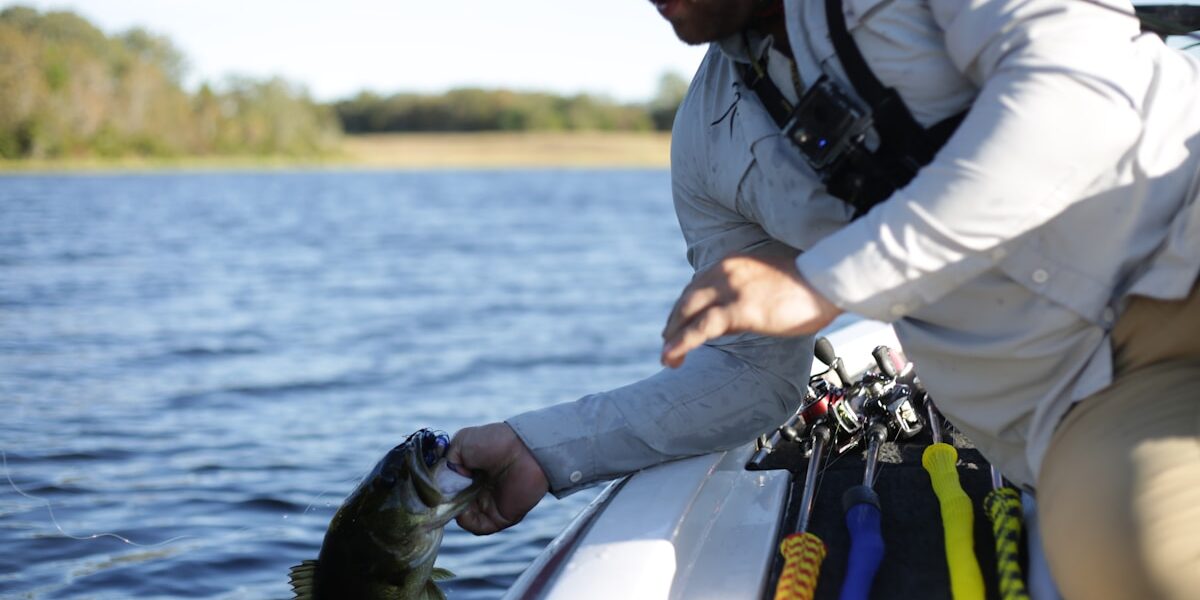
A trophy fish isn’t just a big fish — it’s a fish that represents the ceiling of what a fishery can produce, the product of years of growth and survival. Chasing them requires a different mindset than general fishing. You’re not trying to maximize the number of bites; you’re trying to get one specific bite from one specific class of fish. Everything about how you approach that — where you fish, when you fish, what you present — shifts when that’s the goal.
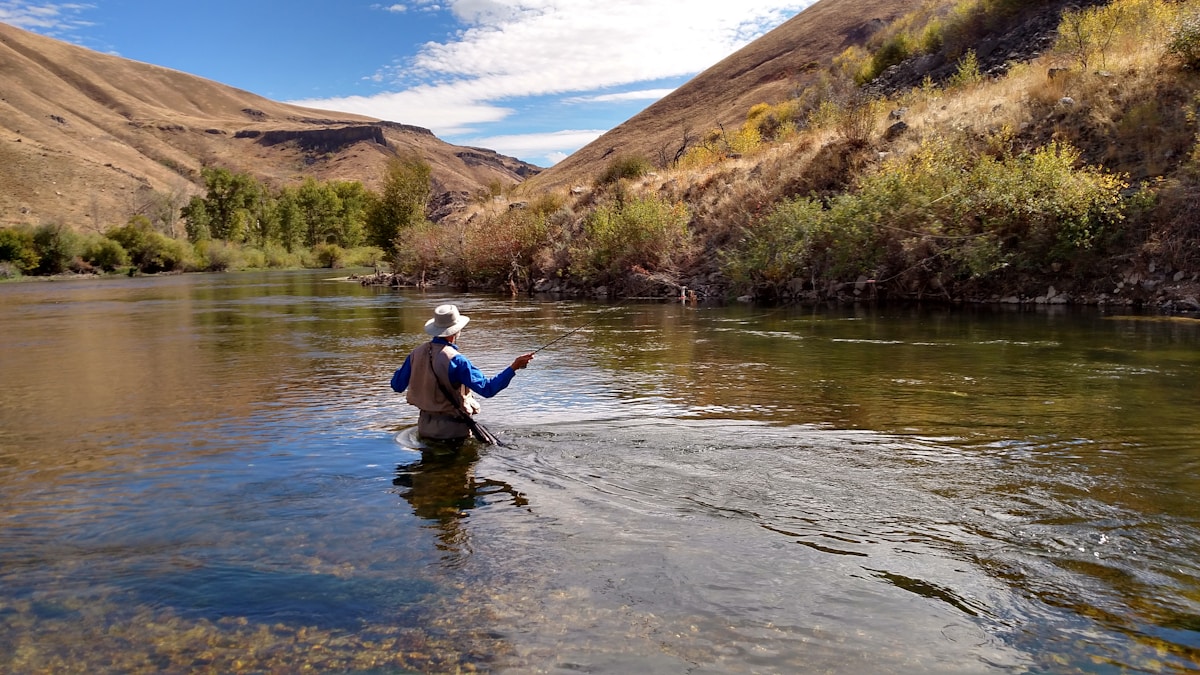
Know the Trophy Fish in Your Target Fishery
Trophy thresholds vary by species and geography. A 5 lb largemouth is a trophy in the upper Midwest; in California it might be a nice fish but not exceptional. A 20 lb striped bass is good; a 40 lb striper is legitimate bragging rights. Know what a trophy looks like for the species in the specific body of water you’re fishing, because that calibrates everything — where those fish hold, how they feed, how pressured they are.
Research the fishery before you fish it. Look for published surveys, tournament records, and catch reports. The state record and local tournament history tell you what the water is capable of producing. A lake with no documented fish over 5 lb is not a trophy bass destination; a lake with documented 8-10 lb fish is a different proposition entirely.
Location: Where Trophy Fish Actually Live
Trophy fish occupy premium real estate in any body of water. They’re big enough to defend territory and selective enough to position themselves where they can feed most efficiently with minimal energy expenditure. That typically means:
Deep structure adjacent to feeding areas. A big bass doesn’t live on the 4-foot flat — she holds in the 15-foot channel nearby and makes periodic movements up to feed. Find the adjacent deep structure and you understand her home range.
Isolated, specific pieces of cover. A single rock on an otherwise featureless bottom. One brush pile in a 200-acre flat. One dock in a long stretch of bank. Isolated cover concentrates fish, and the biggest fish in the vicinity often stakes out the best spot on that cover. Fish that nobody else is fishing because it requires a specific cast to hit.
Less-pressured water. The biggest fish on popular lakes are often the ones that survived by being selective and cautious. They’ve seen every common presentation. Getting away from the launch ramp — the back of the back, the long paddle, the locked gate — often puts you on fish that haven’t been thoroughly educated by other anglers’ presentations.
Timing: Windows That Produce Trophy Fish
Early morning and late evening are when fish feed aggressively, and big fish specifically move out of deep cover to hunt at these times. That’s the consistent daily pattern. But the bigger timing windows for trophy fish are seasonal.
Pre-spawn is the single best window for trophy bass in most of the country. In February through April depending on latitude, large females are feeding heavily to build energy reserves before spawning. They’re in predictable locations staging near shallow spawning flats. A big female at peak pre-spawn weight is often a pound or more heavier than she’ll be the rest of the year. This is when the records fall.
Early fall is the other key window. As water temperatures drop from summer highs, fish that spent three months deep and lethargic start feeding aggressively. They push bait into coves and up on points. The aggressive feeding of September and October can be exceptional for large fish across most freshwater species.
Gear Built to Handle What You Might Hook
Heavy-action rod, high-capacity reel, quality line. Match these to what you’re genuinely going after. For trophy bass in heavy cover: 7’3″ heavy-power fast-action rod, baitcasting reel in 8 lb class with smooth drag, 50-65 lb braid. You need to be able to stop a big fish before she wraps your line around the first piece of cover she reaches.
Sharp hooks, tied with verified knots. Check every knot before every session. A bad knot on your main line-to-swivel connection or your leader-to-hook connection can lose a fish you’d have mounted. Test by pulling hard on both ends of each knot. If it slips even slightly under manual pressure, retie it.
Presentations That Target Large Fish
Size up. A 4-inch lure attracts fish of all sizes. A 10-inch swimbait, a jumbo nightcrawler, a large sucker minnow — these presentations naturally select for larger fish. Small fish aren’t interested in prey that’s nearly their own size. Big fish specifically seek out large, high-calorie meals.
Slow down. Big fish in most conditions don’t want to chase prey long distances. A slow-moving presentation that passes close to where they’re holding gives them an easy opportunity. A fast-moving presentation often triggers a reaction strike from an average fish but gets ignored by a large one that’s learned to be selective. There are exceptions — big fish will bust a topwater early morning — but deliberate, slow presentations produce larger average fish in most situations.
Live bait, when legal and practical, has advantages that no artificial can fully replicate. A large live bluegill on a freeline in flathead country, a big live shiner on a bridle rig near a bass bed, a live sucker in pike water — live bait moves naturally, smells correct, and triggers feeding responses that artificials sometimes can’t.
Read the Water, Use Technology
Polarized sunglasses are specifically valuable for trophy fishing. In shallow-water situations you can often spot individual large fish before casting to them. Sight fishing for specific large bass on beds or cruising in clear water is a skill worth developing — it’s different from blind-casting and requires a different approach, but when it works it’s one of the most precise forms of fishing there is.
A quality fish finder lets you identify the specific pieces of structure where large fish are staging. The difference between a featureless bottom and a hard-bottom transition at the base of a drop-off is invisible from the surface and obvious on side imaging. That transition is often where big fish stack.
Hook Set and Fighting Technique
Hook set technique depends on the lure. Single-hook presentations — jigs, Texas-rigged plastics — require a hard, sweeping hook set to drive the hook through the plastic and into the jaw. Treble-hook presentations — crankbaits, topwaters — require reel-down pressure rather than a yanking motion; the trebles set themselves when the fish turns with the lure. Getting these backwards costs fish: yanking on a treble-hook lure usually pulls it away from the fish, and reel-down pressure on a single-hook presentation doesn’t penetrate the jaw adequately.
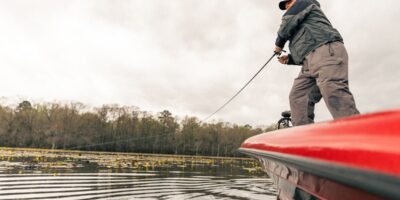
When fighting a big fish, keep steady pressure, keep the rod up, and let the drag work. Don’t try to horse the fish; tire it by maintaining sustained pressure and steering it away from cover when you get the chance. Big fish lost at the boat are usually lost because of slack line — a dip of the rod tip, a moment of reel handle fumbling. Keep tension constant through the whole fight and all the way into the net.
Document and Release
Have the camera or phone ready before the fish comes out of the water. Get it out, take the photo quickly, and get the fish back in. A trophy fish that’s been properly fought and released quickly swims back to its territory and continues to be a trophy fish. One that’s held in the air for five minutes while you fumble with your phone may not survive the experience. The memory matters; the fish matters more.

Stay in the loop
Get the latest fishing tales journal updates delivered to your inbox.