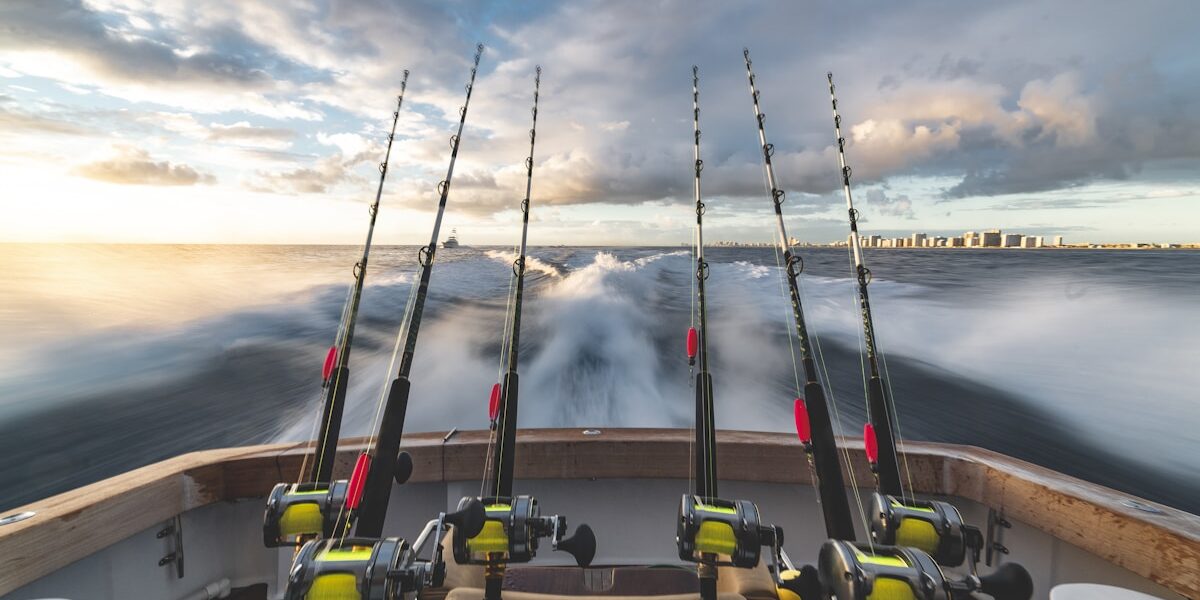
Saltwater fishing gear is a different category from freshwater gear — not just bigger, but fundamentally different in the materials, construction, and specifications that matter. The ocean is harder on equipment than any freshwater environment. Salt accelerates corrosion on every metal surface, UV exposure degrades coatings and line, and the fish are generally larger and fight harder. Gear that works fine on a bass lake will fail in a saltwater environment, sometimes on the first day. Here’s how to choose a saltwater rod and reel setup that actually holds up.
Saltwater Rods: What’s Different
The core issue with any saltwater rod is corrosion resistance. Guides are the most vulnerable point — they’re the metal rings the line runs through, and cheap guides pit and corrode quickly in saltwater, developing rough spots that abrade and weaken your line. Quality saltwater rod guides are made with titanium frames or SiC (silicon carbide) inserts that are impervious to salt damage. It’s worth inspecting guides carefully before buying any saltwater rod.
Reel seats and hardware should be anodized aluminum or stainless steel. Avoid chromed parts — chrome is a freshwater finish and won’t hold up to prolonged saltwater exposure. The blank itself is usually graphite or graphite-composite; both handle saltwater fine as long as the other components are up to spec.
Rod Types for Different Saltwater Situations
- Spinning Rods: The most versatile choice for inshore fishing — redfish, snook, speckled trout, flounder. User-friendly, handles lighter lures and jigs, works from shore, kayak, or boat. A 7 to 7’6″ medium-heavy spinning rod handles the majority of inshore situations.
- Casting Rods: Paired with baitcasting reels for situations requiring precision casts to specific targets. Good for pitching lures under docks, along structure. Requires more technique than spinning but rewards it with accuracy.
- Surf Rods: Long — typically 10-14 feet — for casting heavy sinker rigs or lures from the beach into the surf. The length generates casting distance you can’t achieve with a standard rod. Used for striped bass, pompano, drum, and other beach-accessible species.
- Boat Rods (Conventional): Shorter, sturdier, designed for vertical jigging or bottom fishing from a stationary boat. Shorter length provides leverage when pumping fish up from depth.
- Jigging Rods: Specialized for working heavy metal jigs vertically in deep water. Often fiberglass or composite for the sustained bend resistance required by jigging technique.
Saltwater Reels: The Main Types
Spinning Reels
Spinning reels dominate inshore saltwater fishing for good reason — they’re versatile, handle light lines and lures, cast a mile with light presentations, and are straightforward to use. The spool is fixed; line peels off during the cast and is retrieved by the bail. For saltwater, you want sealed bearings and a sealed drag system — salt works its way into everything and sealed components last dramatically longer than unsealed ones.
Shimano Stradic FL, Penn Battle III, and Daiwa BG are all solid mid-range spinning reels with good corrosion resistance. Size your reel to your rod — a 3000-4000 size handles most inshore applications, 5000-6000 for bigger inshore work or light offshore.
Baitcasting Reels
Baitcasting reels in saltwater are primarily used for inshore situations requiring casting precision — working specific structure, pitching lures into tight spots, flipping to specific targets. They handle heavier lines and lures than spinning setups of equivalent size and give experienced anglers more control over the cast. They’re not recommended for beginners because the free-spinning spool requires thumb control to prevent backlash.
Conventional Reels
Conventional reels are the big-game standard. They have high line capacity for long runs, lever drag systems that allow precise drag adjustment mid-fight, and the torque to muscle large fish. Offshore trolling, deep bottom fishing, shark fishing from the beach — these are conventional reel situations. They’re heavier and more specialized than spinning or baitcasting setups but they’re what you need when the fish are genuinely large.
Drag System
A fish that makes a 50-yard run when the line’s tight will snap the line if the drag doesn’t give. A smooth, reliable drag that you can set accurately and that doesn’t surge or stick is non-negotiable for fishing larger saltwater species.
Test the drag before you buy: turn it up to maximum, pull line off the spool by hand, and feel for smoothness and consistency. A drag that jumps or sticks at maximum will fail when you need it. Front drags are generally smoother than rear drags at equivalent price points. Set your drag to roughly 25-33% of your line’s breaking strength for most situations.
Gear Ratio and Line Capacity
Gear ratio is how many times the spool rotates per handle turn. A 6:1 ratio means six spool rotations per turn. High gear ratios (7:1+) retrieve line fast — good for burning lures or taking up slack quickly. Lower ratios (4:1-5:1) deliver more torque for cranking large fish up from depth. For most inshore spinning applications, a 6:1-6.5:1 ratio is a good middle ground.
Line capacity matters when you might need a fish to run. For offshore or larger species, you want enough line that a 200-yard run doesn’t empty the spool. Check the reel’s specification for line capacity at your intended line weight before buying.
Line Selection
Braid is the dominant line choice for saltwater fishing. It’s stronger diameter-for-diameter than mono or fluorocarbon, has no stretch for immediate bite detection and hooksets, and doesn’t degrade in UV the way mono does. 20-50 lb braid with a fluorocarbon leader covers most inshore situations. The fluorocarbon leader is less visible than braid near the hook and provides abrasion resistance against dock pilings, oyster bars, and rocks.
Match the leader length and weight to your target species. For redfish in clear water over grass flats, 20 lb fluorocarbon with a longer 3-4 foot leader. For sharks or big jack crevalle, bump up to 40-60 lb with a short 12-18 inch leader.
Maintenance After Every Trip
This is non-negotiable for saltwater gear. Rinse everything — rod, reel, guides — with fresh water after every single use. A gentle hose-down is enough to remove salt crystals before they penetrate bearings and corrode metal. Let it dry fully before storage. Every few sessions, spray the reel exterior with corrosion inhibitor (CorrosionX or CRC 6-66) and wipe down the rod blank. Once or twice a season, have the reel serviced or service it yourself: open it, clean the bearings, relubricate, and reseal. Saltwater gear that gets this treatment lasts years. Gear that doesn’t gets thrown away after one season.




Stay in the loop
Get the latest fishing tales journal updates delivered to your inbox.