Parts of a Boat Every Angler Should Know
Boat terminology has gotten unnecessarily confusing with all the nautical jargon flying around in most guides. Today I’ll walk through the parts worth knowing and what they actually do.
Hull
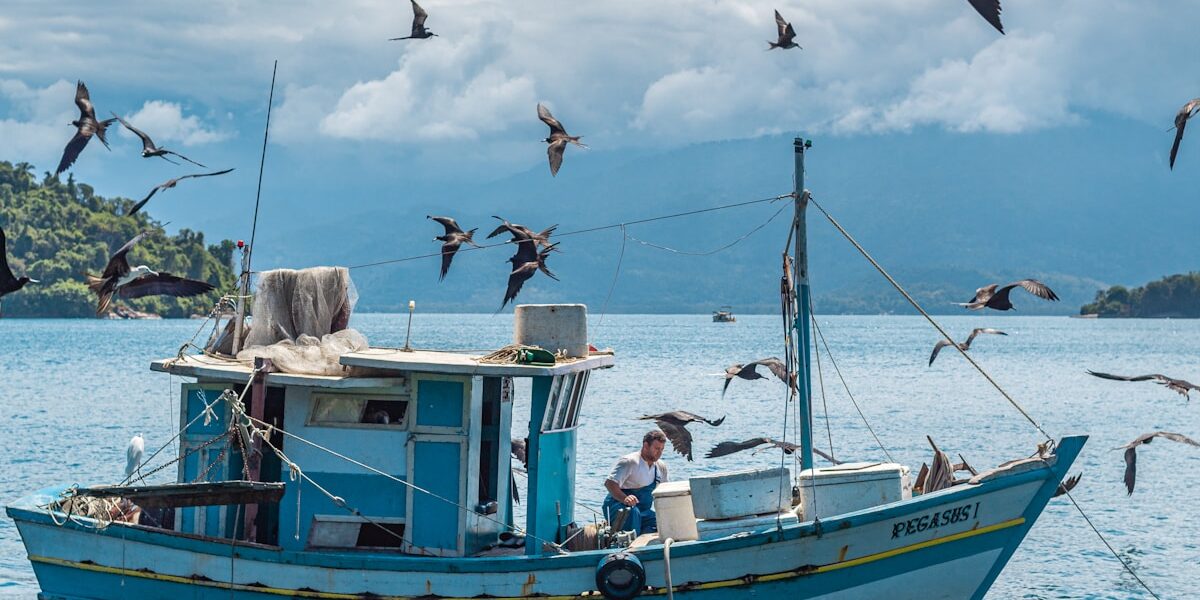
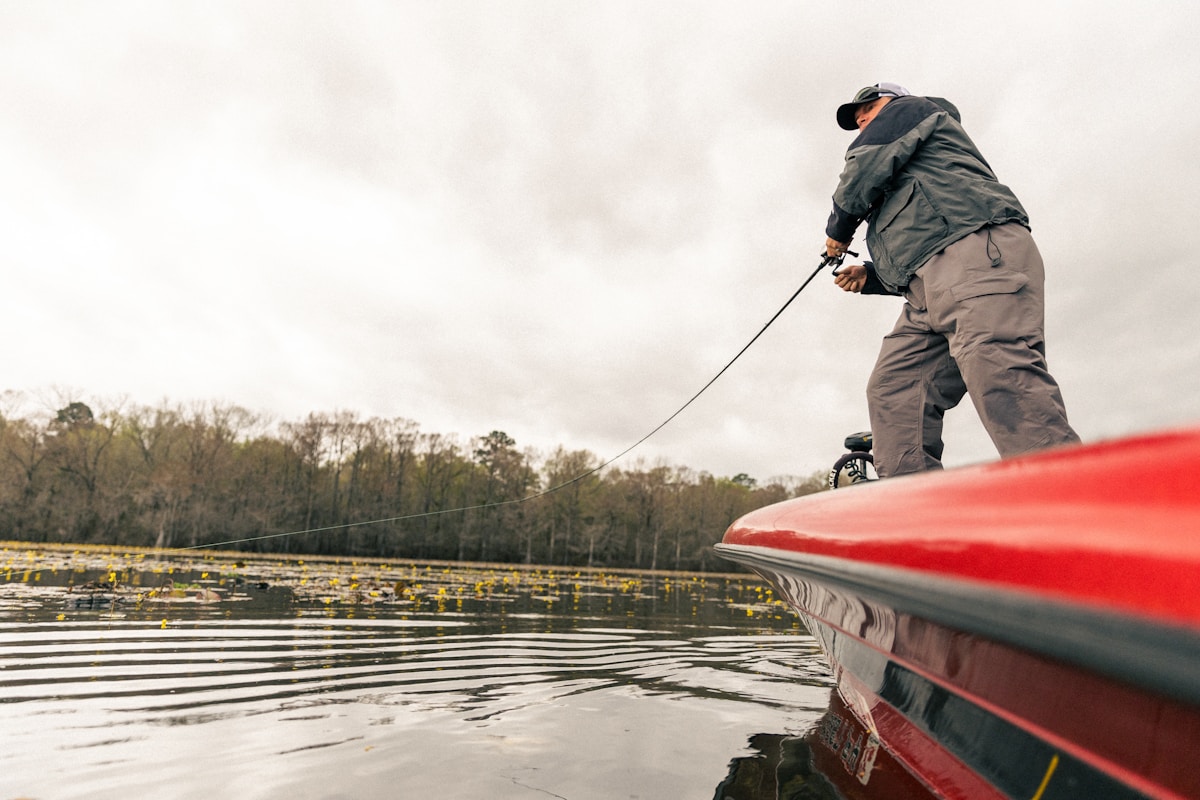
The hull is the main body of the boat — the watertight shell that provides buoyancy and contains everything else. Hull design varies enormously depending on intended use. Planing hulls rise up and skim across the water surface at speed, which is what you want in a bass boat or center console. Displacement hulls push through the water at slower speeds and are designed for stability rather than speed, common in larger cruising vessels. Materials range from fiberglass (most common today) to aluminum, wood, and steel.
Bow
The bow is the forward-most point of the boat. Its shape determines how the boat handles waves — a fine, pointed entry cuts through chop more efficiently, while a wider, flatter bow provides stability in calmer conditions but pounds harder in rough water. On most boats, the anchor is deployed from the bow because the bow’s reinforced structure handles the loading, and it keeps the anchor rode away from the propeller.
Stern
The stern is the rear of the boat, and it’s where most of the mechanical action happens. Outboard engines mount to the transom at the stern. Rudders or outboard steering systems are positioned here. Many fishing boats have a swim platform at the stern for boarding and for getting fish in and out of the water. The transom is the flat vertical surface at the back — it takes a beating from engine vibration and wave impact, so it’s built heavily.
Deck
The deck is the walkable surface covering the hull. On fishing boats, the deck layout is purpose-built — casting platforms fore and aft on bass boats, wide open cockpits on offshore center consoles, rod holders and tackle storage integrated throughout. The deck is where you spend all your time, and it’s worth paying attention to how a boat’s deck is laid out before you buy one, because a bad layout makes fishing genuinely harder.
Keel
The keel runs along the bottom centerline of the hull from bow to stern. It provides directional stability and prevents lateral drift — without it, a boat would skid sideways every time you applied power. On sailboats, the keel extends deep below the waterline and carries ballast weight to counterbalance the force of the wind in the sails. Powerboats have much shallower keels designed mainly for tracking rather than ballast.
Mast
The mast is the vertical spar on a sailing vessel that supports the sails. It’s typically aluminum on production sailboats, carbon fiber on performance boats where weight matters. The mast transfers the force of the wind (through the sails and rigging) down to the hull. On fishing boats you’ll sometimes see a shorter mast or tower for mounting electronics, lights, or outriggers, but that’s a different application of the same basic idea.
Sails
Sails capture wind energy and convert it into forward motion. The mainsail is the primary sail, attached to the mast and boom. The jib (or headsail) is the forward sail that contributes speed and improves upwind performance. Modern sails use synthetic materials — Dacron for cruising applications, laminate fabrics for racing — that are durable, hold their shape, and are easier to handle than the canvas sails of previous generations.
Rudder
The rudder steers the boat by deflecting water flow — when the rudder turns, the stern swings one direction and the bow swings the other. On sailboats and smaller powerboats, the rudder is a separate blade at the stern. On outboard-powered boats, the engine itself rotates to steer (it functions as the rudder). Larger inboard powerboats have dedicated rudders controlled through hydraulic steering systems.
Propeller
The propeller converts engine rotation into thrust by pushing water rearward. Propeller sizing — diameter, pitch, and number of blades — is engineered for specific engine and hull combinations. Get the prop wrong and you’ll either over-rev the engine or lug it, both of which cause wear and hurt fuel efficiency. Prop selection is an underappreciated tuning variable on powerboats.
Engine
Outboard engines are the dominant setup on fishing boats up to about 40 feet — they’re removable for service, take up no interior space, and can be tilted up in shallow water. Inboard engines are enclosed in the hull, typically quieter, and common on larger vessels where they’re better protected from the elements. Sterndrive (inboard/outboard) configurations split the difference. Electric outboards are becoming increasingly viable for smaller boats and are excellent for quiet trolling situations.
Cockpit
The cockpit is the helm area where the controls live — steering wheel, throttle, gauges, chart plotter, VHF radio, and whatever else you’ve wired in. On fishing boats, the cockpit also needs to work as a fishing station, so the design involves real tradeoffs between helm visibility, ergonomics, and access to fishing equipment. A well-designed fishing cockpit is one you’ll appreciate every time you’re on the water.
Cabin
Cabins appear on larger boats and provide shelter and living space — sleeping berths, a galley, a head (marine term for toilet). The quality and usability of a cabin varies enormously between boats. If you’re day fishing, the cabin primarily offers a place to get out of the weather and store gear. If you’re doing multi-day trips, the cabin’s livability becomes a significant factor in how much you enjoy the experience.
Anchor
The anchor holds the boat stationary by gripping the bottom — fluke anchors (also called Danforth-style) work well in sand and mud, plow anchors hold better in varied bottom types, and mushroom anchors are used in permanent moorings. Anchor size needs to match the boat. An undersized anchor in current or wind will drag, which is both annoying and potentially dangerous.
Bilge
The bilge is the lowest interior point of the hull, where any water that gets aboard collects by gravity. Every boat accumulates some water — rain, spray, splashing around. The bilge pump removes it automatically (float switch activated) or manually. A functioning bilge pump is a basic safety requirement. When a bilge pump runs constantly, it means water is getting in somewhere faster than it should.
Pulpit
The bow pulpit is a railing at the bow that provides something to hold while working the anchor or just standing forward. It’s a safety feature more than anything else — having a solid rail between you and open water in any kind of chop makes a real difference. Stern pulpits serve the same function at the back of the boat.
Winches
Winches are mechanical advantage devices used primarily on sailboats to tension sheets (the ropes controlling sails). They use a ratcheting drum to let you wind in line under load without it slipping back. Manual winches require physical effort; electric winches are available for larger boats where the loads become impractical to manage by hand. The grinding rhythm of working a winch in a good breeze is one of the more satisfying physical experiences in sailing.
Boom
The boom is the horizontal spar extending from the base of the mast. It holds the foot (bottom edge) of the mainsail and allows the sail’s angle to be adjusted relative to the wind. An accidental jibe — where the boom swings across the cockpit without warning — is one of the more reliable ways to injure someone on a sailboat. Pay attention to where the boom is, especially in light, shifty winds.
Tiller
The tiller is a direct-connection steering lever attached to the rudder post. Move it left, the stern goes left, the bow goes right. It provides immediate, tactile feedback about what the boat is doing, which makes it a better teaching tool than a wheel. Tillers are practical on small sailboats and dinghies. Larger boats typically use wheel steering because the forces involved make direct tiller steering too fatiguing.
Fenders
Fenders are inflatable cushions hung along the hull when docking. They absorb the impact between your boat and the dock or another boat, preventing the gelcoat scratches and dings that accumulate embarrassingly fast on an unprotected hull. Sizing matters — an undersized fender compresses completely and provides no protection. Deploy them before you need them, not after you’ve already touched the dock.
Cleats
Cleats are the horn-shaped metal fittings on the deck for securing dock lines, anchor lines, and sail control lines. A properly tied cleat hitch is one of the first knots every boater should learn — it holds securely under load and releases instantly when you need it to. Cleats need to be bolted through the deck with backing plates to handle the loads; surface-mounted cleats on old backing will pull right out.
Navigation Lights
Navigation lights are required by law for operating after dark and in reduced visibility. The basic scheme: red on the port (left) side, green on the starboard (right) side, white at the stern and masthead. When you see another vessel’s lights, their color combination tells you their heading and right-of-way status. Keep yours working — it’s both a safety issue and a legal requirement.
Lifelines
Lifelines run along the perimeter of the deck on sailboats and larger powerboats, providing a barrier between crew and open water. Made from stainless steel wire or high-strength synthetic rope, they’re attached to stanchions bolted to the hull. They’re not infallible — a hard impact can go under or over them — but they’re a meaningful first line of defense in rough conditions.
Bitts
Bitts are the heavy-duty posts or fittings used to secure mooring lines and towing lines. They’re designed for high loads — much higher than cleats — and are found primarily on commercial vessels and larger recreational boats. If you’re ever towing something heavy or being towed, the bitts are what you attach to. They’re built into the structure of the boat, not just fastened to the deck surface.
Recommended Fishing Gear
Garmin GPSMAP 79s Marine GPS – $280.84
Rugged marine GPS handheld that floats in water.
Garmin inReach Mini 2 – $249.99
Compact satellite communicator for safety on the water.
As an Amazon Associate, we earn from qualifying purchases.



Stay in the loop
Get the latest fishing tales journal updates delivered to your inbox.