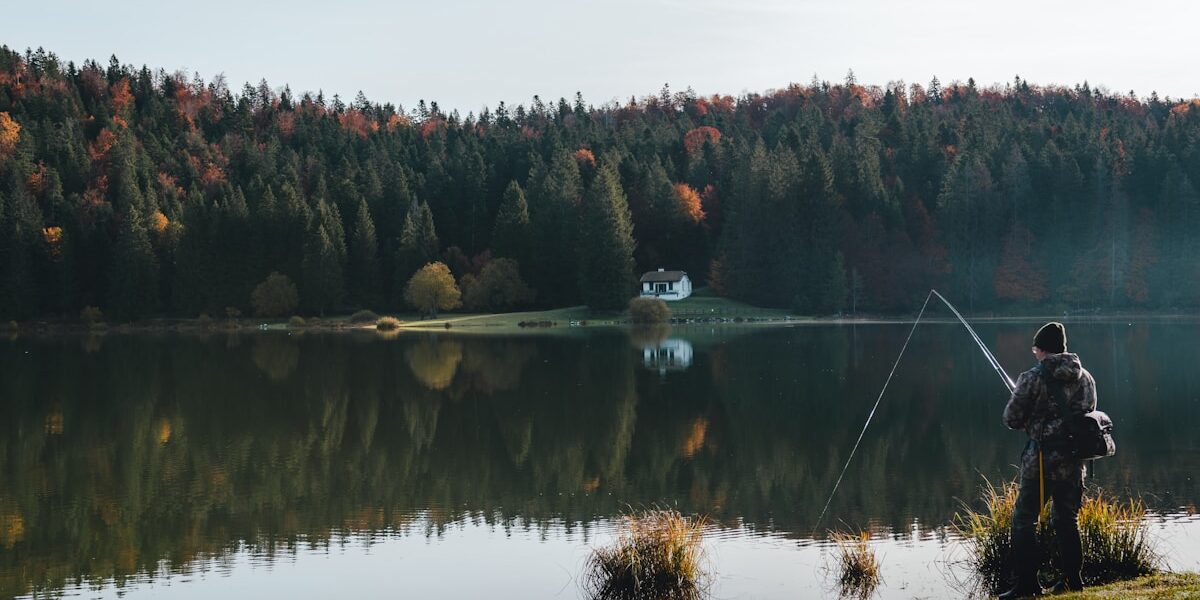
International fishing has gotten complicated with all the Instagram destination posts and luxury lodge marketing flying around. As someone who’s fished four continents and discovered that a Scottish gillie can humble you faster than any fish, I learned everything there is to know about why crossing a border with a rod tube changes your entire relationship with the sport. Today, I will share it all with you.
The gillie — that’s what Scots call a fishing guide — handed me a rod that looked museum-worthy. “Mind your backcast,” he said in an accent so thick I had to concentrate. “The salmon have been here longer than your country’s existed. They deserve proper respect.”
That moment on Scotland’s River Spey started a love affair with international fishing that’s taken me across four continents, introduced me to species I’d never imagined, and taught me that fishing culture varies as much as the fish themselves.
Why Fish Internationally?
American anglers have incredible fishing at home — Florida flats, Alaska salmon, Texas bass. So why leave?
Honestly, it’s less about the fish and more about the experience:
- Cultural immersion — Fishing with locals reveals aspects of culture tourists never see
- Unique species — Some fish simply don’t exist in North American waters
- Different approaches — Techniques developed over centuries abroad can improve your fishing at home
- Adventure — Fishing in truly foreign environments reawakens that discovery feeling you had as a kid
Scotland: Where Atlantic Salmon Were Born
Scottish salmon fishing is less sport than religion — one predating written history, continuing with rituals unchanged for centuries. The great rivers — Tweed, Spey, Dee, Tay — hold Atlantic salmon returning from the sea each year, following routes their ancestors swam for thousands of years.
Requires patience and humility. Atlantic salmon are notoriously difficult, often refusing for days despite being clearly visible. The technique — Spey casting with long double-handed rods — was developed specifically for wide rivers with tight backcasts. Probably should have led with this section, honestly. Learning to Spey cast on the actual River Spey was a humbling education.
My first Scottish salmon took three days of casting. When it finally ate my fly, I nearly forgot to set the hook from shock. Fifteen minutes of heart-pounding uncertainty before the gillie netted a perfect 12-pound fish.
“Not a large one,” the gillie noted. “But she’ll do for your first.”
Iceland: Fire, Ice, and Wild Browns
Iceland’s trout fishing defies description. Brown trout isolated from European populations for thousands of years, growing large and aggressive in water so clear you could read a newspaper at fifteen feet. And the landscape — volcanic black beaches, hot springs steaming in the distance, midnight sun that never quite sets.
Fished the Laxa i Adaldal during the brief summer season. Fish averaged 3-4 pounds with occasional specimens approaching 10. They ate dry flies with enthusiasm that would make a spring creek angler weep with joy.
What I remember most is the silence. Iceland has fewer people than most American cities, spread across an island the size of Kentucky. On the river I might go hours without seeing another human. Just me, the trout, and a landscape that felt like another planet entirely.
Argentina: The Patagonian Frontier
Argentine Patagonia is basically what Montana would be if Montana had no roads, no people, and fish that had never seen a fly. Brown and rainbow trout descended from early 1900s stockings have gone wild and large and magnificently naive over the century since.
Fishing is technical — clear water, selective fish, match-the-hatch situations rivaling any American spring creek. But the setting elevates everything. Andes in the distance. Condors overhead. Rivers flowing through ranches unchanged for a hundred years.
My largest Argentine brown — 26 inches, ate a tiny emerger — fought with the strength of a fish twice its size. When I finally landed it, my guide crossed himself and muttered something in Spanish. Even he was impressed, and he’d fished these waters his whole life.
New Zealand: Sight-Fishing Paradise
South Island contains what many consider the world’s finest sight-fishing for trout. Water clarity is almost impossible to believe — spotting fish from distances that seem like exaggeration until you experience them firsthand.
Technique is pure hunting. Walk banks searching for fish, often spotting them from 50 yards away. Then the stalk — approach carefully, read the fish’s position and feeding rhythm, plan the cast. One wrong step, one sloppy presentation, and the fish is gone. Most demanding trout fishing I’ve experienced. And when everything works — spot, stalk, cast, hook a five-pound brown that had no idea you existed — most rewarding too.
Japan: Tenkara and Tradition
Before Western fly fishing reached Japan, local anglers developed tenkara — simple fixed-line rods and sparse flies, perfected over centuries for mountain stream fishing. Just now reaching American awareness.
Fishing tenkara in Japan isn’t just about catching yamame and iwana (Japanese trout species, both beautiful and willing). It’s about experiencing a fishing culture developed in complete isolation from Western influence. The philosophy is different. The approach is different. The connection to nature feels different.
My tenkara guide in the mountains near Nagano barely spoke English. My Japanese was nonexistent. We communicated through gesture, demonstration, and the universal language of fishing. By day’s end I felt I understood something new about why we fish at all. That’s what makes international fishing endearing to us world-wandering anglers — it expands your definition of the sport itself.
Planning International Trips
Start with Reputable Outfitters
International logistics are complex. Work with established outfitters handling permits, transportation, lodging, and local knowledge. DIY international fishing is possible but requires serious research.
Understand Local Regulations
Rules vary dramatically by country. Some waters strictly catch-and-release. Some require specific licenses. Some are privately controlled. Know before you go.
Pack Strategically
Airlines have baggage limits. Bring versatile gear covering multiple situations rather than specialized equipment for every scenario. Good lodges can usually provide tackle if needed.
Embrace the Culture
Fishing is only part of the experience. Engage with local customs. Try local food. Learn basic phrases. Your trip will be richer for the effort.
The International Angler’s Perspective
Fishing internationally changes how you think about fishing everywhere. You return home with new techniques, new perspectives, and deeper appreciation for the diversity of angling culture worldwide. You realize fishing isn’t just what we do — it’s a fundamental human activity connecting anglers across languages, borders, and centuries.
The fish are different. Methods are different. Landscapes are different. But the essential experience — patience and persistence, joy of success and lessons of failure — is universal. That’s a lesson worth traveling for.

Stay in the loop
Get the latest wildlife research and conservation news delivered to your inbox.