Mountain stream fishing has gotten complicated with all the gear lists and social media trail maps flying around.
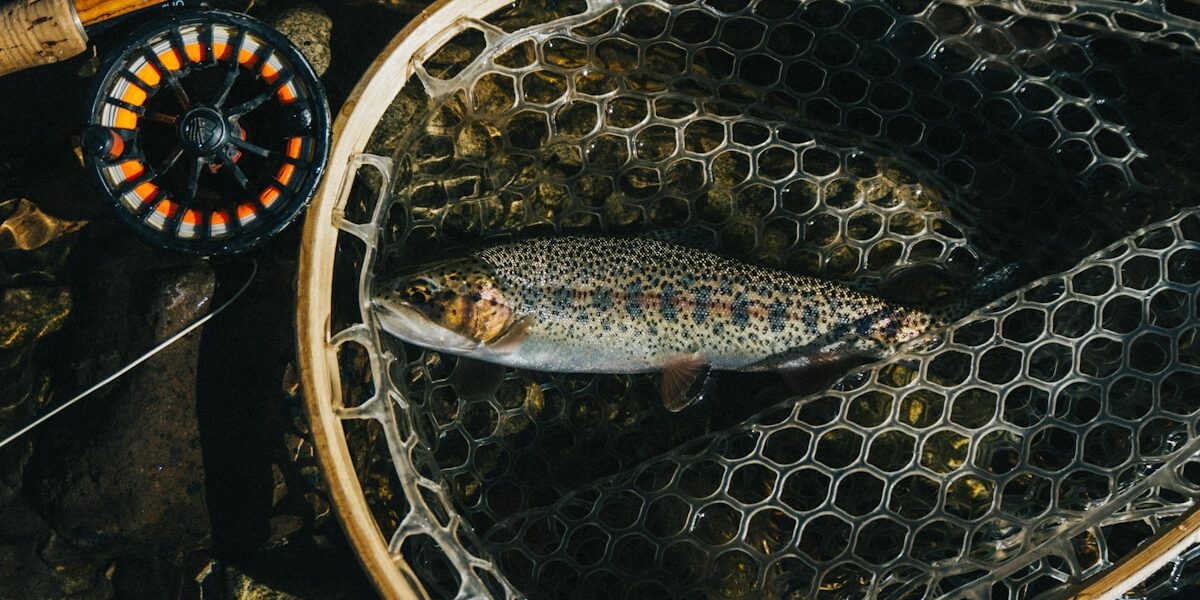
The stream was barely ten feet wide, tumbling over granite boulders through a forest of spruce and fir. Above me, peaks still holding patches of July snow. Below, in a pool no bigger than a bathtub, a wild brook trout rose to sip something invisible off the surface. That’s mountain stream fishing — as close to fishing’s essence as you can get.
The Appeal of Small Water
In an age of fish finders, trolling motors, and high-tech everything, mountain stream fishing offers something increasingly rare: simplicity. Short rod, a few flies or small lures, and willingness to walk. That’s the whole kit. The fish aren’t big by trophy standards. But they’re wild, beautiful, and they live in settings that stop you mid-cast just to look around and remember where you are.
I’ve fished marlin in Mexico, salmon in Alaska, and bass in a dozen states. But the fishing that brings me the most pure joy happens on streams you’ve never heard of, for fish that fit in my hand, in places where I might not see another angler all day. Everything else in fishing is complicated. This is simple.
The Species of High Country
Brook Trout
Not actually a trout but a char — a technical distinction that matters to biologists and nobody else on the streambank. Brook trout are the native salmonid of eastern mountain streams. Their colors are almost too beautiful to describe: olive backs with squiggly worm-track patterns, red spots ringed in blue halos, fins edged in white over orange. They’ve declined in much of their native range from habitat loss and competition with stocked fish, but in remote headwaters they hang on. Finding a population of wild brookies in a stream that’s never seen a hatchery truck feels like finding something that was almost lost.
Cutthroat Trout
Native western trout, identified by those distinctive red slashes under the jaw. Different subspecies occupy different drainages — Colorado River cutthroat, Yellowstone cutthroat, westslope cutthroat — each adapted to its home water over thousands of years. Like brookies, they get outcompeted by non-natives in accessible streams but thrive up high where nothing else wants to live. The higher you hike, the more likely you are to find the real thing.
Rainbow Trout
Not native to most mountain streams but stocked widely and now self-sustaining in many of them. Wild stream-bred rainbows in cold mountain water are genuinely gorgeous fish — faster, stronger, and more colorful than their hatchery cousins in every way that matters.
Brown Trout
European imports that have gone native over a century of establishment in American mountain streams. More nocturnal and selective than the other species, which makes them interesting to target when you want to work for your fish rather than just find them.
Reading Mountain Water
Mountain streams demand different thinking than bigger rivers. Fish concentrate in specific spots. Finding those spots — and approaching them correctly — is most of the job.
Plunge Pools
Where water drops over rocks or logs, turbulence carves a deep pocket. Trout sit there comfortably while food washes down to them. The head of the pool, where current first slows, is almost always the prime position.
Undercut Banks
Erosion creates hollow spaces under banks where trout hide and ambush prey. You need to drift a fly tight to the bank edge — two inches too far out and you’re in dead water with nothing underneath you.
Boulder Pockets
Big rocks break current. Trout rest in the cushion of slower water in front of the rock and in the eddy behind it. Both spots hold fish. Both deserve a cast on every pass.
Tailouts
The smooth shallow water at the downstream end of pools concentrates food and produces rising fish during hatches. Approach carefully though — flat, clear surfaces reveal every shadow and footfall. Spooking tailout fish is embarrassingly easy, and they don’t come back quickly.
Tactics for Small Streams
The Short Game
Long casts aren’t possible or necessary. Most presentations happen at 15 to 30 feet. Accuracy matters infinitely more than distance here. Dropping a fly into a six-inch window between two boulders often determines whether the whole spot produces anything. Practice short, accurate casts at home until they’re reflexive.
Stealth Above All
Small stream trout spook at everything. Stay low. Move slowly. Fish upstream so you’re approaching from behind and the fish are facing away from you. In clear water, back off further than you think necessary and use the longest practical cast you can manage accurately. I’m apparently someone who learned this lesson the hard way multiple times before it stuck.
Fish Every Spot
In tiny water, the difference between a spot holding a trout and a spot holding nothing might be a single rock creating a foot of slower current. Don’t skip water that looks too small. Some of my best fish have come from places I almost walked past without casting.
Simple Patterns Work
Mountain trout see fewer flies than heavily pressured tailwater fish. Simple high-visibility attractor patterns — Royal Wulffs, Elk Hair Caddis, Parachute Adams — outperform complex match-the-hatch approaches most of the time. For spin gear, small spinners and spoons in gold, silver, or natural colors produce consistently. The thing is, don’t overthink it. The fish are rarely that selective up high.
My Favorite Mountain Stream Memory
August in Colorado. A drainage requiring a seven-mile hike just to reach the good water. Following a thread of water through increasingly vertical terrain, gaining elevation with each mile. The topo map showed a lake at 11,500 feet; below it, according to old state survey records, lived greenback cutthroat trout — one of the rarest trout subspecies in North America, down to near-extinction before a recovery program brought them back.
Found them in a meadow section at 10,800 feet where the stream braided through willow flats and moved slowly enough to see the bottom. Not big fish — the largest maybe ten inches. But their colors were something I’ll never forget as long as I’m fishing: gold flanks, rose-pink throats, spots like scattered embers on a dark background, red jaw slashes that seemed almost painted on.
Caught a dozen that afternoon on small dry flies, releasing each one back into water their ancestors had occupied since the last ice age. As the sun dropped behind the peaks and the air turned cold fast the way it does above 10,000 feet, I sat on a rock watching trout rise in perfect rings and understood something about why any of this matters.
It’s about the places fish take us, and the state of mind we find when we get there.
Conservation Notes
Many mountain stream trout populations face real threats that weren’t present a generation ago. Non-native competition, warming water temperatures, increased recreational pressure on once-remote streams now accessible via GPS trail apps. As anglers who love these places, there are specific responsibilities that come with that:
- Practice catch and release — Mountain trout grow slowly and recover slowly from overharvest. Handle them briefly, keep them wet, release quickly.
- Use barbless hooks — Faster, cleaner releases with less damage. Worth the small adjustment in hooking percentage.
- Stay on trails — Streamside vegetation prevents the erosion that degrades habitat and silts up spawning gravel.
- Pack out everything — These are pristine places. They should leave your visit unchanged.
- Report invasive species — Brook trout above their native range in western cutthroat streams are the problem, not the solution. Know what belongs and report what doesn’t.
Planning Your Mountain Stream Adventure
Getting started doesn’t require expensive gear or a plane ticket. Most regions have accessible high-country water within a few hours’ drive. Start here:
- Research local waters — State fish and wildlife websites have stocking reports, stream surveys, and access information that’s updated regularly.
- Get the right rod — Short (7 feet or under) and light weight makes tight-quarters casting manageable without fighting the brush on every backcast.
- Study maps — Topographic maps show gradient (which predicts stream character) and identify access points you might not find by trail alone.
- Start with accessible water — Learn the fishing on streams you can drive to before committing to a backcountry overnight trip based on theory.
- Prepare for mountain weather — Conditions change fast at elevation. Bring more layers than you think you need and rain gear regardless of the morning forecast.
The Purest Form of Fishing
Fishing started on small streams and rivers, with lines and hooks and the same fundamental problem of convincing a fish that something artificial is worth eating. Mountain stream fishing connects to that origin in a way that most modern fishing doesn’t. Stripped down, essential, no distractions between you and the water and the fish.
The fish are small. The gear is simple. The crowds are absent. The experience, if you find the right water at the right time, is profound. That’s the magic of mountain stream tales — and why the ones worth telling almost always start with a long walk uphill.


Stay in the loop
Get the latest fishing tales journal updates delivered to your inbox.