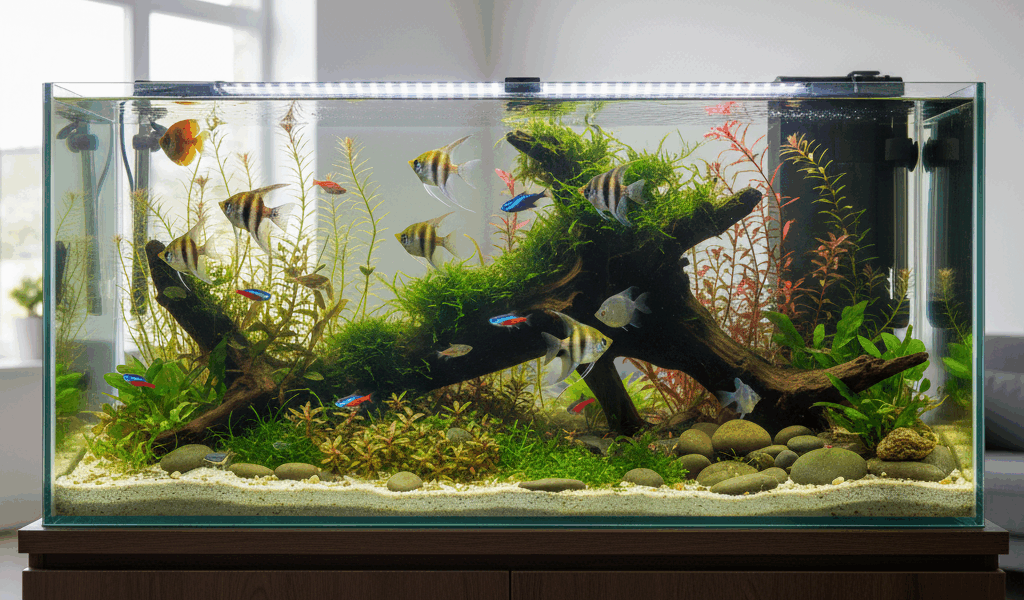
Best Fish for Freshwater Aquarium: Top 20 Species for Beginners (2026)
Setting up your first freshwater aquarium is genuinely exciting — and then you walk into the fish store and face 80 tanks, all of which look amazing, and have no idea what’s actually suitable for a beginner setup. The wrong fish turns that excitement into frustration very quickly. I’ve been keeping freshwater tanks for over a decade and made most of the classic beginner mistakes myself. Here’s what actually works.
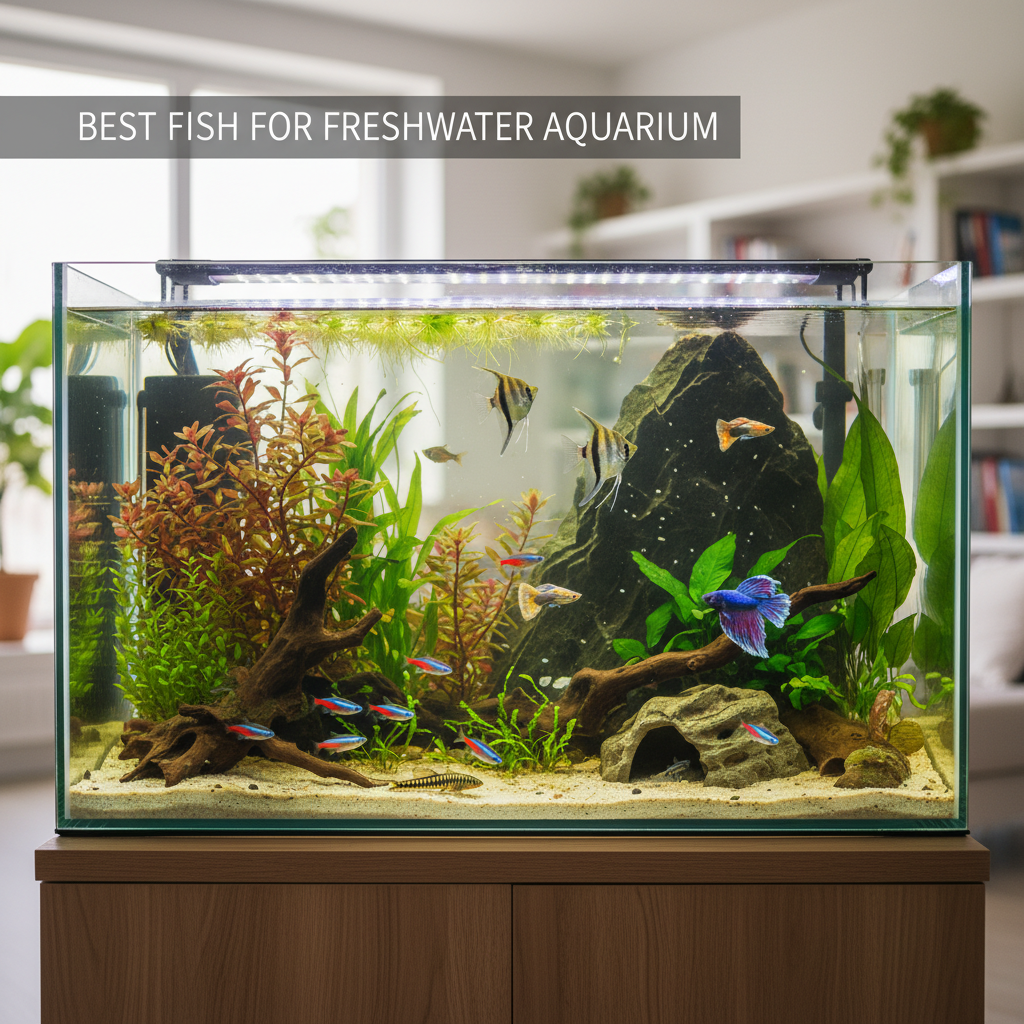
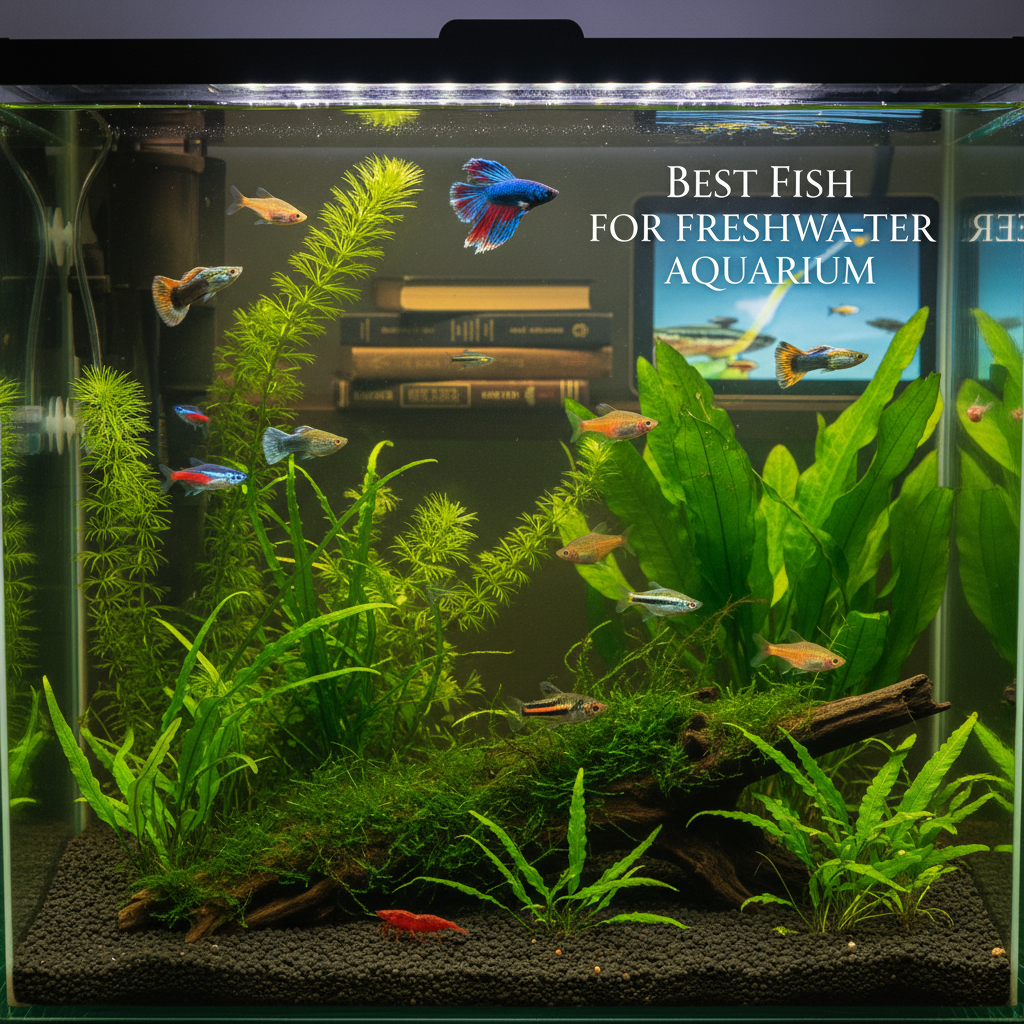
Quick Recommendations
- Easiest Overall: Betta Fish (single male)
- Best Community Fish: Neon Tetras
- Most Hardy: White Cloud Mountain Minnows
- Best Algae Eater: Corydoras Catfish
- Most Colorful: Guppies
- Best Centerpiece: Dwarf Gourami
- Best Bottom Dweller: Kuhli Loaches
What Makes a Good Beginner Fish?
Before diving into specific species, here’s what actually separates great beginner fish from the ones that end up floating within a week:
Key Characteristics:
- Hardy: Tolerates beginner mistakes like minor water quality issues
- Peaceful: Gets along with other community fish
- Forgiving: Survives occasional feeding mistakes or temperature fluctuations
- Active and visible: Swims in open areas, not hiding constantly
- Readily available: Easy to find at local pet stores
- Affordable: Won’t break the bank if something goes wrong early on
- Adaptable water parameters: Doesn’t require perfect pH or extreme conditions
Top 20 Best Freshwater Aquarium Fish
1. Neon Tetra – Best Community Fish
Care Level: Easy
Tank Size: 10 gallons minimum
Temperature: 70-81°F
Size: 1.5 inches
Lifespan: 5-10 years
Temperament: Peaceful
Why they’re perfect for beginners: Neon tetras are small, peaceful schooling fish with stunning electric blue and red coloring. They’re incredibly hardy once established and thrive in groups of six or more. That’s worth emphasizing: they genuinely need to school. A lone neon tetra is a stressed neon tetra.
Care Tips:
- Keep in groups of at least 6 — they school, and schooling reduces stress significantly
- Prefer slightly acidic water (pH 6.0-7.0)
- Feed small amounts twice daily
- Peaceful tank mates only — don’t house with anything that might chase them
- Need a well-established, stable aquarium; new tanks kill them quickly
Best tank mates: Other tetras, rasboras, corydoras, peaceful dwarf cichlids
2. Betta Fish (Siamese Fighting Fish) – Easiest Solo Fish
Care Level: Very Easy
Tank Size: 5 gallons minimum (not bowls — never bowls)
Temperature: 76-82°F
Size: 2.5-3 inches
Lifespan: 3-5 years
Temperament: Aggressive to other bettas, variable with other species
Why they’re perfect for beginners: Bettas are gorgeous, personality-filled fish that thrive in smaller tanks. They’re hardy, eat almost anything, and have a labyrinth organ that lets them breathe surface air — which makes them somewhat forgiving of lower oxygen levels. They still need a filter, though. The “betta in a vase” setup is not good husbandry.
Care Tips:
- NEVER keep two male bettas together — they’ll fight until one is dead
- They need a heater; they’re tropical fish despite the common myth otherwise
- Prefer gentle water movement — strong filter flow stresses them
- Feed betta-specific pellets or frozen bloodworms
- Avoid fin-nipping tank mates like tiger barbs
Best tank mates: Corydoras, mystery snails, shrimp (with a peaceful betta), kuhli loaches in larger tanks
3. Guppies – Most Colorful and Prolific
Care Level: Very Easy
Tank Size: 5 gallons for a trio, 10+ recommended
Temperature: 72-82°F
Size: 1-2 inches
Lifespan: 2-3 years
Temperament: Peaceful
Why they’re perfect for beginners: Guppies are colorful, active, and nearly indestructible. They breed like crazy, which is exciting for beginners — until you have 40 guppies and no plan. Have a plan for babies before they arrive, because they will arrive whether you’re ready or not.
Care Tips:
- Males are more colorful than females
- Keep a ratio of 2 females per male to prevent harassment
- They will breed. This is not optional.
- Feed flake food 1-2 times daily; easy to overfeed
- Very adaptable to a range of water conditions
4. Corydoras Catfish – Best Bottom Feeder
Care Level: Easy
Tank Size: 10 gallons
Temperature: 72-78°F
Size: 2-3 inches depending on species
Lifespan: 5-10 years
Temperament: Peaceful
Why they’re perfect for beginners: Corydoras are peaceful, social bottom-dwellers that help keep your tank clean by eating leftover food. They’re also just genuinely entertaining to watch — they interact with each other in ways most fish don’t. I’m apparently the type who anthropomorphizes corydoras immediately, and they work for me in every tank I’ve set up.
Care Tips:
- Keep in groups of 4-6 minimum — they’re social and stressed when alone
- Need sand or very smooth gravel; their barbels damage easily on coarse substrate
- Feed sinking pellets and algae wafers to reach them at the bottom
- Peaceful with ALL community fish
- Need clean, well-oxygenated water
Popular species: Bronze cory, Julii cory, Panda cory, Peppered cory
5. Platy Fish – Hardy Community Fish
Care Level: Very Easy
Tank Size: 10 gallons
Temperature: 70-77°F
Size: 2-3 inches
Lifespan: 3-5 years
Temperament: Peaceful
Why they’re perfect for beginners: Platies are colorful, active, and one of the most forgiving freshwater fish available. They come in dozens of color varieties and tolerate a wide range of water conditions with minimal complaint.
Care Tips:
- Live-bearers — will breed readily, same caveat as guppies
- Tolerate wide range of water conditions
- Eat almost any fish food available
- Keep in groups of 3-5
- Prefer harder, more alkaline water than tetras — worth knowing if you’re mixing species
6. Mollies – Versatile and Adaptable
Care Level: Easy
Tank Size: 20 gallons
Temperature: 72-78°F
Size: 3-5 inches
Lifespan: 3-5 years
Temperament: Peaceful
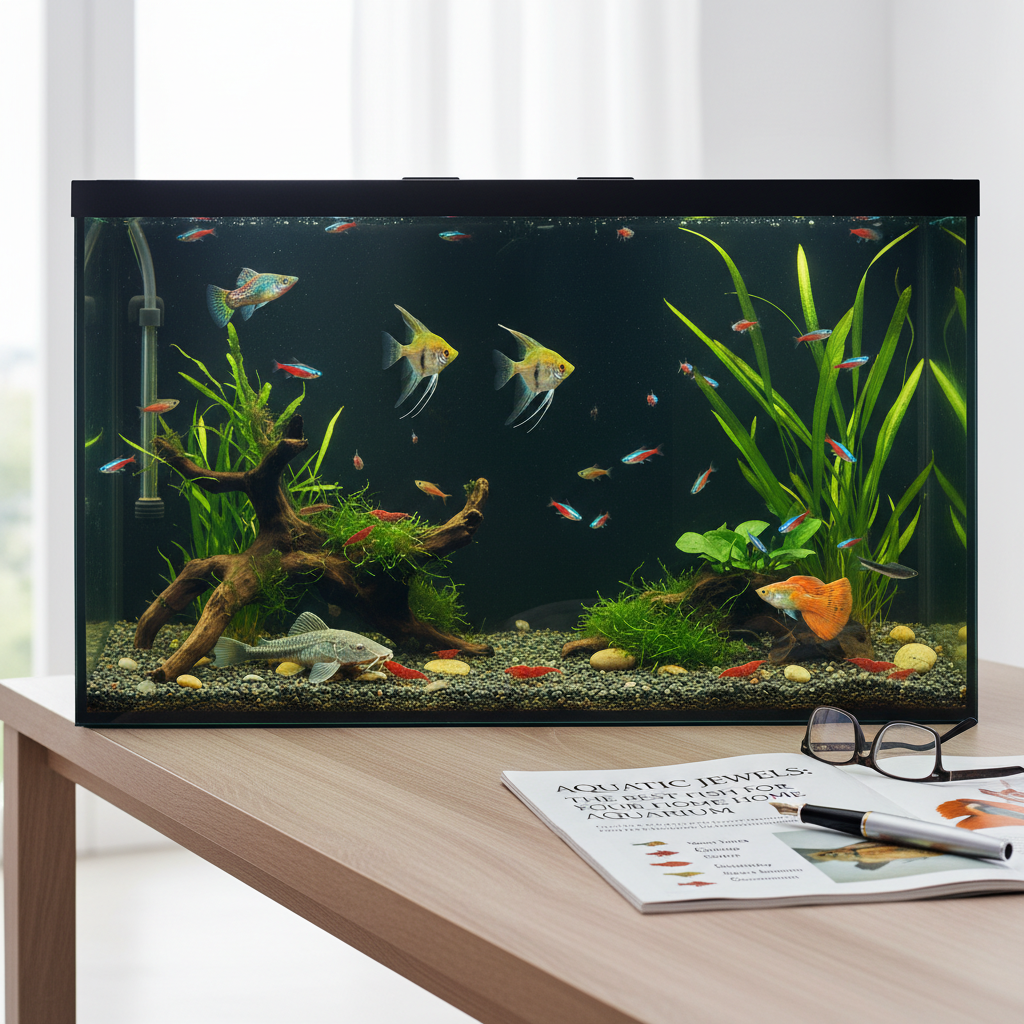
Why they’re good for beginners: Mollies are larger, peaceful community fish that can adapt to freshwater or lightly brackish conditions. They’re hardy, come in several color varieties, and add some size diversity to a community tank that otherwise runs small.
Care Tips:
- Need a larger tank than platies or guppies — they grow bigger than they look in the store
- Prefer slightly harder, more alkaline water
- Adding a small amount of aquarium salt is beneficial but not strictly required
- Live-bearers — will reproduce
- Need a well-filtered tank to handle their waste output
7. White Cloud Mountain Minnow – Most Hardy
Care Level: Very Easy
Tank Size: 10 gallons
Temperature: 64-72°F (notably cooler than most tropical fish)
Size: 1.5 inches
Lifespan: 3-5 years
Temperament: Peaceful
Why they’re perfect for beginners: Nearly indestructible. They tolerate cooler temperatures and don’t need a heater in many climates, which removes one failure point from your setup. Often called “the beginner’s neon tetra” for a reason.
Care Tips:
- Don’t need a heater — prefer cooler water than most tropical species
- School of 6+ recommended
- Very active swimmers that use the whole tank
- Tolerate wide range of conditions
- Great for unheated tanks in temperate climates
8. Zebra Danio – Active and Entertaining
Care Level: Very Easy
Tank Size: 10 gallons
Temperature: 64-75°F
Size: 2 inches
Lifespan: 3-5 years
Temperament: Peaceful but very active
Why they’re good for beginners: Zebra danios are incredibly hardy, tolerate cooler temperatures, and are very active — they’re one of those fish that make a tank look alive rather than just occupied. Worth mentioning: they move fast, so slow or long-finned tank mates can get stressed by their constant activity.
Care Tips:
- Keep in groups of 5+
- VERY active — need adequate swimming room
- Fast swimmers; slow or timid fish may get stressed sharing their space
- Tolerate wide temperature range
- Eat flake food readily; easy to feed
9. Cherry Barb – Peaceful and Pretty
Care Level: Easy
Tank Size: 20 gallons
Temperature: 73-81°F
Size: 2 inches
Lifespan: 4-6 years
Temperament: Peaceful
Why they’re good for beginners: Unlike many barbs, which develop a reputation for fin-nipping, cherry barbs are peaceful and work well in community tanks. Males develop beautiful deep red coloration when comfortable — one of the nicest-looking fish in this size range.
10. Dwarf Gourami – Best Centerpiece Fish
Care Level: Moderate
Tank Size: 10 gallons
Temperature: 72-82°F
Size: 2-3 inches
Lifespan: 4-6 years
Temperament: Peaceful
Why they’re good centerpiece fish: Dwarf gouramis are colorful, personality-filled fish that become the focal point of any tank they’re in. Labyrinth fish that breathe surface air, they have interesting behaviors that most other fish in this category lack.
Care Tips:
- Males are dramatically more colorful than females
- Keep only one male per tank — they’re territorial with each other
- Labyrinth fish that breathe air from the surface — don’t cover every inch of the surface
- Prefer planted tanks with some hiding spots
- Generally peaceful but can be territorial with similar-looking fish
Note: Dwarf gouramis can be prone to Dwarf Gourami Disease (iridovirus). Buy from reputable sources and quarantine new fish.
11. Harlequin Rasbora – Elegant Schooling Fish
Care Level: Easy
Tank Size: 10 gallons
Temperature: 72-81°F
Size: 2 inches
Lifespan: 5-8 years
Peaceful schooling fish with a distinctive triangular black marking on the rear half of the body. Hardy, easy to feed, and genuinely attractive in a school of 8 or more.
12. Kuhli Loach – Best Bottom Dweller
Care Level: Easy
Tank Size: 15 gallons
Temperature: 73-86°F
Size: 3-4 inches
Lifespan: 10+ years
Eel-like, peaceful, entertaining cleanup crew. Keep in groups of 3 or more — they’re social and will spend more time visible when they have company. They’ll hide constantly if alone.
13. Swordtail – Active and Colorful
Care Level: Easy
Tank Size: 15 gallons
Temperature: 72-79°F
Size: 3-5 inches
Lifespan: 3-5 years
Hardy live-bearers with the distinctive elongated lower tail lobe on males. Active swimmers that add visible movement to any mid-size tank.
14. Mystery Snail – Best Beginner Invertebrate
Care Level: Very Easy
Tank Size: 5 gallons
Temperature: 68-82°F
Size: 2 inches
Lifespan: 1-2 years
Excellent algae eaters that won’t overpopulate like pest snails. Come in multiple colors — gold, blue, black, ivory. Interesting to watch and genuinely useful.
15. Otocinclus Catfish – Tiny Algae Eater
Care Level: Moderate
Tank Size: 10 gallons
Temperature: 72-79°F
Size: 1.5 inches
Lifespan: 3-5 years
Small, peaceful, and specifically targeted at algae — green spot algae, brown diatoms, soft green algae on plant leaves. Keep in groups of 4-6 and make sure they have enough algae to eat; they’ll starve in a clean tank.
16. Bristlenose Pleco – Algae-Eating Powerhouse
Care Level: Easy
Tank Size: 30 gallons
Temperature: 60-80°F
Size: 4-6 inches
Lifespan: 10-15 years
Unlike common plecos, which grow to 18+ inches and need enormous tanks, bristlenose stay at a manageable 4-6 inches. Excellent algae control, long-lived, and peaceful. Worth the 30-gallon requirement.
17. Celestial Pearl Danio – Nano Tank Gem
Care Level: Moderate
Tank Size: 10 gallons
Temperature: 73-79°F
Size: 1 inch
Lifespan: 3-5 years
Stunning tiny fish with pearl-like white spots on a dark blue-green body and orange fin stripes. Perfect for planted nano tanks. Somewhat shyer than other fish on this list — give them cover.
18. Endler’s Livebearer – Guppy Alternative
Care Level: Easy
Tank Size: 10 gallons
Temperature: 72-82°F
Size: 1 inch
Lifespan: 2-3 years
Smaller and arguably more colorful than guppies, with more compact body shape. Perfect for nano community tanks. They breed too, but produce fewer offspring at a time.
19. Honey Gourami – Peaceful Alternative to Dwarf Gourami
Care Level: Easy
Tank Size: 10 gallons
Temperature: 72-82°F
Size: 2 inches
Lifespan: 4-8 years
Less prone to disease than dwarf gouramis, very peaceful, and males turn a warm golden-orange color when happy and healthy. One of the most underrated beginner fish available.
20. Amano Shrimp – Best Cleanup Crew
Care Level: Moderate
Tank Size: 10 gallons
Temperature: 70-80°F
Size: 2 inches
Lifespan: 2-3 years
Excellent algae and debris eaters, peaceful with essentially everything, and entertaining to watch as they work through a tank. Harder to breed than red cherry shrimp but won’t overpopulate.
Sample Tank Stocking Ideas
10 Gallon Community Tank
- 8 Neon Tetras
- 4 Corydoras Catfish
- 2 Mystery Snails
20 Gallon Planted Tank
- 10 Harlequin Rasboras
- 6 Corydoras Catfish
- 4 Kuhli Loaches
- 6 Otocinclus Catfish
- 3 Amano Shrimp
20 Gallon Livebearer Tank
- 6 Platies
- 6 Guppies
- 4 Corydoras Catfish
- 2 Mystery Snails
5 Gallon Betta Tank
- 1 Male Betta
- 2 Mystery Snails
- 3 Amano Shrimp (only with a demonstrably peaceful betta)
Fish to AVOID as a Beginner
These species look tempting in the store but cause problems in beginner setups:
- Common Pleco: Grows to 2 feet. Needs a 75+ gallon tank. Most people don’t find this out until they already have one.
- Oscar: Large, aggressive, messy, and requires 75+ gallons. Beautiful fish, wrong fish for a starter tank.
- Goldfish: Need cold water, large tanks, and completely different care parameters than tropical fish. Don’t mix them.
- Tiger Barbs: Aggressive fin-nippers that stress long-finned tank mates. Not community fish.
- Most Cichlids: Too territorial and aggressive for community tanks. Some species are workable but research first.
- Chinese Algae Eater: Peaceful when small, increasingly aggressive as it matures, and tends to attach itself to larger fish.
- Discus: Beautiful but demanding — need pristine water, high temperatures, and experience. Not a beginner fish.
- Arowana: Grows massive, jumps, needs a very large tank. Not suitable for any beginner setup.
Essential Care Requirements
Regardless of which fish you choose, you’ll need:
Equipment:
- Filter: Appropriate for your tank size — don’t under-filter
- Heater: For tropical fish (adjustable, 3-5 watts per gallon is a common starting point)
- Thermometer: Separate from the heater — verify temperature independently
- Light: For viewing and for live plants if you choose to keep them
- Water conditioner: Removes chlorine and chloramine from tap water
- Test kit: Liquid test kits for ammonia, nitrite, and nitrate — the API Master Test Kit is the standard recommendation
Maintenance Schedule:
- Daily: Feed fish, check temperature, observe for anything unusual
- Weekly: 25-30% water change, test water parameters
- Monthly: Rinse (don’t replace) filter media in tank water to preserve beneficial bacteria
- As needed: Algae cleaning, plant trimming, equipment checks
The Nitrogen Cycle (Most Important Concept)
Before adding fish, your tank needs to complete the nitrogen cycle. This is the most important thing to understand before buying anything:
- Fish waste produces ammonia — toxic to fish at low concentrations
- Beneficial bacteria convert ammonia to nitrite — also toxic
- Different bacteria convert nitrite to nitrate — much less toxic in small amounts
- Water changes remove accumulated nitrate
Fishless cycling (recommended): Add an ammonia source — pure ammonia drops, fish food, or a small piece of raw shrimp — and wait 4-6 weeks for the bacterial colonies to establish before adding fish. Test the water throughout.
Fish-in cycling (less ideal but common): Add only very hardy fish in small numbers, test water daily, and do frequent water changes to keep ammonia and nitrite below dangerous levels while the cycle establishes. Harder on the fish but workable with the right species.
Common Beginner Mistakes
- Overstocking: Too many fish means water quality crashes. The general starting rule — 1 inch of fish per gallon — is rough, but better than ignoring stocking density entirely.
- Not cycling the tank: Adding fish to an uncycled tank produces an ammonia spike that kills them. This is the number one beginner mistake.
- Overfeeding: Feed only what fish eat in 2-3 minutes, once or twice daily. Excess food rots and destroys water quality fast.
- Incompatible tank mates: Research compatibility before buying. What’s peaceful at the store may be a predator in your tank.
- Skipping water changes: Even with excellent filtration, regular water changes are necessary. There’s no shortcut here.
- No water testing: You can’t fix problems you can’t measure. Test kits pay for themselves immediately.
- Buying unhealthy fish: Inspect fish carefully before buying — look for clamped fins, white spots, unusual behavior, or lethargy. Sick fish introduce disease to your whole tank.
The best freshwater fish for beginners are hardy, peaceful, and forgiving. Start with easy species like guppies, platies, neon tetras, or corydoras. Add fish gradually, give the tank time to adjust, and resist the urge to rush the process. Most problems in beginner tanks trace back to moving too fast.
Research your fish before you buy them — understand tank size requirements, temperament, and care needs before you’re standing at the counter. That single habit prevents most of the mistakes that end beginner aquariums early.
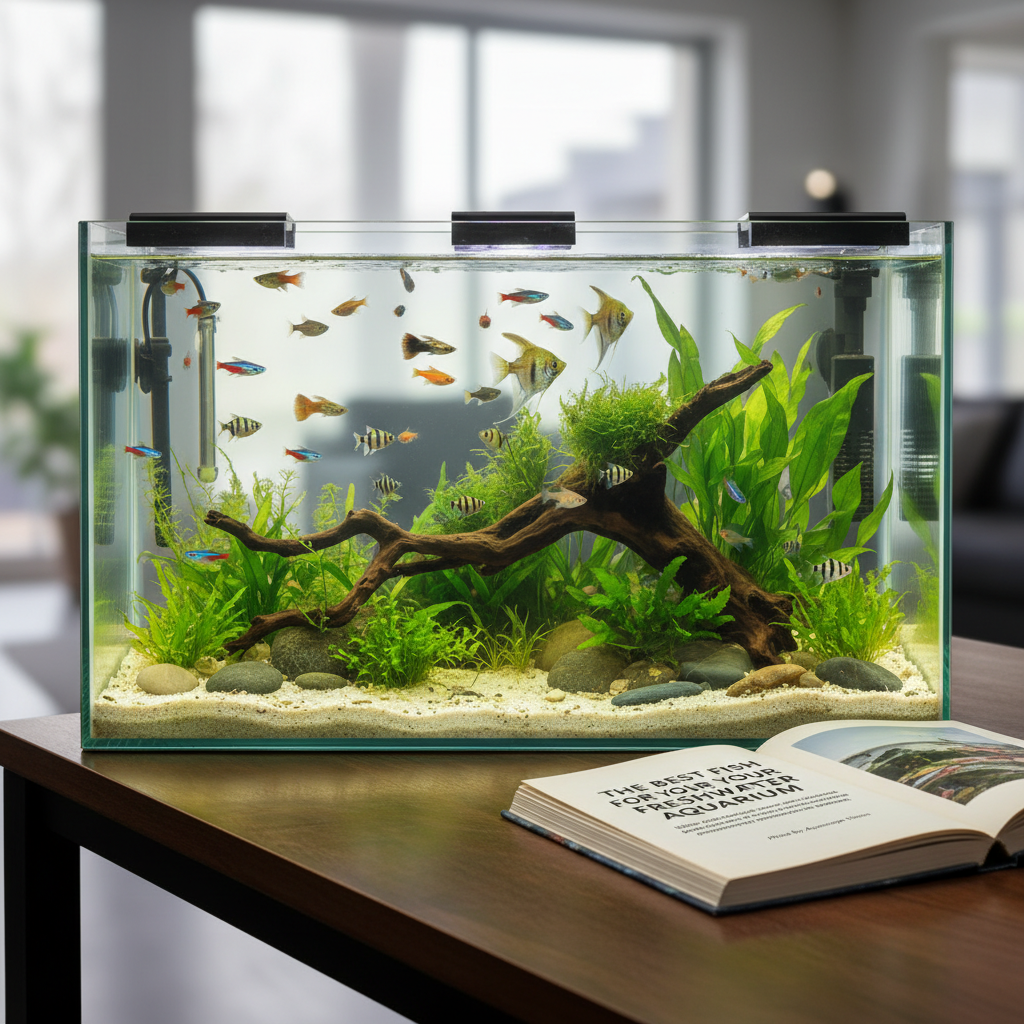
With proper care, these beginner fish will thrive and provide years of genuine enjoyment. The hobby is rewarding when you start with the right foundation.

Stay in the loop
Get the latest wildlife research and conservation news delivered to your inbox.