Understanding the Golden Rainbow Trout
Golden rainbow trout have gotten more attention in recent years as stocking programs have expanded across the northeastern and mid-Atlantic United States. As someone who grew up fishing West Virginia and Pennsylvania waters where these fish have been around for decades, I learned everything there is to know about them. They’re beautiful, they’re catchable, and their story is more interesting than most anglers realize.
Origin and Genetic Mutation
Golden rainbows aren’t a separate species — they’re a color variant of the standard rainbow trout (Oncorhynchus mykiss). The golden coloration results from a specific genetic mutation first documented in 1955 at a hatchery in West Virginia. Hatchery workers noticed a small number of trout with unusual golden pigmentation, and rather than dismissing it, they began selective breeding to fix the trait. Over several generations, the vibrant golden-yellow we recognize today was stabilized. That’s how a single mutation spotted in a batch of hatchery trout became a fixture in sport fishing across the country.
Physical Characteristics
The coloration is the obvious distinguishing feature: golden-yellow across the body, contrasted by a bright red or pink lateral stripe running from behind the gill cover to the tail. The pattern is striking enough that once you’ve seen a golden rainbow, you won’t confuse it with anything else. Beyond the color, they share the same body shape as standard rainbows — streamlined, built for cold fast water. Adults typically run 20 to 30 inches and weigh 5 to 15 pounds, though hatchery fish in well-maintained stocked ponds occasionally grow larger.
Habitat and Distribution
Golden rainbows share habitat requirements with regular rainbows: cold, well-oxygenated water with adequate flow. They don’t establish self-sustaining wild populations easily, which is why they’re considered a hatchery fish in most contexts. They’ve been stocked in waters across Pennsylvania, West Virginia, Maryland, New York, and beyond — popular specifically because their golden color makes them dramatically visible, which adds to the experience for anglers targeting them. That’s worth mentioning: these fish are stocked for recreational value, and they deliver on it.
Fishing for Golden Rainbow Trout
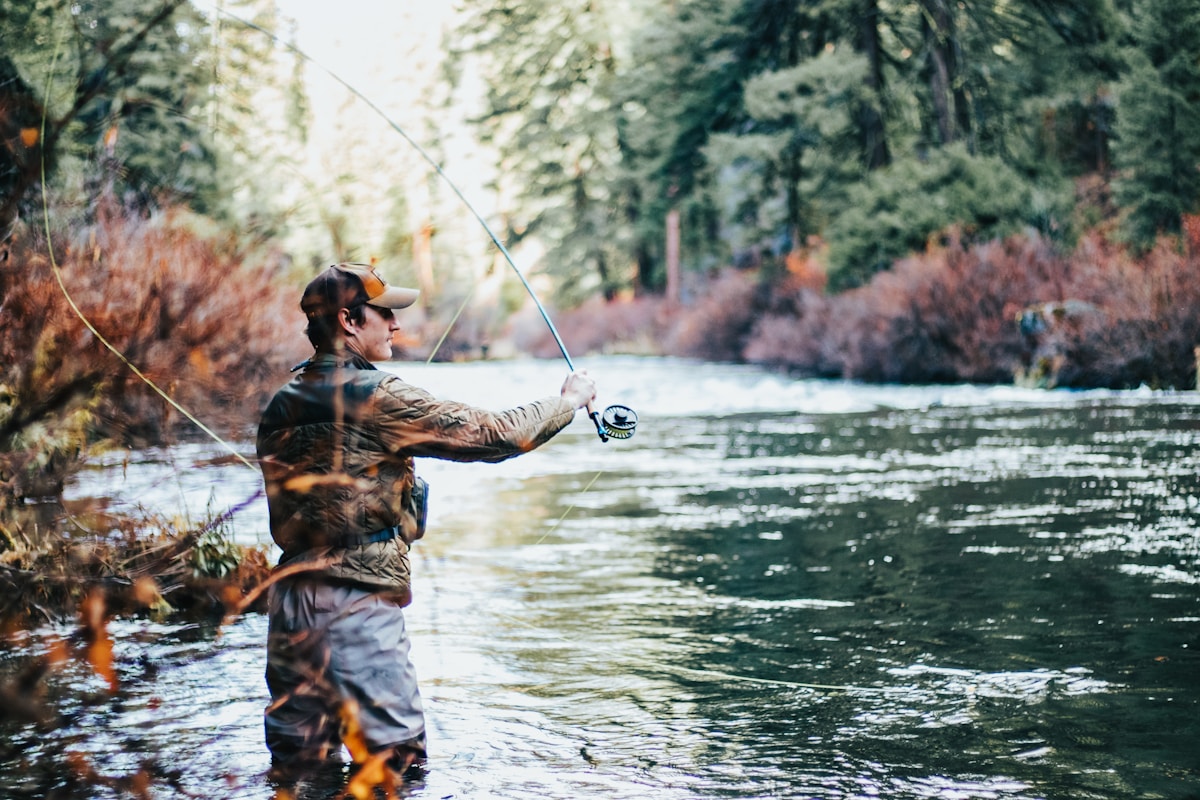
- Bait and Equipment: Fish for golden rainbows the same way you’d fish for regular rainbows. Live bait — nightcrawlers, minnows, salmon eggs — works consistently. Berkley PowerBait in chartreuse or orange is effective in stocked ponds where hatchery fish have been conditioned to pellet food. Spinners like the Mepps Aglia in gold or silver produce well. Fly fishing with small nymphs and soft hackles works in moving water. Light to medium spinning gear with 4 to 8 lb test is appropriate.
- Timing: Early morning and late afternoon in spring and fall, when water temperatures are in the 50s to low 60s Fahrenheit. During summer heat, fish hold deeper or in shaded, spring-fed sections. Stocking days and the week immediately following are reliably productive if you can time your trip accordingly.
Organized fishing events targeting golden rainbows have become popular in stocked waters across the Northeast. Worth mentioning: these events often draw families and casual anglers who’d otherwise not be on the water, which builds the broader fishing community and the license revenue that funds stocking programs.
Golden Rainbow Trout in Aquaculture
Golden rainbow trout are raised in controlled hatchery environments with specific water temperature, oxygen, and cleanliness requirements. Cold water — typically below 60°F — is essential; warm water stresses trout quickly and increases disease susceptibility. The color makes them visually distinctive at market and at fishing events, which contributes to their continued appeal in aquaculture beyond just the stocking context.
Conservation and Genetic Diversity
The challenge with selective breeding for a specific visible trait is that it can narrow the genetic pool over time, increasing vulnerability to disease and environmental stress. Responsible hatcheries manage this by periodically introducing wild-type genetics into their golden rainbow broodstock — keeping the color trait dominant while maintaining enough genetic breadth to support a healthy, disease-resistant population. It’s a balance that requires active management rather than simply letting the same fish reproduce indefinitely.
Culinary Uses and Taste
Golden rainbow trout eat extremely well. The flesh is firm, white to pale pink, mild, and flaky — essentially identical to regular rainbow trout at the table, which is high praise. They take to virtually any preparation: pan-fried with butter and fresh herbs, grilled with lemon and garlic, baked whole, or cold-smoked. If you catch and keep a golden rainbow from cold spring water in April or October, you’re eating one of the better things freshwater fishing produces.
The Status of the Golden Rainbow Trout Today
Golden rainbows have moved from a curiosity to a staple of stocked sport fishing in the regions where they’re available. They attract anglers who wouldn’t otherwise fish for trout, boost local tourism on stocking days, and provide an accessible trophy-fish experience in waters that might otherwise only offer standard hatchery rainbows. Their management reflects a pragmatic balance: maximize recreational value while maintaining the genetic health and ecological responsibility that makes continued stocking sustainable.
The Role of Hatcheries
Hatcheries make the golden rainbow possible at any meaningful scale. Through careful selection and breeding, they’ve produced generations of fish with consistent coloration that can be stocked predictably across different environments. The West Virginia Division of Natural Resources, where this all started in 1955, remains one of the primary sources of golden rainbow broodstock for the eastern United States. The history runs through a single hatchery observation made by a worker who looked at a batch of trout and noticed something different.
Impact on Local Ecosystems
Introducing any hatchery fish to new waters requires ecological assessment first. Golden rainbows don’t naturally reproduce at significant rates, which reduces some risks — they won’t outcompete wild trout populations through unchecked reproduction. However, they do compete for food and space while present, so stocking densities and timing are managed carefully by state fisheries biologists. The goal is recreational benefit without disrupting native fish communities or the habitat conditions that support them.
Recommended Fishing Gear
Garmin GPSMAP 79s Marine GPS – $280.84
Rugged marine GPS handheld that floats in water.
Garmin inReach Mini 2 – $249.99
Compact satellite communicator for safety on the water.
As an Amazon Associate, we earn from qualifying purchases.



Stay in the loop
Get the latest wildlife research and conservation news delivered to your inbox.