Where Dead Water Comes Back to Life
Stream conservation has gotten complicated with all the buzzwords and fundraising appeals flying around. As someone who’s been wading trout streams for twenty-odd years, I learned everything there is to know about what actually works by standing knee-deep in water that science brought back from the dead. Today, I’ll share what I saw at Kettle Creek.
I stood on the bank of this stream in north-central Pennsylvania last October and watched a brown trout rise to a mayfly. Sounds ordinary enough. Except ten years ago, this creek barely supported any fish at all. The water had been killed—murdered, really—by acid mine drainage from coal operations that shut down before my grandparents were born. Orange iron stains covered every rock. pH levels dipped below 4.0. Local anglers had written off the stream decades before I ever heard of it.
A Century of Poison Running Downhill
Kettle Creek’s upper reaches had been coal country since Civil War times. When the companies packed up and left, they abandoned underground mines that filled with water, leaching iron, aluminum, and sulfuric acid into every tributary feeding the main stem. The acidic water killed the bugs first. No bugs meant no fish. No fish meant no reason for anyone with a fly rod to bother making the drive.
By the 1990s, miles of what should’ve been premier wild trout water were essentially lifeless. That’s what makes streams like Kettle Creek endearing to us old-timers who remember when everyone called it hopeless—because watching something come back feels like witnessing an actual miracle.
The mines couldn’t be capped. Too many of them, and the underground workings spread out too far. Without doing something, the acid would keep flowing for centuries. Traditional stocking was pointless—you’d just be killing fish with extra steps.
Probably Should Have Led With This Section, Honestly
Here’s what Trout Unlimited actually did. Working with state agencies and local volunteers, they built an active treatment system that intercepts acid mine drainage before it reaches the main stream. Limestone channels neutralize the acidity. Settlement ponds capture iron precipitate—all that orange gunk that used to coat the streambed. Constructed wetlands provide final polishing before the water flows back into the creek.
I visited the treatment site during my trip. It doesn’t look like much to the untrained eye—some channels, some ponds, piles of orange sediment being captured before it can reach the stream. But the water flowing out runs clear and neutral, capable of supporting the insect life that trout need to survive and reproduce.
What Twelve Years and Real Commitment Looks Like
Old-timers who fished Kettle Creek before the restoration project told me what they remembered. Orange water. Rocks slick with iron oxide. Complete absence of life. One guy pulled out photos from the 1980s that looked like an industrial disaster zone—not a trout stream.
Now the stream runs clear over clean gravel. Mayflies hatch in decent numbers. Caddis larvae build their cases on rocks that used to be barren. Wild brown trout reproduce successfully—not hatchery fish dumped from a truck, but self-sustaining populations that prove the ecosystem is actually functioning again. Brook trout, the native salmonid of these Appalachian waters, are making a comeback in the coldest tributaries.
The Fishing Itself (Since You’re Probably Wondering)
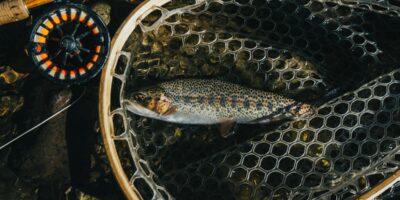
I caught eight brown trout that October day. None larger than 14 inches, but every one of them wild fish with bright colors and the wary behavior that hatchery trout never develop. They rose cautiously to small dry flies—size 18 Blue-Winged Olives and size 20 Tricos—and fought with the tenacity that cold mountain water produces.
Every fish felt like receiving a gift, knowing what the stream had been through to produce them. The fishing isn’t world-class by any stretch. You won’t catch twenty-inch trophies or fill your camera roll with grip-and-grin photos. That’s not the point. The point is that fish exist here at all. That a stream written off as dead has been brought back through sustained effort and smart science.
Why Any of This Matters to Anglers
Kettle Creek is one of hundreds of Trout Unlimited restoration projects across the country. Some address acid mine drainage like this one. Others remove obsolete dams, improve spawning habitat, or reconnect isolated populations. Each project tackles different problems, but they share a common belief: damaged waters can be healed if we commit to the long-term work.
If you’re an angler who cares about the future of fishing—and I mean actually cares, not just complains about it on forums—consider supporting Trout Unlimited or similar organizations. Membership dues and donations fund projects like Kettle Creek. I’ve seen the results with my own eyes, cast to fish that wouldn’t exist without this work. Conservation isn’t just a feel-good abstraction or a tax write-off. It’s rising trout in water that used to be poison.