
Bass fishing lure selection has gotten overwhelming, and most of the advice out there doesn’t help because it focuses on describing lure categories rather than explaining when and why to use them. I’ve been fishing for bass long enough to have strong opinions about what actually matters, and today I’ll share what I’ve found works in the real world rather than in a product description.
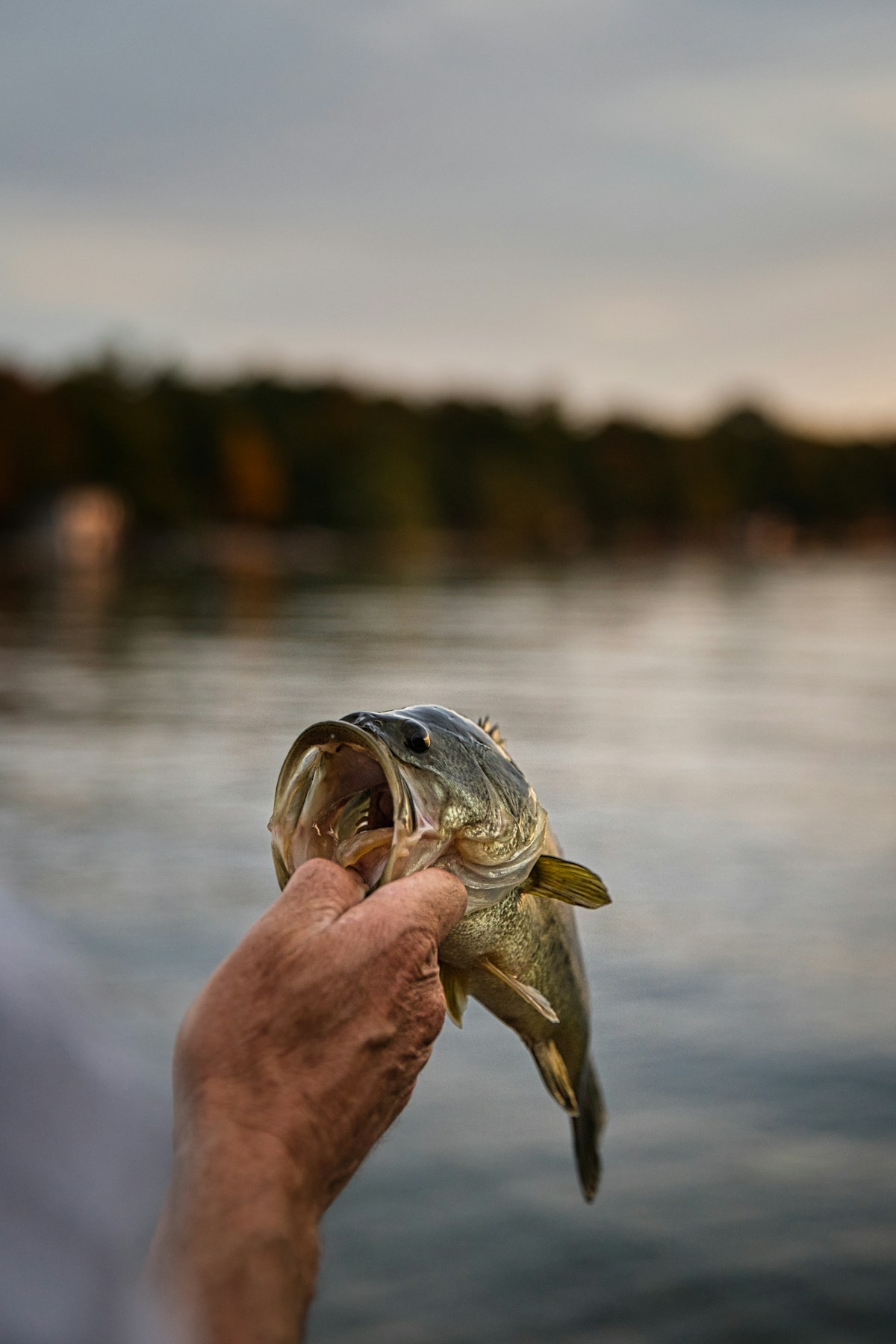
Types of Bass Fishing Lures
Bass are opportunistic predators and they’ll eat most things if conditions are right. The job of your lure is to be the right thing at the right time. Here’s how each major category works and when to reach for it.
- Crankbaits: These are covering lures — you’re using them to find fish and trigger reaction strikes, not to target a specific location. They dive to a specific depth range based on their bill design, hit bottom and rock off structure, and imitate the swimming action of baitfish. Square-bill crankbaits in the 1-3 foot depth range are excellent for shallow cover. Lipless crankbaits like a Strike King Red Eye Shad work well in cold water because you can burn them at high speed or yo-yo them vertically through schools of fish. Vary retrieval speed until you find what triggers strikes on a given day.
- Spinnerbaits: One of the most versatile bass lures made. White 3/8 oz spinnerbait around shallow cover in stained water is a classic that keeps producing because it just works. In murky or muddy water conditions, the vibration of the blades lets bass locate the lure when they can’t see it well. Slow-roll a spinnerbait along the edge of submerged vegetation; burn it just under the surface on warm days. It covers water efficiently and gets bit in conditions where other lures don’t.
- Jigs: The most versatile lure category for targeting specific fish in specific locations, especially in heavy cover. A 3/8 or 1/2 oz football jig on a rocky bottom mimics a crawfish perfectly. A flipping jig into laydown wood or a dock piling targets bass that are tucked tight and won’t move for anything moving fast. Add a Zoom Big Craw trailer and you’ve got one of the most consistently productive bass presentations in existence. Jigs are slow and deliberate — not the right choice when you’re trying to cover water.
- Topwater Lures: Nothing in fishing is quite like watching a bass blow up on a topwater lure. Poppers, walking baits like the Zara Spook, and hollow-body frogs are all most effective in low light — early morning from first light until about 8 AM, evenings from 6 PM until dark, and overcast days when bass are willing to feed at the surface. Frog lures specifically are the way to fish thick surface vegetation like lily pads; other lures can’t get through it without fouling.
- Soft Plastics: The deepest category with the most options. A 7-inch Senko on a weightless Texas rig on a sunny, post-cold-front day when nothing else is working is often the answer. Soft plastics have a natural feel in the fish’s mouth, which means the bass holds on longer before spitting it, giving you more time to set the hook. Texas rigs are weedless for cover, Carolina rigs work well for covering open bottom areas. Swimbaits (3-5 inch on a jig head) have replaced spinnerbaits as the go-to in many clear-water applications.
Selecting the Right Lure
The framework I actually use: match the water clarity, then the temperature, then the location structure.
- Clear water calls for natural colors — shad patterns, crawfish colors in tan and brown, green pumpkin soft plastics. Fluorocarbon line. Smaller profiles. Stained water opens up chartreuse, white, bright oranges and reds.
- Warm water means faster presentations — crankbaits, spinnerbaits, topwater. Cold water means slow presentations — jigs, drop shots, weightless soft plastics finessed through the zone.
- In the morning and evening, shallow presentations. Midday in summer, go deep — diving crankbaits, drop shot, Carolina rig on main lake points and channel swings.
- Match the hatch when you can identify what bass are eating. Bluegill predominant? Bigger swimbaits in bluegill pattern. Shad schooling on the surface? Lipless crankbait through the school.
Techniques for Using Bass Lures
Technique is what separates catching fish on good lures from just casting them. A few specifics:
- Crankbaits: stop-and-go retrieve on a medium-action rod. Let the lure deflect off structure — that deflection pause is often when the bass hits. Keep your rod tip down and set the hook by sweeping sideways rather than straight up.
- Spinnerbaits: slow-roll for deep fish, burn for aggressive shallow fish. In cold water, slow-roll just fast enough to keep the blades turning — bass will hit it on the blade’s almost-stopping pause.
- Jigs: hop them off bottom to imitate a crawfish, or drag slowly with occasional hops. Most strikes happen on the fall, so watch your line for a jump or tick as the jig descends.
- Topwater: cast to a target, wait for all the rings to disappear before you do anything. Then work it with erratic twitches and pauses. When a bass blows up on it, wait an extra half-second before setting the hook — the instinct to set immediately often pulls the lure away before the hook is in the fish’s mouth.
- Soft plastics: on a Texas rig, feel every bump and transition as the weight crawls along bottom. A strike is often just a subtle heaviness or a change in the feel of the line. Sweep the rod to one side, hard.
Adapting to Conditions
Wind is your friend. Wind-blown banks concentrate baitfish and the bass that follow them. When the wind is pushing consistently into one end of a cove or one bank of a point, that’s usually the more productive side. Fish often position with the wind at their back, feeding into it.
Seasonal adjustments matter more than most anglers give them credit for. Spring prespawn, bass are staging on the first hard structure outside spawning flats — that’s when big fish are catchable on slow presentations. During the spawn (water temps 62-68°F), a Texas-rigged lizard or creature bait near beds is classic. Post-spawn, the big females recover deep and the males guard fry in shallow water — good time for topwater around visible fish. Summer means depth and offshore structure. Fall is a great season: bass are chasing shad in the shallows and feeding aggressively before winter.
Equipment Considerations
One more thing: rod action and line choice matter as much as lure selection for getting these techniques right. Fast-action rods for jigs and soft plastics where you need sensitivity and a quick hookset. Medium or moderate-action rods for crankbaits where rod flex absorbs the strike and keeps fish pinned. Braid in heavy cover. Fluorocarbon in clear water. Monofilament for topwater because its stretch helps buffer the hit and keeps fish from throwing the hook during aerial jumps.
Sharpen your hooks. Dull hooks cause more missed strikes than any other single factor. Touch up any hook that’s been used a few times with a hook file, or replace them. That small investment pays off more reliably than any new lure.
Recommended Fishing Gear
Garmin GPSMAP 79s Marine GPS – $280.84
Rugged marine GPS handheld that floats in water.
Garmin inReach Mini 2 – $249.99
Compact satellite communicator for safety on the water.
As an Amazon Associate, we earn from qualifying purchases.

Stay in the loop
Get the latest wildlife research and conservation news delivered to your inbox.