Famous fishing stories have a way of getting tangled up with mythology, exaggeration, and the occasional outright lie — which is what makes them so enjoyable. As someone who’s spent more early mornings on the water than I can honestly count, I’ve heard hundreds of these tales. Some I believed. Some I didn’t. But a handful of them turned out to be completely true, and those are the ones that stick with you. Today, I’ll share some of the most legendary catches and fishing moments from around the globe.
The Legendary Black Marlin of Cairns, Australia
Cairns sits up in North Queensland and most people know it for the Great Barrier Reef. What doesn’t get as much attention is the offshore fishing scene, which is some of the most intense big-game fishing on the planet. The Black Marlin draw anglers from everywhere — Europe, North America, Japan — all of them making the long haul down to Queensland hoping to tangle with one of these animals.
The story that still defines Cairns fishing happened back in 1953. Alfred Glassell Jr., a Texas oil heir with a genuine passion for big-game fishing, was working the waters off Cairns when he hooked into something extraordinary. After a brutal fight using a heavy rod and reel, he brought a 1,560-pound Black Marlin to the gaff. That record has stood in the IGFA for over 70 years now. Nobody has topped it. The fish weighed more than a small car, which is a fact that somehow never stops being difficult to wrap your head around.
A Father and Son on Lake Michigan
Not every great fishing story is about a world record. Some of the best ones are just about the right moment, the right fish, and the right person standing next to you.
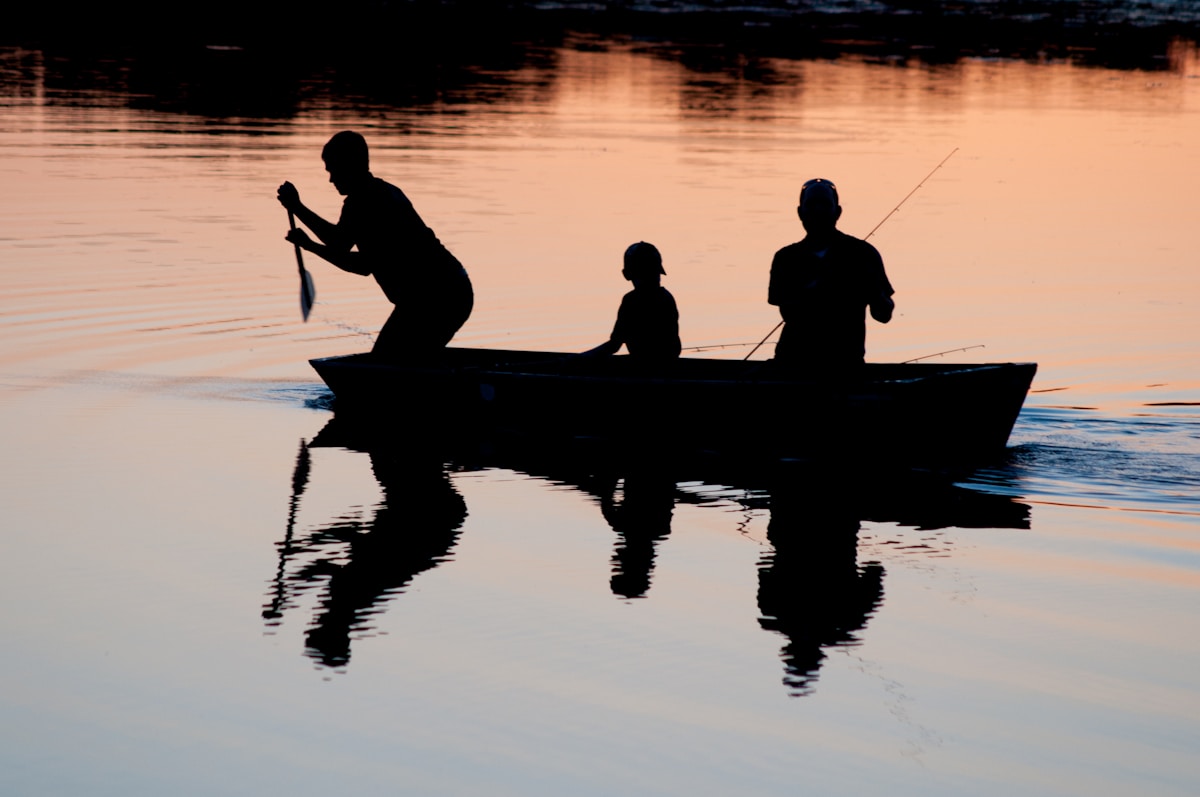
The Johnsons — John Sr. and his son Tim — had been fishing Lake Michigan together since Tim was old enough to hold a rod. John had done the teaching back then, patiently explaining knots and reading water and why you don’t yank the rod when you feel a bump. By the time Tim was an adult, the roles had quietly reversed. He was the one planning the trips, navigating the boat, checking the weather apps the night before.
On a crisp fall morning, somewhere in the deep-blue cold of Lake Michigan, Tim hooked a 34-pound Chinook salmon. The fish ran, then ran again. It took a while to get it to the net. But here’s the thing — the catch wasn’t really the point. The point was that John was standing right there when it happened. That’s what made it a story worth keeping.
The 280-Pound Catfish of the River Po, Italy
The River Po runs across northern Italy and it’s home to some of the largest catfish in Europe — wels catfish that have been growing undisturbed in those deep, murky channels for decades. Anglers from Germany, the Netherlands, and beyond make pilgrimages here specifically for the chance to hook one.
In the summer of 2015, Italian angler Dino Ferrari was fishing with a relatively light tackle setup when something enormous took his bait. What followed was a prolonged, exhausting fight before Ferrari finally brought a wels catfish to the surface that measured out at 280 pounds. The photos went everywhere. It was one of those catches that looked too large to be real, which is probably why it traveled so far so fast across fishing forums and social media. The River Po has a way of producing those kinds of moments.
The Freshwater Stingray of Thailand’s Mae Klong River
Most people don’t think of stingrays as freshwater fish. That’s understandable — they’re not supposed to be there. But the Mae Klong River in Thailand has a population of giant freshwater stingrays that can reach extraordinary sizes. They’re bottom-dwellers, mostly invisible, and almost never seen unless someone specifically targets them.
In 2009, American biologist Jeff Corwin was on a research expedition in Thailand when he hooked into one. The stingray measured 8 feet across and was estimated at around 400 pounds. Worth mentioning: this wasn’t just a trophy moment. The catch was significant because scientists had limited data on the species. Bringing attention to these animals helped push forward conservation efforts for a fish that most of the world didn’t even know existed in rivers.
Iceland’s Atlantic Salmon — A Surprise Record
Iceland’s rivers run cold and clear off volcanic highlands, and the Atlantic salmon that push up those rivers in summer are among the healthiest, most hard-fighting fish in the world. It’s a destination that draws serious fly anglers willing to spend serious money for a week on the water.
In the summer of 2020, a group of friends took a trip that started as a casual outing — not a record attempt, not a sponsored expedition, just a few people who wanted to go fishing. Sarah, the least experienced in the group by most measures, hooked an Atlantic salmon one morning that refused to give up. After a long fight on lighter gear than you’d ideally want, the fish came in at 79 pounds. That’s not just a personal record. That’s the kind of catch that anglers with thirty years of experience never see. The unpredictability is kind of the whole point of fishing.
The 920-Pound Bluefin and the Conservation Question
Bluefin tuna are among the most valuable fish in the ocean, both commercially and to sport anglers. They’re also in serious trouble. Decades of industrial overfishing have gutted populations across the Atlantic and Pacific, and getting them back has been a slow, contentious process involving international quotas and a lot of conflict between commercial interests and conservation groups.
In 2014, off the coast of Nova Scotia, the crew of the fishing vessel “Hard Merchandise” brought in a 920-pound Bluefin tuna. It was a remarkable catch by any measure. But it also landed in the middle of a broader conversation about whether these fish should be caught at all, or whether the sport fishing community has a responsibility to push for more restrictive harvest policies. The story resonated because it captured both sides of that tension — the genuine thrill of landing a fish like that, and the uncomfortable questions that come right behind it.
Les Anderson and the Kenai River King
Probably should have led with this one, honestly. The Kenai River in Alaska is where you go when you want to catch the largest king salmon on Earth, and the stories that have come out of that river over the years read like tall tales until you check the IGFA records and discover they’re all real.
In 1985, Les Anderson was fishing the Kenai with a modest setup — nothing exotic, nothing custom — when he hooked a king salmon that came in at 97.4 pounds. That record has held for nearly four decades. Anderson wasn’t a professional angler. He wasn’t on a sponsored trip or chasing a record. He was just out fishing, and the Kenai decided it was his day. That’s the thing about king salmon fishing in Alaska — you can do everything right for years and come up empty, and then one morning it all lines up.
Catch and Release on Argentina’s Rio Grande
Argentina’s Rio Grande, down in Tierra del Fuego, is one of the world’s best destinations for sea-run brown trout — migratory fish that push up from the Atlantic into the river system each season. The fishing culture there leans heavily toward catch and release, which is part of why the river has stayed productive while other trout fisheries around the world have degraded.
In 2017, angler Jane Doe hooked a 30-pound sea-run brown in those cold Patagonian waters and released it. The fish itself was extraordinary — 30 pounds is a serious brown trout by any standard. But the release mattered just as much. The Rio Grande’s health depends on anglers respecting those norms, and stories like hers are part of how that culture gets maintained and passed on to people just getting into the sport.
A 50-Inch Barramundi on Fly Gear in Australia’s Northern Territory
The Northern Territory’s barramundi fishery is something that Australians are rightly proud of, and it’s gained a strong following among international fly anglers who want a fish that hits hard, runs fast, and jumps. Barra on fly is not easy — they’re ambush predators and they’ll shake a fly loose in a heartbeat if you give them any slack.
In 2010, angler Ted Ross was working the flats in the NT when he connected with a barramundi that measured 50 inches. On fly gear. That’s a large fish in any context, and catching it on fly rather than conventional lure tackle made it notable enough to get picked up in fishing publications at the time. It’s the kind of catch that demonstrates why presentation and skill matter as much as the gear itself.
Piranha Fishing in the Amazon
Here’s the deal with piranhas — the fear is mostly cultural. Yes, they have impressive teeth. Yes, they can bite. But local Amazonian anglers have been catching them for food for generations without incident, and guided piranha fishing trips have become a popular tourist activity in Brazil, Peru, and Bolivia precisely because the fish are catchable and the experience is unlike anything else.
During a guided trip in 2018, a group of tourists spent an afternoon fishing for red-bellied piranha off a dugout canoe in the Amazon basin. Simple handlines, small hooks, bits of meat for bait. The guides explained how the fish fit into the ecosystem, which species they target, how to handle them safely. The tourists caught fish. Some of them caught a lot of fish. It wasn’t a record-breaking event — it was just a genuinely memorable afternoon in one of the most biodiverse places on Earth.
The 400-Pound Arapaima and Why It Matters
One more thing: the Arapaima might be the most impressive freshwater fish on the planet. It’s one of the largest — regularly exceeding 200 pounds and occasionally topping 400 — and it’s an obligate air breather, which means it has to surface to breathe. That sound, the gulp of air at the surface, is something Amazonian fishermen have listened for and used as a locating method for centuries.
In 2011, river guide Manuel Santiago worked alongside a team of researchers on the Amazon to catch a 400-pound Arapaima for tagging and study. The data they collected fed directly into conservation programs trying to protect the species from the commercial fishing pressure that had dramatically reduced populations in more accessible parts of the river. Manuel’s story is a reminder that not every fishing story is about sport or records — sometimes it’s about making sure there are still fish there for the next generation to find.


Stay in the loop
Get the latest wildlife research and conservation news delivered to your inbox.