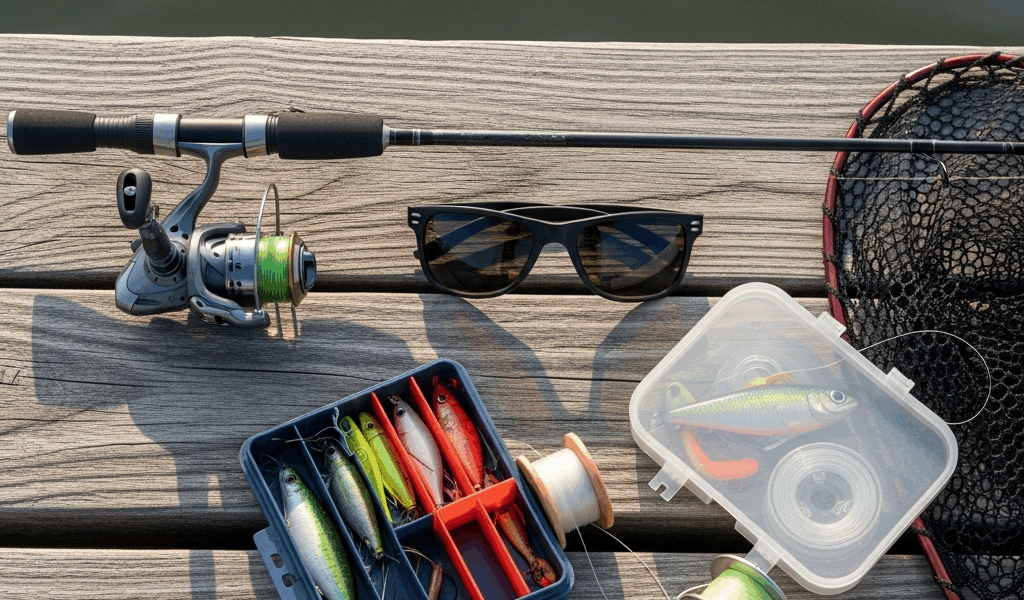
The Complete Beginner Setup — Under $150
Fishing gear has gotten complicated with all the marketing noise flying around. Walk into any sporting goods store and you’ll see $300 rods hanging next to tackle backpacks that cost more than a car payment — all of it aimed at people who just want to catch their first fish. I know because I was that person. Standing in the Bass Pro on Route 9, completely frozen, holding a $14.99 pack of lures I didn’t understand while Jake texted me asking if I was almost ready to go.
That was 2019. I’ve since learned that the whole expensive-gear conversation is mostly noise for beginners. You can walk out with everything you actually need for under $150. Not a stripped-down starter kit that falls apart. A real rod. A reel that works. Organized tackle. Line. The whole thing.
This article includes affiliate links. We may earn a commission at no extra cost to you.
Today, I’ll share it all with you — exactly what I’d buy if I were starting over, with real prices and real products.
The One Rod and Reel That Covers Everything
But what is the ideal beginner setup? In essence, it’s a medium-power spinning combo in the 6- to 6.5-foot range rated for 8 to 15-pound test line. But it’s much more than that — it’s the decision that determines whether your first few months feel frustrating or actually fun.
Forget baitcasting for now. Spinning reels exist for one reason: they work without practice. You cast, you retrieve, no backlash that looks like a bird attempted to build a nest inside your spool. I made the mistake of letting someone talk me into a baitcaster early on. Spent three hours untangling line on my second trip out. Three hours. On a Tuesday morning. Don’t make my mistake.
The Shimano Sienna FE spinning combo runs about $45 to $55 at most retailers. Medium-light action, smooth drag, guides that are actually aligned. Honestly, it feels better in hand than rods costing triple. The reel doesn’t stick on the retrieve. It’s not flashy. It just works every single time you pick it up.
If the Shimano is sold out — and it often is — the Pflueger President spinning combo sits around $50 to $60. Slightly heavier, slightly different drag feel, but I’ve used both and the difference matters maybe zero times across a hundred actual fishing days. Either one gets the job done.
Total investment here: $50 to $60.
Why Spinning Over Baitcasting Right Now
Baitcasters aren’t impossible. But they have a learning curve nobody fully admits to beginners. You will backlash. Probably four or five times before lunch. That’s enough to make you hate fishing before you’ve had a chance to love it. Spinning reels let you focus on real fundamentals — casting accuracy, feeling the bottom, detecting actual bites — instead of managing your equipment at the same time.
Switch to baitcasting in six months if you want. By then the learning curve feels manageable instead of crushing, and you’ll actually understand what the reel is doing differently.
The 10 Tackles You Actually Need Starting Out
Probably should have opened with this section, honestly. Tackle selection matters more than most beginners realize — just not in the way the store walls suggest. You don’t need 47 lures in 47 colors. You need 10 things that actually work across most situations.
- Hooks — sizes 4 through 8. A variety pack with five of each size covers live bait situations and costs almost nothing. Gamakatsu or Owner brands run about $5 for a solid pack. You’ll reach for these more than anything else in the box.
- Split shot sinkers — assorted sizes. Tiny weights that pinch directly onto your line to get bait down or add casting distance. One pack runs $2 to $3 and lasts for months of fishing. Essential but nearly invisible in terms of cost.
- Bobbers — round or pencil style, small to medium. Cork or plastic — doesn’t matter. Around $4 for a pack. These let you fish shallow water and keep suspended baits exactly where you want them. Adults use bobbers more than they publicly admit.
- Barrel swivels — size 12 or 14. These prevent line twist when using spinners or live bait. Under $3 for a pack. One of those small purchases that prevents hours of frustration down the road.
- Soft plastic lures — 2 to 3 colors. Get 4-inch Yamamoto Senkos in green pumpkin and watermelon. About $3 to $5 per pack. These aren’t novelty items — they genuinely outperform expensive options in most freshwater situations.
- Hard body crankbaits — 2 to 3 colors. Small crankbaits around 2 to 2.5 inches in shad patterns or natural colors. About $4 to $6 each. These catch everything from largemouth bass to pike without much technique required.
- Fishing line — 8 to 12-pound test monofilament. A 250-yard Stren or Trilene spool runs $6 to $10. Monofilament floats, stretches slightly for shock absorption, and handles every freshwater scenario a beginner encounters. Braided line is better for specific situations — none of which are your situation yet.
- A small plastic tackle box with adjustable dividers. Not a backpack. Not a wheeled cart. A basic Plano 3700 StowAway costs $12 to $18 and holds everything above it. Keeps hooks organized. Prevents losing individual items between trips.
- Needle nose pliers. For hook removal — from fish mouths and occasionally your own fingers. $5 to $8 at any hardware store. Your hands will thank you within the first hour.
- A headlamp. Doesn’t sound like tackle. Is absolutely tackle. Early mornings, late evenings, and tying knots in low light require you to actually see what you’re doing. A basic Black Diamond Spot runs $15 and lasts years.
Total tackle investment: $20 to $30 if you pick one item from each category and grab a basic box. Maybe $35 to $40 if you go slightly nicer on the lures and pliers.
Where These Items Fit Together
Your actual fishing setup looks like this: rod over your shoulder, Plano box at your feet. You tie a hook or lure directly to your line — improved clinch knot, five turns, done in 30 seconds. Add a split shot two feet above it if you need depth. Cast. Either wait on the bobber or work the lure back slowly. Repeat until something bites.
I’m apparently a live-bait person — minnows on size 6 hooks with a split shot — and that rig works for me while expensive lure rigs never seemed to perform as well my first season. Caught more fish in month one using nothing but that simple setup than friends running $15 crankbaits. Genuinely. That’s not false modesty — it’s just how fishing works early on.
What to Skip Until You Know What You Like
This matters as much as what to buy. Expensive gear is a trap — especially for beginners who don’t yet know their preferences.
Expensive rods. A $200 rod casts maybe 10% better than a $55 rod. Not 50% better. Your casting technique matters far more than your equipment at this stage. Spend the money after six months when you actually know whether you prefer finesse fishing or power fishing.
Tackle backpacks and wheeled carts. These cost $80 to $150 by themselves. That’s your entire fishing budget. Use a Plano box. Upgrade once you know how you want to organize things and what volume of tackle you actually accumulate.
Fish finders and electronics. Anything decent starts at $300. Read the water instead. Watch where fish surface. Ask the guy at the boat ramp. Those things cost nothing and teach you more.
Specialized rods for specific fish. A medium-power spinning rod catches bass, walleye, pike, catfish, and panfish with the right techniques. You’re months away from knowing if bass is even your thing. Don’t buy a dedicated bass rod yet.
Fly fishing gear. Someone always suggests this to new anglers. Don’t. Completely different skill set, completely different investment, completely different learning curve. Revisit in two years if you’re still curious.
Premium braided line. That $60 spool of 10-pound braid? You don’t need it. Monofilament works. You’ll actually learn better line management with mono because it requires real attention — and that skill transfers later.
Avoid specialization early. You learn through variety of situations, not through premium versions of one specific situation.
Your Actual Spending Breakdown
Rod and reel combo: $50 to $60
Basic Plano tackle box: $15 to $20
Hooks, split shot, bobbers, swivels: $10 to $12
Lures (soft and hard body): $10 to $15
Monofilament line: $8 to $10
Needle nose pliers: $6 to $8
Headlamp: $10 to $15
Total: $109 to $140
You’re under $150 with room for tax. No credit card debt. No gear paralysis. Just an actual functional setup that goes in the truck and comes back with fish stories.
So, without further ado, get out there. This setup catches real fish. Every trip you take it out. Stop overthinking the gear — it matters considerably less than you think the moment you’re actually standing at the water.

Stay in the loop
Get the latest fishing tales journal updates delivered to your inbox.