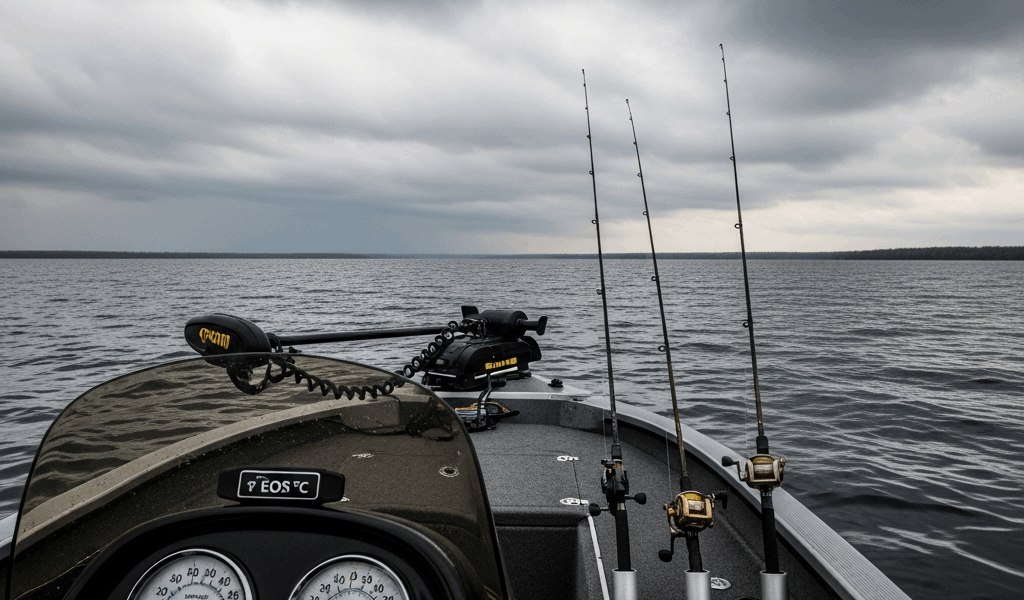
Why Fish Stop Biting After a Cold Front Hits
Cold front fishing has gotten complicated with all the generic advice flying around. “Slow down.” “Wait it out.” “Try live bait.” Thanks, incredibly helpful. You just spent six hours throwing topwater on a lake that was absolutely stacked five days ago, or you worked a jetty where snapper had been sitting all week — then the front rolled through overnight and every fish in the water vanished. Not literally. But close enough to feel that way at 11 p.m. while you’re rage-watching YouTube videos.
including the mistakes I kept making for years before the picture finally clicked.
What Actually Happens to Fish When a Cold Front Moves Through
But what is a cold front doing to fish, exactly? In essence, it’s triggering a biological shutdown response driven by pressure, temperature, and light changes hitting all at once. But it’s much more than that.
Fish detect barometric pressure through their lateral line — a pressure-sensing system running along the length of their body. When the barometer drops fast, which it does during front passage, that system fires off alarm signals. Combine that with a sudden temperature drop and a hard wind swing toward the north or northwest, and you’ve got three simultaneous stressors hitting fish that were otherwise comfortable and actively feeding.
Metabolism crashes. That’s the short version. A largemouth bass chasing a buzzbait at 75-degree water temps isn’t interested in that same bait when temps fall to 68 or 69 degrees inside 12 hours. Their search radius shrinks. Their feeding impulse goes quiet. They need less food, full stop — and they’re not burning energy to chase something they don’t urgently need.
They don’t vanish, though. They move. Deeper channels instead of shallow flats. Tight against hard structure instead of cruising open water. Vegetation edges instead of the middle of the flat. That distinction — relocated, not gone — changes everything about how you approach the next 48 to 72 hours on the water.
How Long the Slowdown Lasts and What to Watch For
A moderate front shuts the bite down for roughly 24 to 48 hours. A severe one — the kind that drops 15 degrees overnight and swings the wind hard — can stretch that to 72 hours or longer. But most articles stop there. They skip the secondary indicators that actually tell you when the bite is about to come back.
Watch the barometer obsessively. A stabilizing barometer — even if it’s still sitting low — signals that fish will start feeding again. Stability matters more than the actual pressure reading. You can have a genuinely productive day on a stable low-pressure system. You won’t have one during a rapidly dropping barometer, period. Surface temperature is the second thing to track. Once water temps stop falling and hold steady for three or four hours, expect feeding windows to open up within 12 hours of that stabilization.
Sky clearing is a supporting signal, not the main one. Clear skies alone don’t move the needle. What moves the needle is clearing skies paired with stabilizing pressure, warming surface temps, and a wind shift back east or southeast. When those line up, the worst has passed. The bite won’t be pre-front quality — don’t expect that — but it becomes workable.
One more thing most people ignore: time of day matters more during cold front recovery than it ever does during normal conditions. The 90 minutes after sunrise and the 90 minutes before sunset will consistently outproduce midday by a wide margin. Plan around those windows or don’t bother going out at all.
Presentations That Still Work in Post-Front Conditions
“Slow down” is technically correct advice. It’s also almost useless without specifics. Here’s what slowing down actually looks like in practice.
Retrieve Speed and Rhythm
Where you’d normally crank a crankbait at a moderate, steady pace — post-front you’re cutting that in half and adding deliberate pauses. A 1/8-ounce shaky-head rigged with a 3-inch Berkley PowerBait MaxScent worm isn’t retrieved steadily. You drop it to the bottom, work it with two or three short twitches, let it sit for a full five seconds, then repeat. Same lure. Completely different outcome. That five-second pause is where the bite happens.
For crappie and panfish, live bait under a light bobber fished 12 to 15 feet down outproduces artificials almost every time after a front. A single live minnow doesn’t need your help. It works on its own while you resist the urge to keep messing with it.
Downsizing and Going Subtle
Your 3/8-ounce chatterbait becomes a 1/8-ounce model. Your 4-inch swimbait becomes a 2.5-inch version. The flash and vibration that was triggering aggressive strikes during stable conditions now just spooks fish sitting still and lethargic. A 1/16-ounce jighead with a Mister Twister 2-inch curl-tail on 6-pound fluorocarbon feels almost embarrassingly light — it’s also exactly right when fish are buried in grass or stacked tight against a laydown.
I learned this on a Tennessee reservoir back in September. Three days of solid smallmouth on a 1/2-ounce jig, then a front hit overnight. I kept throwing that same jig for hours because it had been working — caught absolutely nothing. Switched to a 1/8-ounce shaky-head. Caught fish on the second drop. That 3/8-ounce difference felt almost meaningless until it was the entire difference between going home empty and coming home with a limit. Don’t make my mistake.
Target Deeper Structure and Transition Zones
Abandon the shallows for a day or two — at least if you want a realistic shot at catching something. Fish that were sitting in 4 to 6 feet have pulled to 12 to 18 feet. Channel ledges, creek bends, underwater ridges, defined drop-offs. A graph becomes genuinely essential here rather than just a nice-to-have. Anywhere you see bait holding near even slight structural change, that’s your target.
Transition zones are your second-best option. Where a deep channel meets a flat. Where vegetation hits a hard edge and stops. Where a rock pile drops into sand. Fish that refuse to chase anything through open water will still eat something presented right on that boundary — they just won’t move six feet to get it.
Live Bait and Soft Plastics Over Reaction Baits
Topwater and buzzbaits are essentially off the table. Fast reaction baits, same story. Soft plastics worked with real patience and live bait are your tools now. A live shiner under a popping cork fished over deep grass beds will produce redfish and snapper when nothing artificial is touching bottom. A wacky-rigged 5-inch Senko worked on the drop along a vegetation edge is doing most of its work before it ever hits bottom — which is also when the bite comes.
The Worst Mistakes Anglers Make After a Cold Front
Probably should have opened with this section, honestly. These are the exact mistakes that cost me full fishing days before I finally stopped making them.
- Fishing the same shallow spots the same way — The flat that was on fire is a dead zone now. Fish dropped. Grinding the same bank with the same retrieve catches nothing but frustration.
- Moving too fast between spots — Cold front conditions require you to commit. Work a promising piece of structure for 10 to 15 minutes before moving on. Three casts and leaving is how you miss the only fish that was sitting there willing to eat.
- Keeping reaction baits tied on out of loyalty — I’m apparently a creature of habit and my confidence lure works for me on normal days while subtler presentations never feel right — until after a front, when it’s the only thing that does. Set the chatterbait down before you launch. Mentally.
- Fishing midday and expecting anything — Midday post-front is the deadest window of the deadest period of the year. First light and last light are your only reliable feeding windows. Plan your whole day around them.
- Staying shallow because that’s where fish “should” be — Fish moved. Accept it. Go find where they actually are instead of fishing where they’re supposed to be based on last Tuesday.
When to Go Anyway vs. When to Wait It Out
Here’s the honest answer. If you’ve got one day and a front just ripped through last night, your odds aren’t great. A 180-degree wind shift, stabilizing pressure, and holding water temps can tilt things enough to make dawn and dusk worth fishing — especially if you have access to deep structure. But midday, north wind still hammering, skies still gray and dropping? You’re grinding for almost nothing.
The exception is saltwater and large reservoir systems where real depth exists. A jetty run or a deep creek channel after a front beats a shallow pond every single time. Fish have somewhere to go in bigger water, and you have somewhere worth targeting.
Pressure stabilizing and dusk approaching? Go. Wind still howling north and barometer still falling? Wait 24 hours — you’ll catch more fish and the trip won’t feel like punishment. That’s what makes understanding cold fronts so valuable to us anglers who refuse to just stay home. So, without further ado, go check your barometer app. The bite will come back. Knowing why it left means you’ll be on the water catching fish long before everyone else figures out it’s time to go.
Track fronts with weather and pressure data, but avoid universal thresholds; see the best fishing barometer app comparison and pressure checklist.


Stay in the loop
Get the latest fishing tales journal updates delivered to your inbox.