Fishing gear advice has a way of getting overwhelming fast. Walk into any tackle shop and you’ll find walls of options, most of which you don’t need — especially when you’re starting out. But there are five pieces of gear that actually matter, the kind of stuff that shows up in every serious angler’s kit regardless of what they’re fishing for. Here’s what you need, and why.

1. Rod and Reel Combo
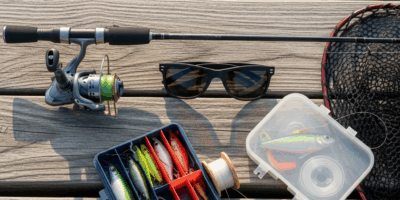
This is the obvious one, but it’s worth getting right from the start. Your rod and reel are your primary connection to everything happening underwater. For most beginner-to-intermediate fishing situations, a medium-action spinning combo in the 6′ to 7′ range covers the most ground — panfish, bass, trout, walleye, most of it. Don’t overthink the brand at first. A $50-80 combo from Ugly Stik or Shakespeare will fish just fine while you figure out what type of fishing you actually want to focus on. Then you can get specific.
2. Tackle Box with Assorted Hooks and Lures
I’m apparently incapable of keeping a tackle box organized, but the gear inside it matters. The thing is, you don’t need a hundred different lures. You need a handful of proven ones: a few sizes of split-shot sinkers, a variety of hook sizes (size 6 through 2/0 covers most situations), a couple of curly-tail grubs, a few spinners, and some hard-body crankbaits in natural colors. Build from there. A well-stocked box is something you add to over years — start small and purposeful.
3. Fishing Line
Line is the one piece of gear most beginners underestimate. It’s not exciting, but it’s the literal link between you and the fish — and cheap line fails at exactly the wrong moment. For most freshwater fishing, 8-12 lb monofilament is a solid starting point. It’s forgiving, cheap, and handles well on spinning reels. Braided line has better sensitivity and zero stretch, which some anglers swear by and others can’t stand. Fluorocarbon is nearly invisible underwater and is worth using as a leader in clear water. Different situations call for different line — that’s part of the learning process.
4. Bobbers
The round clip-on style you remember from childhood works fine for still fishing with live bait near the surface. For more precise setups, slip bobbers are better: they let you adjust the depth quickly and cast more easily when you’re fishing 8 or 10 feet down. Beyond the mechanics, there’s something genuinely enjoyable about staring at a motionless bobber until it suddenly dips under — it never really gets old.
5. Net and Pliers
These two get lumped together because they’re both about what happens after the bite. A landing net — even a small rubber-mesh one — makes a huge difference when you’re trying to land a fish alone, especially from a bank or a kayak. Rubber mesh is worth it over nylon because it’s gentler on the fish’s slime coat if you’re releasing. Fishing pliers are non-negotiable. Whether you’re crimping split shot, cutting line, or backing a deeply-set hook out of a fish’s jaw, you’ll reach for them constantly. A $15 pair of stainless pliers will outlast multiple rods and reels.
One more thing: don’t let gear obsession get in the way of actually fishing. The best anglers I know have pretty modest kits — they just spend a lot of time on the water. Grab these five essentials, get out there, and fill in the gaps as you learn what the fish in your local waters actually respond to.


Stay in the loop
Get the latest fishing tales journal updates delivered to your inbox.