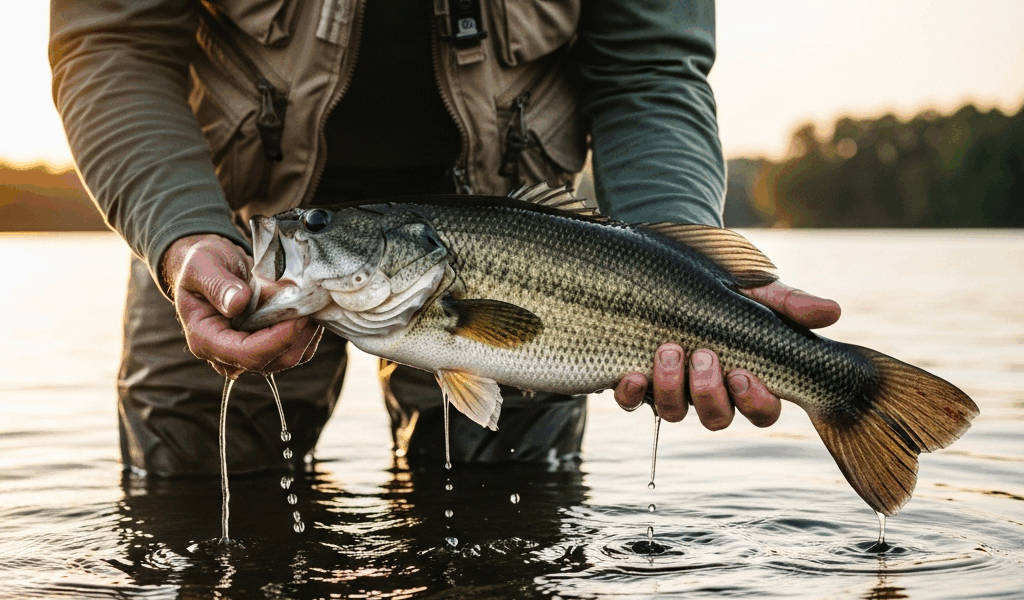
You just landed a solid largemouth, snapped a quick photo, and watched it swim off strong. What you probably did not see: that bass died eight hours later from lactic acidosis it built up during the fight. Catch and release works — but only when you understand what actually kills fish after they leave your hands.
Why Bass Die After Being Released (Sometimes Hours Later)
Lactic acidosis: A prolonged fight exhausts muscle tissue and floods the bloodstream with lactic acid. The bass swims away looking strong but may die overnight from metabolic stress it cannot recover from. This is why 10-minute tournament fights produce high post-release mortality even when the fish is handled perfectly afterward.
Air exposure: Every second out of water damages gill tissue and the protective slime coat. Gill filaments begin drying in under 30 seconds. Extended photo sessions on a hot day cause damage that does not show until days later.
Water temperature: Bass survival rates drop sharply above 75 degrees. Above 85 degrees, even textbook handling cannot prevent significant mortality. The fish is already thermally stressed before you hook it — the fight pushes it past recovery.
Barotrauma: Primarily affects bass pulled from deep water quickly. The swim bladder expands as pressure drops, damaging internal organs. Less common in recreational bass fishing where most fish come from 15 feet or less, but real for deep structure fishing.
The Fight: Why Shorter Is Better Even with Strong Gear
The goal is landing the fish quickly without exhausting it. This means using appropriate gear — a rod with enough backbone to control the fight, not an ultralight that turns a 3-minute landing into a 12-minute marathon.
Thin wire hooks penetrate easier and reduce fight time. A fish pinned solidly on a sharp hook comes to hand faster than one barely hooked on dull hardware that requires grinding pressure to keep connected.
The warning sign: if a bass rolls over on the surface and stops fighting, it has gone past the recovery threshold. A fish that exhausted its anaerobic reserves during the fight faces steep odds even with perfect handling afterward. Two to three minutes from strike to hand is fine. Ten-plus minutes raises mortality risk regardless of what you do next. Use the right gear for the fish you are targeting.
Handling: Grip, Support, and Time Out of Water
Lip grip with a vertical hold is fine for bass — their jaw structure handles it. But do not let the fish thrash while hanging vertical. A 4-pound bass whipping its body while suspended by the lip can dislocate its jaw or tear internal connective tissue.
Any bass over 3 pounds: two hands. One on the lip, one supporting the belly. This distributes the weight and prevents the body from torquing against the jaw. Tournament anglers do this reflexively. Recreational anglers rarely do, and their big fish pay for it.
Time out of water target: 30 seconds per handling event. Quick photo, back in the water. If you need multiple shots or want to show the fish to everyone in the boat, keep it submerged between photos. Never put a fish on a hot dry boat deck — the slime coat bonds to the surface, gill tissue bakes, and you have just guaranteed a slow death even if the fish swims away looking fine.
Water Temperature: When to Reconsider the Fishing Trip
Above 75 degrees F: Handle quickly, revive thoroughly, accept that mortality rates climb compared to cooler fishing. This is still a reasonable window for catch and release — just work fast.
Above 80 degrees F: Mortality increases significantly. Conservation-minded anglers shift to early morning or late evening only, when surface temps drop a few degrees and bass have not been thermally cooked all day. Midday fishing in 82-degree water is catch and kill, even if you intend catch and release.
Above 85 degrees F: Even perfectly handled bass have poor survival odds. This is the threshold where stopping for the day is the ethical choice. The fish was already stressed before you hooked it. Adding fight exhaustion and air exposure on top of severe thermal stress is a death sentence with extra steps. Check surface water temperature, not air temperature — a 90-degree air day with a cool spring-fed lake might show 72 on the water, which is fine.
Reviving a Bass Before You Let Go
Hold the fish upright in the water, facing into any current. In still water, gently rock it forward to push oxygenated water over the gills. Forward only — never pump backward. Backward motion forces water the wrong direction over gill tissue and does more harm than good.
Signs the fish is ready: it holds position on its own, gills pump at a regular rhythm, it actively tries to swim away from your hand. Let it go when it pulls from you — not when you get impatient.
Signs it is not ready: rolling to one side, swimming in tight circles, floating. If a bass cannot hold upright after 2 minutes of reviving, keep going. Do not give up on a fish that can still be recovered. I have spent five minutes reviving a deeply fought bass in July heat and watched it eventually right itself and swim down strong. That five minutes was the difference between a fish that lived and one that floated belly-up in the cove the next morning.


Stay in the loop
Get the latest fishing tales journal updates delivered to your inbox.