The Grip-and-Grin Problem
You’ve seen the photo a thousand times: angler holding a fish at arm’s length toward the camera, teeth gritted in an awkward smile, fish dangling limply or thrashing wildly, background completely blown out. It screams “I caught a fish and needed proof” rather than “I had a meaningful experience worth sharing.” I spent ten years taking exactly those photos before I started learning from the tournament photographers who shoot fishing content for a living.
Last year, I followed three professional fishing photographers during a major bass tournament, watching how they captured images that actually told stories. What I learned changed how I document my own fishing, and it didn’t require buying expensive gear—just thinking differently about composition and timing.
The Camera Position Matters More Than the Camera
Most fish photos fail because we shoot from standing height, looking down at the angler and fish. This creates unflattering angles for humans and fish alike, shrinks the fish, and puts the background in the wrong relationship to the subject. Tournament photographers almost always shoot from low—kneeling, sitting, sometimes lying in the boat—with the camera at the same level as the fish or slightly below.
Try this: next time someone else catches a fish, drop to one knee before shooting. Get the camera at the fish’s level, angle slightly upward toward the angler’s face, and watch how the image improves. The fish looks more substantial, the angler looks more engaged, and the background becomes sky rather than boat deck.
The Two-Second Rule
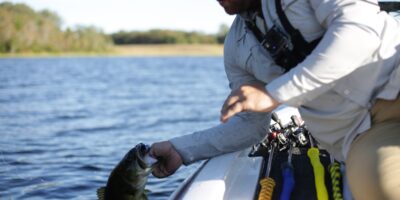
The best fish photos happen in the two seconds after the angler gets control but before they start posing. That moment of genuine excitement, when they’re looking at the fish rather than the camera, produces images with actual emotion. Tournament photographers call this the “reaction shot,” and they’re waiting for it constantly.
Once someone starts mugging for the camera—holding the fish out, forcing a smile, creating the “grip-and-grin” pose—the authenticity disappears. If you must do the posed shot, keep it quick and then go back to capturing the candid moments: the release, the high-five with a fishing buddy, the quiet satisfaction of watching the fish swim away.
Lighting and Background
Early morning and late afternoon light makes everything look better. The golden hour glow adds warmth and dimension that harsh midday sun destroys. If you’re stuck fishing at noon, try to position the sun behind you (behind the photographer) so the subject is evenly lit, not squinting into glare.
Background matters more than most people realize. A fish held against a cluttered boat interior looks like a snapshot. The same fish held with open water or a treeline behind it looks like a magazine cover. Move around before shooting—three steps to the left might eliminate that cooler and trolling motor from the frame.
Quick Tips From the Pros
Hold the fish close to your body, not at arm’s length. The extended arm pose makes fish look smaller and creates awkward proportions. Cradling the fish closer looks more natural and more impressive.
Wet your hands before handling fish, and get the shot quickly. Stressed fish don’t photograph well, and prolonged handling isn’t good for release survival. Three seconds out of water for a quick photo is fine; three minutes of repositioning is harmful.
Turn the fish toward the light so scales and colors show. A fish photographed from the shadow side looks dark and flat. Rotate the fish slightly until the light catches its features.
Shoot bursts, not singles. The difference between a sharp image and a blurry one is milliseconds. Modern phones and cameras can shoot continuously—hold down that button and pick the best frame later.
The Phone Is Fine
I asked every tournament photographer what camera they recommended for serious anglers. All three said the same thing: your phone is probably fine. Modern smartphone cameras have excellent quality, good low-light performance, and the advantage of always being in your pocket. A $3,000 DSLR won’t help if it’s locked in your truck while you’re on the water.
The difference isn’t the gear—it’s understanding how to use light, angle, and timing to create images worth keeping. Practice these techniques with your phone for a season, and if you still want to upgrade, at least you’ll know how to compose a shot.