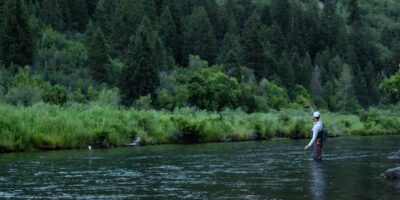
Fly fishing has gotten complicated with all the gatekeeping and gear snobbery flying around. As someone who picked up a fly rod thirty years ago on a Montana creek and never looked back, I learned everything there is to know about this sport the hard way — through tangled leaders, broken tippets, and a whole lot of empty-handed walks back to the truck. Today, I will share it all with you.
This isn’t rocket science. People make it sound harder than it is. Can you wave a stick? Congratulations, you can learn to fly fish.
Understanding What Makes Fly Fishing Different
Regular fishing uses the weight of your lure or sinker to carry line out. Fly fishing flips that completely upside down. The fly weighs practically nothing — a few feathers, some thread, maybe a bead head. The line itself carries the weight. Your casting stroke loads energy into the fly line, which hauls that tiny fly out to where the fish are eating.
This one difference shapes everything about the sport. Equipment design, casting mechanics, how you present the fly — it all flows from this simple reversal. Wrap your head around this and every other piece clicks into place faster.
The Appeal of Fly Fishing
People ask me why I bother when a spinning rod catches fish more efficiently in a lot of situations. Fair question.
For me it’s the craft. Tying your own flies, reading water, matching the hatch — these skills develop over years and keep rewarding you. I’ve been at this three decades and still learn new stuff every season. That never gets old.
There’s also the physical side. A full day of fly casting uses your whole body in ways spinning tackle doesn’t. The rhythm becomes almost meditative. Cast, mend, drift, retrieve. Do it right and hours vanish without you noticing.
And honestly? For certain situations, fly tackle just works better. Delicate dry fly presentations to spooky trout. Subsurface nymphing in fast water. Stripping streamers for aggressive predators. Try doing that with a spinning rod. You can, but it’s not the same.
Essential Fly Fishing Gear
Starting up costs more than conventional tackle. I won’t sugarcoat that. But quality fly gear lasts decades — I still fish a reel I bought in 1998. Here’s what you actually need to get going.
The Fly Rod
Rods are rated by “weight” — a number system matching rod to line to fly size. Lower numbers (1-4 weight) handle small flies and delicate presentations. Higher numbers (7-10 weight) throw big flies into wind and fight bigger fish.
Get a 5-weight if you’re starting out. It handles trout and panfish comfortably but has enough backbone for bigger fish if they show up. Nine feet long, medium-fast action. That’s the Honda Civic of fly rods — does everything reasonably well, nothing terribly.
Action describes flex. Fast rods bend mostly in the tip for line speed and distance. Medium rods flex deeper for more feel. Slow rods bend into the handle. Most beginners do well with medium-fast — enough speed to learn proper technique without needing perfect timing on every cast.
The Fly Reel
Here’s where fly fishing differs from spin fishing most obviously — the reel mostly just stores line. For trout-sized fish, any reel with a decent drag and enough capacity works fine. Don’t overthink this part.
For bigger game — steelhead, salmon, saltwater — reel quality matters a lot more. Sealed drags resist corrosion. Large arbors pick up line faster. Machined aluminum survives brutal runs. Match your reel investment to what you’re chasing.
Fly Line
Probably should have led with this section, honestly. The fly line IS the system. It’s what you’re casting. Everything else just facilitates that. Line weight must match rod weight — 5-weight rod, 5-weight line. Simple.
Weight-forward lines concentrate mass up front for easier casting and better distance. Double-taper lines offer more delicate presentation and can be flipped when one end wears out. Shooting heads maximize distance for specialized stuff.
Floating lines ride on top — perfect for dry flies and most nymph rigs. Sinking lines pull flies down for deeper presentations. Sink-tips compromise between the two. Start with a floating weight-forward line matched to your rod. That covers most trout fishing and teaches you to cast properly.
Leaders and Tippet
Leaders connect your thick fly line to your tiny fly, transferring energy while staying invisible near the fly. They taper from thick to thin over about nine feet. That’s your starting length for most trout fishing.
Tippet is the fine end where the fly ties on. It gets shorter every time you change flies or break off. Adding fresh tippet extends leader life. The “X” system rates diameter — higher numbers mean thinner. 6X is finer than 4X. Match tippet to fly size and how spooky the fish are. Paranoid spring creek trout might need 6X or 7X. Dumb stocked fish eat on 4X without blinking.
Flies
Fake bugs. That’s what flies are. They imitate whatever fish eat — insects, baitfish, crustaceans, stuff that falls off trees into the water. Dry flies float on top. Nymphs drift below the surface. Streamers imitate baitfish. Terrestrials look like ants, beetles, and hoppers.
You don’t need a thousand patterns to start. Adams, Elk Hair Caddis, and Parachute Adams for dries. Pheasant Tail, Hare’s Ear, and Prince for nymphs. Woolly Buggers for streamers. That small selection catches trout anywhere they swim. Hit your local fly shop for regional recommendations — what kills in Montana doesn’t necessarily translate to Pennsylvania.
Learning to Cast
Casting intimidates people but the basics come fast with decent instruction. The main thing is avoiding bad habits early, because they take forever to fix later.
The Basic Cast
Strip line out and work it through the guides. Start with about thirty feet extended on the water. The cast begins with line out, not piled at your feet.
Backcast lifts line off the water and sends it behind you. Smooth acceleration ending in a crisp stop loads the rod. Line unrolls behind you, straightens completely, then you start the forward cast.
Forward cast mirrors the back. Smooth acceleration, stop to stop. Line unrolls forward and lays your fly on the target. The timing between back and forward matters — cast before the line straightens behind you and you get tangles. Rush the forward stroke and you waste energy.
Think paintbrush painting a wall. Smooth strokes between two points. Power comes from acceleration, not arm wrestling. A relaxed grip beats a death grip every single time. I tell beginners to pretend they’re holding a baby bird. Firm enough it can’t fly away, gentle enough you don’t hurt it.
Common Casting Mistakes
Too much arm, not enough wrist. The elbow is a hinge, but the wrist provides that crisp stop that actually loads the rod. Casting stiff-wristed feels powerful but generates less line speed.
Breaking the wrist too far open on the backcast sends your line crashing into the ground behind you. Imagine a wall behind your head — rod tip shouldn’t go past it. Keeps the backcast high and clean.
Rushing the timing. This kills more casts than anything else. Wait for the line to straighten. Watch it over your shoulder until muscle memory develops. That pause feels longer than you think it should be. Trust the pause.
Building Proficiency
Practice on grass. Tie a piece of yarn to your leader and go to a park. No fish to distract you, no current to complicate things. Focus on smooth acceleration and crisp stops. Add distance slowly as your mechanics improve.
Get a lesson. Seriously. A few hours with a casting instructor prevents months of frustration. Local fly shops, guide services, and Trout Unlimited chapters all offer instruction. Online videos help but they can’t see what YOU’RE doing wrong. In-person feedback catches mistakes you’ll never spot on your own. Best money you’ll spend on fly fishing isn’t a rod — it’s a lesson.
Reading Water and Finding Fish
Perfect casting into empty water catches zero fish. Learning to read a stream tells you where trout actually live.
The Basic Principle
Trout are energy accountants. They park in slower water next to faster currents that carry food past their face. A rock creating a calm pocket behind it? Prime real estate. The foam line concentrating drifting insects? Trout buffet.
Cover matters too. Trout are prey animals. They want overhead cover from birds, shadows to hide in, and deep water to bolt to. Food access plus protection equals trout holding spot. It’s that simple every single time.
Classic Holding Water
Pool heads where fast water dumps into deeper slow water stack fish up. Turbulence oxygenates the water and delivers food. Trout face upstream and pick off whatever floats by.
Riffles — that shallow fast broken water — hold way more fish than they look like they should. Oxygen peaks in riffles. Bugs thrive in the rocky bottom. Aggressive fish tolerate the energy cost because food is everywhere.
Banks deserve attention always. Undercut banks mean cover and cooler temps. Overhanging trees drop bugs. Log jams and root wads break current and offer shelter. And tail-outs — where pools shallow out before the next riffle — often hold the best fish. The big ones get pushed out of crowded pool heads by competition and settle into quieter lies. Approach tail-outs carefully though. Thin water means spooky fish.
Approaching Without Spooking
Trout see remarkably well. They feel footsteps through the streambed. Shadows crossing overhead make them bolt. Successful fly fishing requires a level of stealth that most conventional anglers never think about.
Stay low. Move slow. Come from downstream when possible — fish face into current so your motion stays behind them. Wade quietly. Shuffling feet on gravel sends alarm signals further than you’d believe.
Wear dull colors. Don’t wave your arms around. Use sidearm casts when you’d silhouette against the sky. These little adjustments seem minor until you see the difference in your catch rate. Then they seem essential.
Presentation and Drift
That’s what makes dead-drift presentation endearing to us fly anglers — matching the natural behavior of the food. Getting the fly there is half the job. Making it look real is the other half.
Dead Drift
Most trout food drifts passively in current. Your fly needs to do the same — no drag from the line pulling it sideways or speeding it up. Drag looks wrong to fish. Period.
Multiple current speeds between you and your fly create drag. Fast water bows the line and pulls. Slow water lets the fly outpace. Either one screams “fake” to a feeding trout.
Mending fixes drag. A flip of the rod repositions line upstream or downstream, reducing tension. Good mending is invisible to fish and happens continuously through the drift. Bad mending splashes and jerks everything. Practice makes the difference.
Dry Fly Presentation
Floating flies imitating adult insects on the surface. This is the visual thrill that hooks people on fly fishing for life. Watching a trout come up and sip your fly off the surface — thirty years in and it still makes my breath catch.
Position downstream and across from rising fish. Cast upstream so the fly drifts naturally into the feeding lane. Strip slack as it approaches to stay in contact without causing drag.
When the fish eats, WAIT. Don’t yank. Trout often sip gently and a premature hookset pulls the fly right out. Count to one. Some old-timers say “God save the Queen” to time it. Whatever works. Let the fish turn down before you set.
Nymphing Techniques
Subsurface flies catch most fly-caught trout because fish feed below the surface far more than they rise for dries. Learning to nymph effectively means you catch fish even when nothing is hatching. Which, let’s be honest, is most of the time.
Strike indicators — little floats on your leader — track the drift and signal takes. Set depth at about one-and-a-half times the water depth to reach bottom where nymphs concentrate. Adjust weight and indicator position until you’re occasionally ticking bottom.
European nymphing ditches the indicator entirely and uses tight-line contact to feel takes directly. More skill required, but better strike detection for subtle bites. Czech, French, Spanish styles — they all have their place. As your nymphing develops, explore these methods to expand what you can do subsurface.
Putting It Together: A Day on the Water
Theory is great. Doing it is better. Here’s how all of this combines into an actual fishing day.
Get to the water and watch before you rig up. What’s hatching? Any fish rising? How’s the water look? Spend five minutes observing and you’ll make better decisions about your whole approach.
Rig for what you see. Rising fish? Tie on a dry. Dead surface? Start nymphing. Use patterns you trust on your home water. Confidence matters more than having the exact right fly.
Work close water before casting far. There might be a trout ten feet away you didn’t see. A long cast over its head spooks it before you knew it existed. Work inside out.
Adapt to what the fish say. Getting refusals? Change size before pattern, pattern before technique. One variable at a time until you crack the code. Persistence beats perfection every trip.
Release fish carefully when you return them. Keep them in the water. Handle minimally. Support in current until they swim off strong. The fish we release today are the fish someone else gets to catch tomorrow. That matters to me. I hope it matters to you too.
The Journey Ahead
Thirty years in and fly fishing still challenges me and rewards me in equal measure. Each season brings new water to explore, new methods to try, new puzzles to solve. What I’ve covered here will get you started — the rest unfolds over a lifetime of being on the water.
Find a mentor if you can. Join a local club. Hire guides on unfamiliar rivers. The fly fishing community is genuinely welcoming. People share knowledge generously. Accept those gifts and pass them along someday when a beginner asks you for help.
The trout don’t care about your rod brand or your casting distance. They care whether your fly looks like food and behaves naturally. Master those simple things and everything else follows. Tight lines.