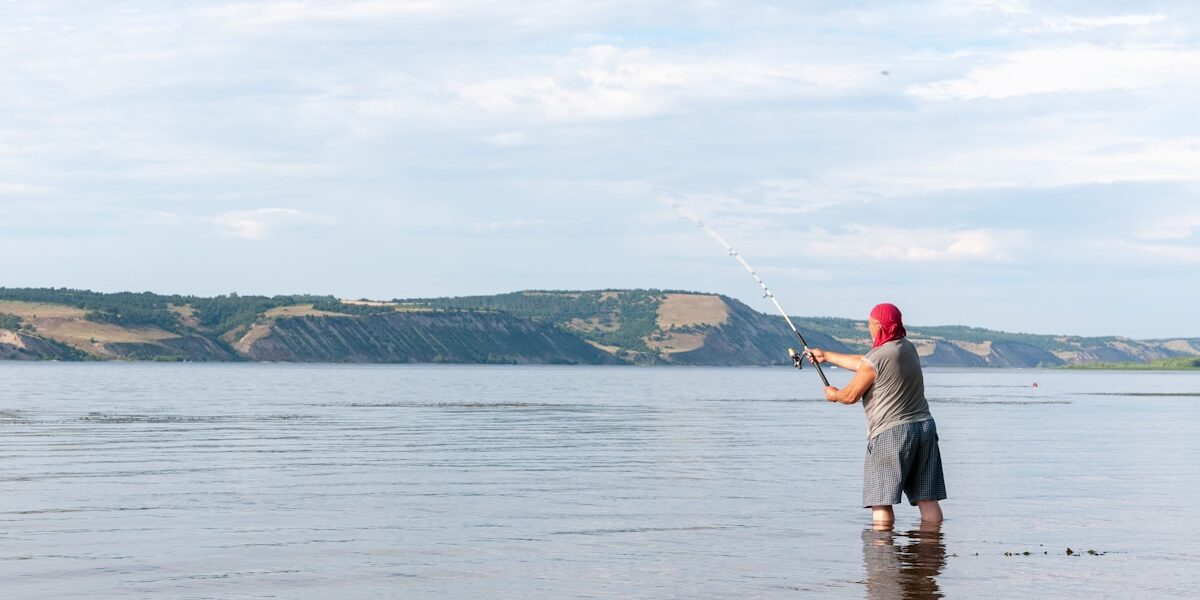
Fishing kayak choices have gotten out of hand. Walk into any paddlesports shop or scroll through an online forum and you’ll find people debating hull angles and pedal drive gear ratios with the intensity of people who have way too much time on their hands. I’ve fished from kayaks for years — sit-on-tops in Florida, sit-ins in cold New England water, an inflatable I dragged on a hiking trip once — and I’ve learned everything you actually need to know to pick one that works. Here it is, without the drama.
Which Type of Kayak Actually Fits Your Fishing
There are four main categories, and which one matters depends almost entirely on where and how you fish.
Sit-on-Top Kayaks
These are the most popular fishing kayaks for good reason. You’re sitting on top of the hull rather than inside it, which makes it easy to spin around, stand up to cast, or just deal with gear without contorting yourself. They self-drain through small holes in the hull, so when water splashes in it goes right back out. The tradeoff is that you’re going to get wet — waves, paddle drip, splashing — which is fine in warm weather and less fun when it’s 50 degrees out. If you’re fishing in Florida, the Gulf Coast, or anywhere warm, a sit-on-top is almost certainly the right call.
Sit-In Kayaks
Sit-in kayaks put you inside the hull with a cockpit surrounding you from the waist down. They stay drier and warmer, which is the point in northern climates or cold-weather fishing. They’re also typically faster and track better in the water. The downside is that accessing gear while you’re in the cockpit is more work, and standing to cast is generally not an option. I’m apparently a sit-in person for late-season striper fishing, and a sit-on-top person for everything else.
Inflatable Kayaks
Inflatables have gotten legitimately good over the past decade. The drop-stitch construction on modern inflatables makes the floor rigid enough that they paddle like a real kayak instead of a pool toy. They pack down into a bag that fits in a closet or a car trunk, which matters if you live in an apartment or travel to fish. Stick to calm or mildly moving water with these — they’re not for rough surf or fast river sections — but for lakes, ponds, and protected bays, a quality inflatable is a real option.
Tandem Kayaks
Built for two. The paddling load gets split between both people, which helps on longer paddles to remote spots. They’re stable and have high weight capacity, which means you can bring more gear. The coordination required is real — if you and your fishing partner have different paddling styles or different ideas about where to go, that becomes apparent quickly. For partners who fish together regularly, tandems work well. For casual partnerships, two solo kayaks is usually the better call.
Features That Actually Matter
Stability
Fishing kayaks need to be stable enough that you’re not white-knuckling the gunwales every time you lean to net a fish. Look for a wider hull — anything over 30 inches of beam gives you a solid platform. Pontoon-style hulls, sometimes called tunnel hulls, add extra stability for standing. If you plan to stand and cast at all, stability should be your first filter, not an afterthought.
Storage
Rod holders are the baseline — you need at least two, ideally three or four, and they should be positioned so a rod in the holder isn’t constantly getting tangled with your line. Gear tracks along the sides let you mount accessories: fish finders, rod holders, camera mounts, whatever you need. For electronics, waterproof compartments matter. Your phone and fish finder have no business getting soaked.
Comfort
You will notice a bad seat after two hours on the water. You won’t notice a good one. Adjustable, high-back padded seats make all-day trips possible. Footrests that adjust for leg length seem minor until you’ve spent a day paddling with your feet braced wrong and your knees aching. Don’t skip this feature.
Weight Capacity
Calculate honestly: your body weight, plus your gear (rods, tackle boxes, anchor, cooler, safety equipment, snacks), plus a margin. A 350-pound capacity kayak carrying 340 pounds is going to sit low and paddle poorly. Models rated at 400-plus pounds give you real room to work with.
Propulsion
This is where kayak fishing has changed most dramatically in the past ten years. Pedal-drive systems — Hobie’s MirageDrive being the most well-known — let you move through the water with your legs while your hands stay free for fishing. That’s not a trivial advantage. The ability to reposition while keeping a line in the water, or to follow a school of fish without stopping to paddle, changes how you fish. Motorized kayaks take it further, but they’re heavier and require charging. Paddle kayaks remain perfectly functional and cost less; the propulsion upgrade is worth it for serious anglers, not necessary for casual use.
What to Budget
Here’s a realistic breakdown of what you get at each price point:
- Entry-level ($300–$600): Functional kayaks for occasional use. Basic seats, minimal storage, no frills. Fine for getting started and figuring out if kayak fishing is for you before committing serious money.
- Mid-range ($600–$1,200): This is where it gets good. Better seats, more storage, gear tracks, multiple rod holders. Most dedicated fishing kayaks live in this range. Perception, Old Town, and Wilderness Systems all have strong offerings here.
- High-end ($1,200 and up): Pedal drives, integrated fish finder mounts, premium ergonomics, maximum durability. The Hobie Mirage Outback lives here, and it earns the price for people who fish seriously and often.
Models Worth Looking At
Perception Pescador Pro 12.0
The Pescador Pro is one of the most consistently recommended fishing kayaks at the mid-range price point. The seat is genuinely comfortable — a full lawn-chair style with good back support — and the storage layout is practical rather than just impressive in the spec sheet. Two flush-mounted rod holders, a large center console, and a bow hatch. It’s 12 feet long, paddles reasonably efficiently, and handles a lot of different water types without drama.
Hobie Mirage Outback
The Outback is the standard recommendation when someone asks for the best fishing kayak and money isn’t the primary concern. The MirageDrive pedal system is reliable and efficient, the stability is excellent, and the storage is thoughtfully designed for actual fishing rather than just looking good in a photo. It’s heavy — around 95 pounds — which matters when you’re loading it onto a car roof by yourself. But on the water, it’s hard to argue against it.
Vanhunks Voyager
A tandem option built solidly and priced reasonably for what you get. High weight capacity, comfortable seating for both paddlers, durable hull construction. Worth considering for partners who fish together regularly and want a kayak that’ll hold up over years of use.
Intex Excursion Pro
The best inflatable option in the sub-$200 range. Rigid drop-stitch floor, adjustable seats, two rod holders, and a profile that actually paddles like a kayak. It won’t replace a hard-shell for serious anglers, but for occasional use or travel fishing, it’s a legitimate piece of equipment rather than a toy.
Taking Care of What You Buy
Kayaks are durable, but they’re not maintenance-free. A few things that matter:
- Rinse after saltwater use: Salt accelerates wear on hardware, seat fabric, and hull material. A quick freshwater rinse after every saltwater trip adds years to the kayak’s life.
- Store out of direct sun: UV exposure degrades the hull material over time. A garage, shed, or kayak cover solves this. A UV protectant spray helps if outdoor storage is unavoidable.
- Check for damage regularly: Cracks and deep gouges in a plastic hull are fixable when small and expensive or impossible when ignored too long. Look it over before each season starts.
- Don’t leave it sitting in water: Long-term water exposure warps and weakens hull materials in ways that aren’t always visible until something fails.
The right kayak for you is the one that matches where you fish, how often you go, and what you’re realistically going to spend. Start with stability, add storage, and decide whether the pedal drive is worth the premium for how you actually fish. Everything else is details.
Recommended Fishing Gear
Garmin GPSMAP 79s Marine GPS – $280.84
Rugged marine GPS handheld that floats in water.
Garmin inReach Mini 2 – $249.99
Compact satellite communicator for safety on the water.
As an Amazon Associate, we earn from qualifying purchases.


Stay in the loop
Get the latest wildlife research and conservation news delivered to your inbox.