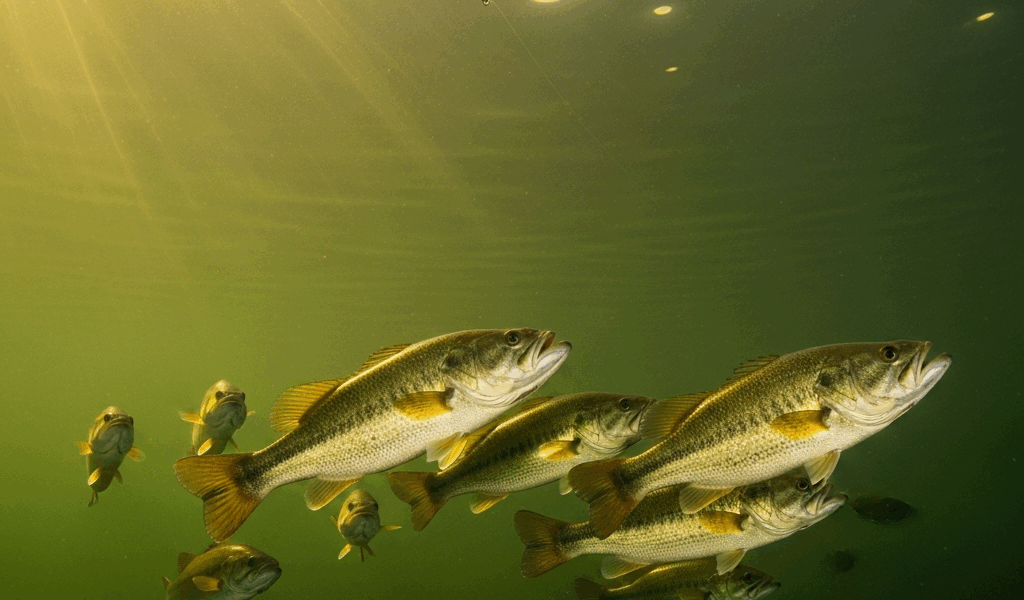
What It Means When Fish Are Suspended
Suspended fish have gotten complicated with all the conflicting advice flying around. As someone who’s spent the better part of fifteen years chasing bass and walleye across a dozen different lakes, I learned everything there is to know about this maddening situation. Today, I will share it all with you.
Here’s the core problem: a suspended fish sits motionless somewhere in the mid-column — not hugging the bottom, not chasing anything near the surface. Just hanging there. Usually between 8 and 25 feet down. Completely indifferent to your lure.
That’s different from a fish actively feeding at depth. An active deep feeder hunts. It responds to vibration. It chases. A suspended fish is locked in a holding pattern — metabolically dialed back, trigger-shy, almost dormant. The difference is a fish that won’t eat versus a fish that genuinely can’t be bothered. Once you understand that distinction, your whole approach changes.
Most anglers either ignore suspended fish entirely or keep throwing the same topwater rigs and shallow crankbaits they’d use during an active bite. Then they wonder why nothing connects. So, without further ado, let’s dive in.
The Four Main Reasons Fish Go Lockjaw Mid-Column
Thermocline Trapping
But what is a thermocline? In essence, it’s a sharp temperature transition layer inside the water column. But it’s much more than that — it’s essentially a biological fence that positions baitfish and, by extension, your target species at a very specific depth. Warm water sits above it. Cold water below. Baitfish can’t go deeper because oxygen levels crash down there, and they won’t push into the warmer upper water because that’s where predators actively hunt. So they get stuck at that boundary. Gamefish figure this out fast and just wait.
Practical implication: During summer suspensions, fish often stack between 15 and 22 feet — sometimes in a band as narrow as three feet. Random casting at various depths produces nothing. You need your presentation locked in that zone.
Post-Spawn Recovery
After spawning, bass especially are spent. They’ve burned enormous energy reserves, their body condition is compromised, and aggressive hunger is simply not on the menu. They suspend in deeper water to rest — not hunt. A post-spawn fish might mouth a bait out of pure reflex, not actual hunger.
Your cadence needs to slow down considerably. These fish need time to commit to anything. A fast retrieve earns refusal after refusal. You’re not triggering aggression here — you’re tempting a tired predator that might snap at something easy if it wobbles into range at the right speed.
Barometric Pressure Crashes
I learned this one the hard way. Late May, on Pickwick Lake, catching fish steadily off a rocky point in about 12 feet of water — then the bite simply evaporated. My buddy pulled up his weather app and barometric pressure had dropped 0.3 inches in under two hours. A thunderstorm was closing in fast. Fish went from active to essentially catatonic in maybe thirty minutes flat. That was a Tuesday. Ruined the whole afternoon.
Practical implication: Barometric suspensions usually break once pressure stabilizes — not before. If pressure is still dropping, fishing gets tougher by the hour. If it’s starting to climb back up, the bite returns faster than it died. This is a wait-it-out situation, not a move-on situation.
Low Dissolved Oxygen at Depth
Stagnant water in deep basins loses oxygen over time. Fish can’t survive sitting on the bottom in those conditions, so they compromise — suspending in the mid-column where oxygen levels are adequate but cooler water is still close enough to matter.
You’ll notice fish holding at one specific depth tier, refusing to go higher or lower. One foot above or below your lure’s running depth, and you’re completely outside the strike window. That’s not an exaggeration.
How to Tell If Your Target Fish Are Actually Suspended
Reading a Fish Finder
On a modern sonar unit — I’m currently running a Humminbird HELIX 7 CHIRP, picked it up for around $349 — suspended fish appear as isolated arcs or small clusters floating between the bottom echo and the surface. Bottom-hugging fish create a dense compressed band along the lake floor. Suspended fish scatter throughout the column, often forming a loose horizontal band at a consistent depth.
The detail most anglers miss: suspended fish arcs are thinner and less dense than what you’d see over an active feeding zone. The image itself is telling you these fish aren’t hunting. You’re seeing them, but you’re not seeing the aggressive pile-ups that show up during a real feed.
Without Electronics
Probably should have opened with this section, honestly. Not everyone runs quality electronics, and plenty of smaller waters don’t lend themselves to sonar work anyway.
Watch baitfish behavior first. Shiners or shad breaking the surface in scattered, erratic groups — rather than forming tight coordinated schools — are being pressured from below. That usually means predators are suspended underneath, picking them off individually rather than herding them into feeding balls.
Temperature is your other clue. I’m apparently obsessive about water temperature, and my old Rapala digital thermometer works for me while guessing by feel never does. Drop it at various depths. If surface temp reads 82°F and you’re hitting 74°F at 12 feet and 68°F at 20 feet, you’ve found your thermocline. Fish will stack just above or right at that transition zone.
Don’t make my mistake of ignoring time-of-day patterns either. Summer mornings might produce feeding fish near structure in 8 feet of water. By 2 p.m., those same fish have quietly slipped to 16 or 18 feet and gone completely quiet. Season tells you why — post-spawn or summer doldrums — and depth tells you where to look.
Presentations That Actually Trigger Suspended Fish
Slow-Falling Soft Plastics
A 4-inch Yamamoto Senko on a 1/8-ounce jighead falls at roughly one foot per second. Cast it out, maintain light contact on the fall, then work it through a series of short twitches and deliberate pauses. Keep that plastic moving through the strike zone as long as physically possible.
Suspended fish aren’t chasing anything. They’re waiting. A slowly descending bait wobbling gently looks like an exhausted baitfish — something easy that doesn’t require effort. That’s the only meal a lethargic suspended fish will bother with.
Drop Shot Rigs
A drop shot keeps your bait suspended at an exact, controllable depth — which is exactly what suspended fish require. Tie your main line to a swivel about 18 inches from your sinker, then run a 12-inch leader up to your drop shot hook. A 3/8-ounce sinker holds everything in place against light current.
Small hops and gentle twitches generate bites without pulling the bait out of the strike zone. It’s almost passive fishing. That’s what makes the drop shot endearing to us suspended-fish anglers — the bait just stays where the fish are.
Suspending Jerkbaits
A Rapala X-Rap 06 or Lucky Craft Pointer 78 SP suspends at roughly 6 feet and can be worked subtly at whatever thermocline depth you’ve identified. The twitch cadence matters enormously here — pause longer than instinct tells you to. Twitch twice, pause 3 seconds. Twitch once, pause 5 seconds. Let the bait hang almost completely still.
That pause is where suspended fish bite. Not during the twitch.
The Depth Precision Thing
While you won’t need tournament-level electronics for every situation, you will need a handful of reliable depth tools and genuine patience for this part. If suspended fish are holding at 17 feet, a lure running at 16 or 18 feet produces exactly nothing. The drop shot outperforms Texas rigs in these situations for one reason — control. Color and flash are secondary. Depth precision is everything.
When to Move On Versus When to Stay and Work Them
First, you should make 10 to 15 quality presentations in the strike zone before any move decision — at least if you’ve actually confirmed fish are there on your sonar. Quality means your lure is genuinely working at the correct depth and cadence, not just being lobbed in the general direction of suspended fish.
Refusals mean stay. If you watch fish follow your lure on the sonar and turn away, they’re interested enough to investigate. Keep adjusting — go smaller, slow down further, try a different color. You’re close. Probably closer than you think.
If 15 casts produce absolutely zero reaction, consider the cause. Thermocline suspensions rarely break mid-session — those fish stay locked until water temperature or season shifts. Leave and find a different zone, or come back tomorrow morning.
Barometric pressure suspensions resolve faster. Watched the pressure drop and the bite die? Stay put 30 to 45 minutes. Check pressure again. Stabilizing readings mean fish will start transitioning back toward normal behavior — that’s exactly when the bite returns.
Post-spawn fish sometimes feed better at dawn or dusk even when suspended all day. Midday work producing nothing doesn’t mean the spot is dead. Come back at first light. Suspended doesn’t always mean impossible.
Stop treating suspended fish like an anomaly to escape. They’re a condition with specific causes and specific solutions. Work the zone methodically, match your presentation to their mood, and either solve the puzzle or move with real confidence that you made the right call. That’s the difference between a frustrating day and productive fishing.


Stay in the loop
Get the latest fishing tales journal updates delivered to your inbox.