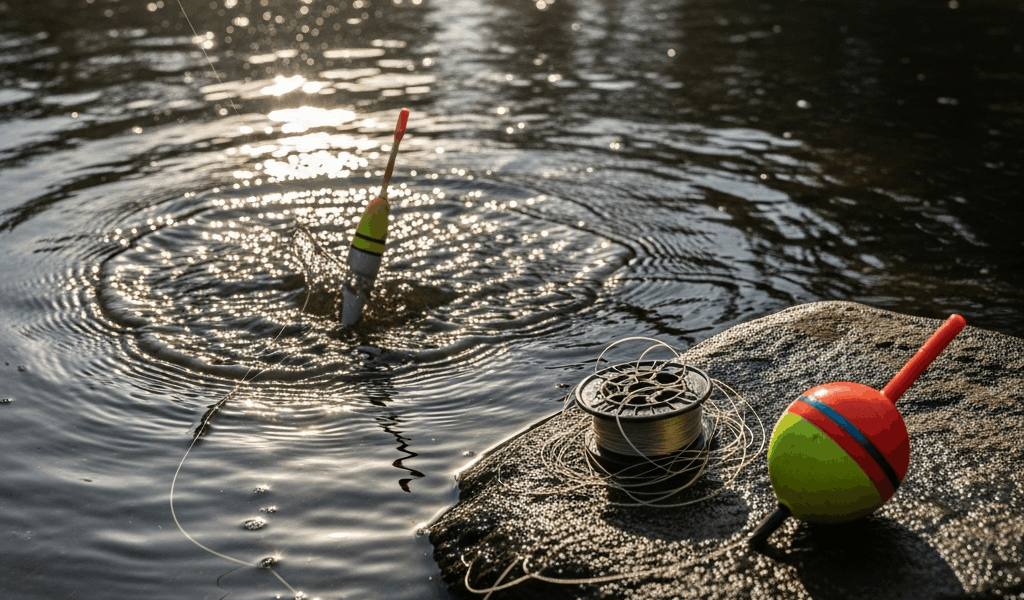
Why Your Bobber Keeps Sinking Without a Bite
Bobber fishing has gotten complicated with all the conflicting advice flying around. But here’s the truth: if your float keeps going under with nothing on the hook, the explanation is almost always mechanical — not supernatural, not a fishless pond, not bad luck.
As someone who spent three full seasons convinced my local pond was basically a decorative puddle, I learned everything there is to know about reading bobber behavior the hard way. Today, I will share it all with you.
Spoiler: the fish were there the whole time. I just didn’t know what my rig was actually telling me.
Your Bobber Stop Is Set Too Loose
Probably should have opened with this section, honestly. A sliding bobber with a worn stop will creep down your line all by itself — no fish required. You cast. The bobber slowly sinks. You set the hook on open water and wonder what’s wrong with you.
That tiny rubber knot or bead — the bobber stop — wears out faster than people expect. Cheap synthetic rubber stops harden after maybe 30 or 40 casts and lose their grip entirely. Test yours right now: hold the line, grab the bobber, and pull downward with light pressure. A good stop doesn’t move at all. A dead one slides like it’s greased.
The fix takes 45 seconds. Packs of 50 rubber bobber stops run $3.97 at Walmart — I bought mine last March and I’m still on the same pack. Wrap the new stop around your line, thread the bobber, cinch it tight. Done. If you’re running a brass bead stop that’s gone smooth, swap it out. Don’t make my mistake of retying the whole rig three times before checking something this simple.
Current or Wind Is Dragging the Line Under
Water moves. Wind pushes line sideways. Both create bow in your mainline that pulls a perfectly healthy bobber straight under — no fish anywhere near it.
Read the water before you cast. Watch debris drift, look for ripple direction, notice surface tension. Even a soft crosswind will gradually arc your line until the float submerges. I wasted an entire July afternoon blaming phantom fish before I finally crouched down, watched my line from water level, and saw exactly what was happening.
You have a few real options here:
- Cast upstream. In creeks or rivers, aim above your target and let current carry the rig into position. Line tension stays aligned instead of bowing out sideways.
- Upsize your bobber. A float rated for 3 to 5 ounces of buoyancy resists light wind far better than a 1-ounce slip float. You lose a little sensitivity — worth it on windy days.
- Add a split shot above the hook. A #4 or #5 shot anchors the rig in the water column and reduces lateral drift. This is my go-to fix on breezy afternoons. Once I pinched on a #5 split shot and recast upstream, everything clicked immediately.
- Switch to a slip float. Proper depth control on a slip bobber keeps the upper line cleaner in wind and current both.
Your Bobber Is Too Small for the Bait Weight
But what is a bobber rating, really? In essence, it’s the maximum weight the float can suspend before going under. But it’s much more than that — it’s the margin between your rig sitting properly and your rig slowly drowning itself with every small disturbance.
Here’s where the math gets people. Say you’re running a 1-ounce float. A live nightcrawler weighs roughly 0.3 ounces. A size 6 hook adds 0.05 ounces. A small split shot adds another 0.1 ounces. You’re already at 0.45 ounces — nearly half the float’s capacity — before the rig even hits water. A lively crawler pulls. Current nudges. The bobber tips and goes under. No fish involved.
That’s what makes proper float sizing so critical to us bank anglers — we can’t see what’s happening below the surface and we’re entirely dependent on that bobber telling us the truth.
Simple rule: with the full rig attached, the top third of the float should still sit above the waterline. Half-submerged means upsize immediately. Going from a 1-ounce to a 2-ounce float runs maybe $2 extra. Small investment, dramatic difference.
Weeds or Structure Are Grabbing Your Bait
Your bait sinks. It finds bottom grass, submerged brush, soft mud — something grabs it. The bobber dips. You set the hook. You pull up a clump of pond weed and feel personally offended.
Here’s the tell: real bites move fast and usually show directional pull. The bobber goes sideways or under decisively. Structure grabs feel heavy and static — the float tilts at a strange angle and just stays there, not going anywhere, not recovering. Reel in slowly and feel for resistance that doesn’t pulse or move. That’s bottom, not a bass.
- Shorten the distance between bobber and hook so bait hovers above the structure instead of dragging through it.
- Use a weedless hook — the wire guard across the shank lets grass slip past cleanly. Size 2 Gamakatsu weedless hooks work well for most live bait.
- Recast away from the thick grass patch. Obvious, but easy to forget when you’re convinced the fish are sitting right in there.
In shallow ponds, vegetation contact is basically guaranteed. Expect it. Plan around it. Don’t set the hook on every twitch.
Line Twist Is Creating Tension in the Rig
I’m apparently someone who ignores line twist until things get genuinely weird — and a Pflueger spinning reel works fine for me while an old no-name reel I inherited never stopped coiling the line into chaos. Heavy twist makes the line coil back on itself, pulling the bobber sideways or dipping it unpredictably. The rig never settles flat on the water.
Fast fix: let the unweighted line trail behind a moving boat or drift in slow current for 30 seconds. Water resistance works the twist out naturally. Or clip in a ball-bearing swivel between mainline and leader — a decent one runs $1.50 and ends twist problems for good. Worth every cent.
So, without further ado, here’s the bottom line: your bobber dipping without bites isn’t mysterious. Check the stop first. Read the current. Upsize the float. Clear the structure. Untwist the line. One of these five things is almost certainly the answer — and every single one is fixable right there on the water, without driving back to the tackle shop.


Stay in the loop
Get the latest fishing tales journal updates delivered to your inbox.