Why This Keeps Happening to So Many Anglers
Soft plastic fishing has gotten complicated with all the conflicting advice flying around. But here’s the honest truth: your worm flies off the hook on cast for one of two reasons. Your hook is too big for the worm you’re using — or you’re threading it in a way that can’t survive the acceleration. Both are fixable. Neither requires a single new piece of gear.
I was pairing 3/0 wide-gap hooks with 4-inch worms. Basically rigging a pencil onto a dinner fork. The worm slipped free the instant my rod loaded backward. Once I stopped casting differently and actually diagnosed the real issue, everything changed. Today, I’ll share it all with you.
Before you buy anything, identify which problem is actually yours. That diagnostic step saves both time and money. It’s also the part most forum threads skip entirely — which is probably why you’ve already read ten contradicting answers and still ended up here.
Hook Size Is Usually the First Culprit
The hook gap — the distance between the point and the shank — needs to match your worm’s body diameter. A gap that’s too wide leaves the worm sitting loose on the shank with nothing actually gripping it during the cast. Your rod loads, whips forward, centrifugal force takes over. Worm gone.
Here’s the rule: the worm should rest snugly against the shank so the gap closes around the body. Not tight enough to tear the plastic. Just snug. Slide it with a little resistance — not effortlessly, not with a grunt. There’s a feel to it once you’ve done it right once.
Wide-gap hooks — 2/0, 3/0, 4/0 — work best with 6-inch worms and larger. Casting 4-inch worms? You probably need a 1/0 or a narrow 2/0. A 5-inch worm pairs well with a 2/0 or 3/0. Small matchups. Big difference on the water.
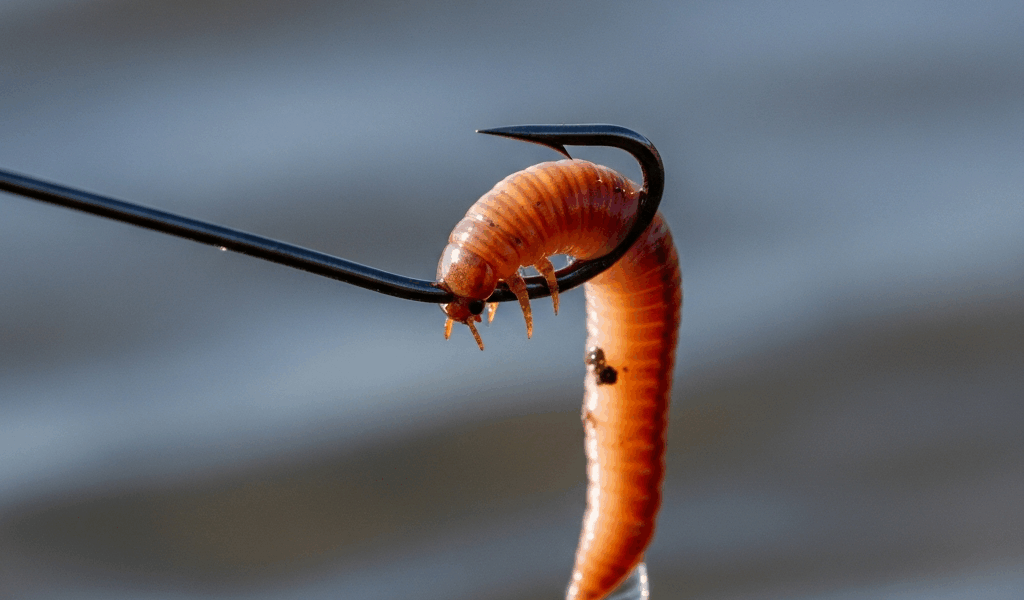
Fastest way to check right now: thread a worm onto your hook and look at the gap on both sides of the body. Can you see daylight between the worm and the inside curve of the hook? That’s your diagnosis. That space is where your worm is escaping from.
How You Thread the Worm Changes Everything
Probably should have opened with this section, honestly. Because the entry point at the worm’s nose matters more than most people realize.
Most anglers thread too shallow — barely piercing the tip of the nose. That creates two problems immediately. First, there’s almost no material pinning the worm against the shank. Second, a shallow entry makes the worm hang crooked, and a crooked worm spins under cast pressure like a corkscrew. That spin accelerates the slip. You never stood a chance.
The fix is straightforward. Push the hook point through the nose at least a quarter-inch deep — some experienced guys go a full half-inch. The goal is burying enough worm material on the shank that friction does the holding, not hope. Use the emerging hook point as your visual guide. When the point comes through the body, you’re roughly where you want to be. Push the worm up the shank and seat it firmly.
Keep the worm straight during threading. Tilting left or right at entry is where that spin gets introduced. Aim the point directly in line with the worm’s body axis. It takes maybe three extra seconds per rig. Worth every one of them.
A properly threaded worm hangs naturally — not twisted, not bunched near the eye. Straight means even weight distribution and predictable flight. A twisted worm is already working against you before you even begin your backswing.
Quick Fixes That Actually Hold the Worm in Place
If your rigging looks right and your hook size actually matches the worm, try these in order of effort.
The bobber stop trick: Slide a small bobber stop — the rubber tube style, about thirty cents at any tackle shop — onto the hook shank just above where the worm nose sits. It becomes a physical wall. The worm has nowhere to slide up toward during the cast. This works especially well when you’re using a worm that’s slightly undersized for the hook you’ve got tied on.
Super glue at the nose: For tournament days or when you’re bombing 50-yard casts into heavy wind, put a single drop of cyanoacrylate — standard Gorilla Glue Super Glue gel works fine — right where the worm enters the hook. Let it cure about 20 seconds. Locks the nose in place without touching how the worm moves underwater. Not elegant. Works.
Switch worm types: Some worms grip hook shanks better than others. Zoom Speed Crawlers, for example, have a body texture with thicker walls and ridged patterns that hold better than smoother plastics like standard Senkos. I’m apparently a textured-body guy and the Zoom products work for me while slick-finish worms never really did. Don’t make my mistake of blaming your technique when it’s actually your bait choice.
When the Cast Itself Is the Actual Problem
There’s a third scenario. Nobody talks about it enough.
Your rigging is solid. Your hook matches the worm perfectly. The worm still flies off on hard casts. This happens when you’re using a spinning rod with light line and loading the rod too abruptly. That sudden snap generates centrifugal force that exceeds what friction can hold — even on a well-rigged worm. That’s not a rig failure. That’s a physics problem.
Switch to a pendulum cast or a sidearm delivery for soft plastics. These accelerate the rod more gradually, which means gentler force at the release point. You still get your distance. You just stop whipping the rod like it personally offended you.
Baitcasting gear makes this less of an issue — the spool is already moving forward, so the line and bait leave more smoothly. But on a spinning rod with line under 12-pound test, that flinging motion is the enemy of soft plastic retention. That was probably 80% of my first-season problem right there.
Once you figure out whether it’s hook size, threading depth, or casting technique causing your problem, the actual fix takes about five minutes. Get back out there.




Stay in the loop
Get the latest fishing tales journal updates delivered to your inbox.