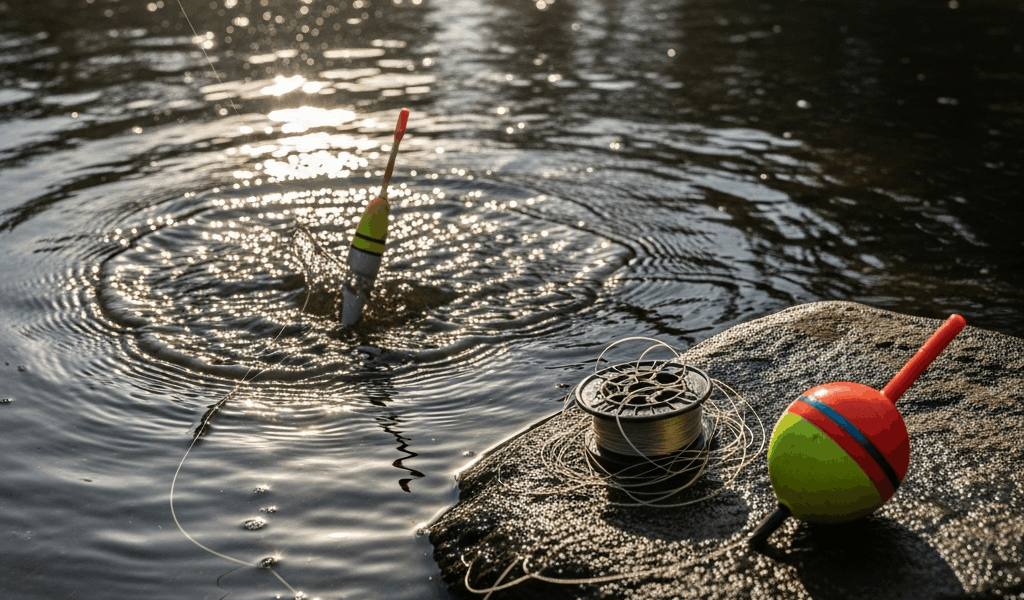
If your bobber sinks and stays underwater without a clear bite, the rig is usually overloaded, the float is taking on water, the bait or weight is snagged, or current is pulling the line. If it dips, moves sideways, or pops back up, small fish or bait thieves may be touching the bait even though you are not hooking them.
The fastest diagnosis is a still-water test: remove the bait and sinkers, attach the bobber correctly, and place the rig beside the bank or in a bucket. Then add the hook, bait, and split shot one item at a time. The component that makes the float submerge identifies the problem.
Why a bobber sinks: symptom guide
| What the bobber does | Most likely cause | First test |
|---|---|---|
| Sinks immediately and stays down | Too much sinker/bait weight, undersized float, or waterlogged float | Test the bare float, then rebuild the rig one component at a time |
| Floats at first, then slowly sinks | Leaking float, bait absorbing water, line/current load, or rig settling into weeds | Move to still shallow water and inspect the float for water |
| Sinks only in current or wind | Line drag or terminal tackle catching current | Reduce slack, change casting angle, or use a better-matched float |
| Tilts or lies sideways | Weight or bait resting on bottom, depth set incorrectly, or rig tangled | Shorten the depth and recast beside the bank |
| Twitches, dips, rises, or moves sideways | Fish, small bait thieves, crayfish, or live bait movement | Check bait and hook size; wait for sustained movement before setting |
| Slip bobber does not stop at the chosen depth | Missing bead, stop passing through the float, or loose stop knot | Slide the stop by hand and confirm the bead cannot enter the float eye |
Do this two-minute test first
- Use calm, shallow water. Test next to the bank where you can see the entire rig, or use a bucket large enough for the float to move freely.
- Test the float by itself. Remove bait and split shot. A conventional fixed or slip float should remain afloat when attached correctly.
- Add the hook. If the bare float supports the hook, continue.
- Add the normal bait. Watch whether the float settles to its intended waterline.
- Add shot one piece at a time. Stop when the float sits correctly. If another shot submerges it, remove that shot or use a float designed for more load.
- Set a shallow depth and cast nearby. If the rig works shallow but fails at fishing depth, bottom contact, vegetation, current, or the slip-stop setup is the likely difference.
Different float shapes are designed to show different amounts above the surface. A pencil float may intentionally display only a narrow tip; a round clip-on bobber may show much more. Use the float’s markings or instructions when available instead of applying one universal waterline rule.
1. The float is carrying too much weight
A bobber must support the combined load of the hook, sinker, swivel, leader hardware, and bait. If that total exceeds the float’s buoyancy, it sinks even when no fish is present.
Indiana DNR’s beginner guidance recommends adding small split shot one at a time until the float is balanced near its intended waterline. Utah’s wildlife agency similarly advises choosing a bobber buoyant enough for the bait or lure, without using one so large that subtle bites become hard to detect.
Fix an overloaded rig by:
- removing one split shot or choosing smaller shot;
- using a lighter hook, swivel, jig, or bait;
- switching to a float with enough stated capacity for the complete rig; or
- using a float designed for the current and presentation rather than simply choosing the largest bobber available.
Do not add more split shot to cure a bobber that already sinks. Extra weight may help a properly sized float stand upright or reach depth, but it reduces the remaining buoyancy.
2. The bobber is cracked, leaking, or waterlogged
Hollow plastic floats can leak at a seam, stem, or impact crack. Cork, wood, and some foam floats can absorb water after their finish is damaged. The clue is a float that begins correctly but rides progressively lower.
Dry the float, shake it near your ear, and look for water or bubbles. Submerge only the body briefly while squeezing or rotating it; escaping bubbles can reveal a leak. Replace a cracked hollow float. A repair that changes the float’s weight or shape can make its calibration unreliable.
3. The bait or weight is resting on the bottom
If the distance from bobber to hook is greater than the water depth, the sinker or bait can rest on bottom. A fixed bobber may lean or lie flat because the terminal tackle no longer pulls downward. In current, the bottom can hold the rig while the water pulls the float under.
Shorten the bobber-to-hook distance and test again. In shallow water, Utah DWR suggests presenting suspended bait roughly six inches to two feet above bottom as a starting range, then adjusting for the fish and conditions. The correct depth is site-specific; the diagnostic point is to keep the rig clear of bottom during the test.
4. Weeds, wood, or rocks are holding the rig
A hook, split shot, or bait caught in vegetation can make a float tilt, creep, or remain submerged. Unlike a clean bite, the pull often stays fixed in one place and feels steady when you lift the rod.
Reel in slowly and inspect the hook for weed fragments, mud, bark, or a bent bait. Shorten the depth, move the split shot farther from cover, or cast to the edge rather than through the obstruction. If every cast sinks at the same location, structure is more likely than a float defect.
5. Current or wind is loading the line
Moving water pushes the line, leader, bait, and sinker. Wind can bow the line and drag the surface end of the rig. The float may ride normally beside the bank but submerge after the cast as drag builds.
Try these changes one at a time:
- cast more directly upstream or downstream instead of across the current;
- mend or reel in excess surface slack without pulling the float toward you;
- reduce bulky bait or unnecessary hardware;
- fish a shorter depth if the lower rig is sweeping into bottom; or
- choose a float shape and capacity intended for moving water.
New York’s beginner guide notes that bobber-and-bait rigs can be difficult in wind. In strong current or wind, a bottom rig or another presentation may provide clearer bite detection.
6. A slip-bobber stop or bead is assembled incorrectly
A loose bobber stop does not directly remove buoyancy. Instead, it lets the stop move, which changes the fishing depth. That can send the bait into bottom or weeds, producing the appearance of a sinking-bobber problem.
For a slip rig, confirm the order recommended for your components—typically stop, bead, slip float, weight, and hook. The bead must be too large to pass through the float’s top eye, and the stop must grip the line while still being adjustable. Test the stop by sliding it firmly with your fingers, then cast shallow and confirm it remains in position.
7. The rig is tangled or the fixed bobber is clipped incorrectly
Line wrapped around a float stem, hook, or split shot can pull from the wrong angle. On some spring clip-on bobbers, only one end is attached unless the line is routed around the body and clipped at both ends as designed.
Lay the rig straight on the bank before casting. Confirm the line exits cleanly, the float can pivot or slide as intended, and the hook hangs below the weight without looping around the main line.
8. It may actually be a bite
Small bluegill, perch, minnows, crayfish, and other bait thieves can pull or peck at bait without taking the hook. A live minnow can also move a finely balanced float. These signals often look like repeated taps, short dips, sideways travel, or sudden rising rather than a steady mechanical submergence.
Reel in and inspect the bait. If it is shortened, torn, scaled, or missing, try a smaller piece of bait and a hook sized to the fish touching it. Do not assume every downward movement requires an immediate hard hookset; wait for sustained travel or the bite pattern appropriate to the target species and hook type.
Fixed bobber versus slip bobber diagnosis
Fixed bobber
If it sinks in still water with a shallow setting, focus on overload, damage, or incorrect clipping. If it works shallow but fails after increasing depth, focus on bottom contact and snags.
Slip bobber
First confirm that the stop and bead arrest the float. Then check whether the chosen depth places the bait into bottom or weeds. Finally, balance the shot and bait against the float’s rated capacity.
Frequently asked questions
Should a fishing bobber be partly underwater?
Often, yes. Many floats are balanced so only the tip or upper section remains visible. The correct waterline depends on the float design and rated load. Sinking completely and staying underwater is the problem.
Will adding split shot stop my bobber from sinking?
No. Split shot adds downward force. It can balance an adequately sized float and improve bait presentation, but too much shot makes the float sink.
Why does my bobber sink only after I cast far out?
The deeper setting may place the bait on bottom, or current and wind may create more line drag away from shore. Test at the same depth beside the bank, then shorten the rig or change the casting angle.
Why does a slip bobber keep going underwater?
Check total weight first, then confirm the stop and bead hold the chosen depth. A slipping stop can let the rig settle into bottom or weeds even though the float itself is not defective.
Practical sources
- Indiana DNR: balancing a bobber with split shot
- Utah Division of Wildlife Resources: suspended bait and float selection
- New York DEC: beginner bobber-and-bait rig guidance
- South Carolina DNR: beginner bobber rig
Rigging advice verified July 31, 2026. Follow local fishing and bait regulations, and consider non-lead sinker alternatives where available or required.



Stay in the loop
Get the latest fishing tales journal updates delivered to your inbox.